
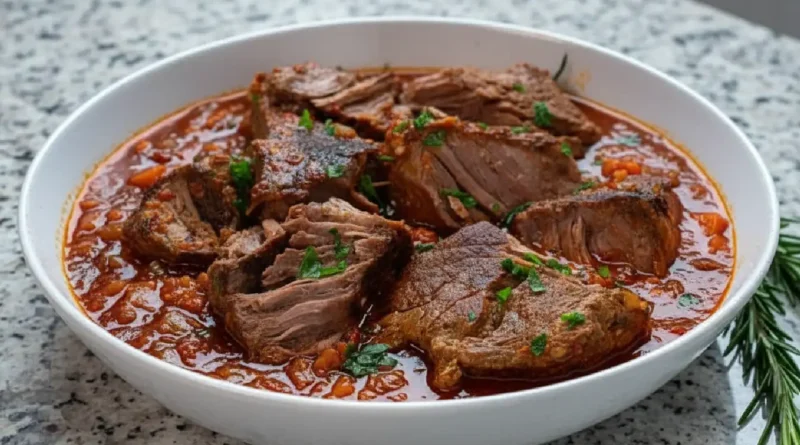
Italian Pot Roast (Stracotto)
Table of Contents
ToggleThe Ultimate Italian Pot Roast (Stracotto) Recipe: A Melt-in-Your-Mouth Sunday Classic
There is a specific kind of magic that happens in a kitchen when a heavy Dutch oven has been simmering on the stove for hours. The air grows thick with the scent of rosemary, toasted garlic, and the deep, fruity aroma of a reducing red wine. This isn’t just a meal; it is an atmosphere. Stracotto, which literally translates to “overcooked,” is the Italian answer to the traditional pot roast, but with a depth of flavor that feels infinitely more sophisticated. I remember the first time I let a beef chuck roast bathe in a bottle of Chianti for a full afternoon. The way the meat eventually surrendered to the fork, falling away in tender, succulent ribbons, changed my definition of comfort food forever. It is a dish that demands patience but rewards you with a velvet-like sauce and beef so flavorful it barely needs a knife.
Why You’ll Love This
-
Effortless Sophistication: While it tastes like it came from a high-end trattoria, the actual hands-on time is minimal, letting the oven do the heavy lifting.
-
Deep Flavor Profile: Unlike standard pot roasts that rely on salt, Stracotto builds layers of flavor through a traditional soffritto and a full-bodied wine reduction.
-
Better with Time: This is one of those rare dishes that actually tastes more complex and harmonious the next day, making it the king of leftovers.
-
Crowd-Pleasing Texture: The slow-braising process turns even the toughest cuts of beef into a buttery, melt-in-your-mouth masterpiece that appeals to everyone.
A few years ago, I hosted a dinner for a close friend who was notoriously skeptical of “brown food.” To him, pot roast was something dry and stringy served at school cafeterias. He sat down with a look of polite apprehension. However, the moment he pulled a piece of this beef through the rich, mahogany-colored sauce and took a bite, his entire expression shifted. He didn’t just finish his plate; he spent the next ten minutes using a crusty piece of bread to swipe every last drop of the wine-infused gravy from the bottom of the Dutch oven. It was the ultimate compliment for a dish that relies on simple ingredients and a lot of heart.
What Makes It Special
-
The Soffritto Foundation: A finely diced mix of onions, carrots, and celery provides a sweet, earthy base that thickens the sauce naturally.
-
A Full Bottle of Red Wine: Using a dry Italian red, like Chianti or Nebbiolo, adds an acidic brightness and a sophisticated crimson hue to the meat.
-
Aromatic Herb Bundle: Fresh rosemary, thyme, and bay leaves are tied together to infuse the braise with woodland notes without leaving loose leaves in the gravy.
-
The Low and Slow Method: The gentle heat breaks down the connective tissue of the beef, turning it into gelatin that creates a silky, glossy mouthfeel.
Making It Happen
The journey to a perfect Stracotto begins with a heavy-bottomed pot and a high-quality piece of beef. You start by generously seasoning the meat with salt and pepper, then searing it in shimmering olive oil until a deep, golden-brown crust forms on every side. This step is vital; that crust is where the savory depth begins. Once the meat is set aside, the vegetables go into the pot to soften, picking up the browned bits left behind by the beef. As the onions turn translucent and the carrots begin to caramelize, you stir in a bit of tomato paste to add a savory punch.
Next comes the transformation. You pour in the wine, scraping the bottom of the pot to release all that concentrated flavor. The beef is nestled back into this fragrant liquid along with a splash of beef stock and the herb bundle. From here, the stove or oven takes over. For the next three hours, the liquid reduces and intensifies, slowly penetrating the fibers of the meat. By the time you lift the lid, the roast should be swimming in a thick, concentrated glaze, and the beef should feel like it would collapse under the weight of a spoon.
You Must Know
-
Don’t Rush the Sear: If the meat isn’t deeply browned, the final sauce will lack color and complexity. Give each side at least 5 minutes.
-
Choose the Right Wine: Avoid “cooking wine.” Use a dry red that you would actually enjoy drinking, as the flavor will be very concentrated.
-
Check the Liquid Level: Halfway through, ensure the liquid hasn’t evaporated too much; the beef should always be at least half-submerged.
-
Rest the Meat: Once finished, let the beef rest for 15 minutes before slicing or shredding to ensure the juices stay within the fibers.
Serving Ideas
The classic way to serve Stracotto is over a bed of creamy, buttery polenta or a pile of wide pappardelle noodles that can catch the rich sauce. If you prefer something more traditional, garlic-mashed potatoes are a fantastic vehicle for the gravy. To balance the richness of the dish, serve it with a side of bright, sautéed broccolini or a crisp arugula salad with a lemon vinaigrette. For pairing, pour a glass of the same wine you used for the braise—a bold Sangiovese or a sturdy Cabernet Sauvignon works beautifully.
Make It Different
-
The Mushroom Twist: Add a handful of dried porcini mushrooms to the braising liquid for an extra hit of umami and earthiness.
-
Vegetable Forward: Toss in whole pearl onions and large chunks of parsnip during the last hour of cooking for a heartier, one-pot feel.
-
Slow Cooker Option: You can sear the meat and veggies in a pan, then transfer everything to a slow cooker on low for 8 hours for a hands-off workday meal.
-
Herb Variations: If you don’t have rosemary, fresh sage and oregano provide a lovely, slightly more floral Italian profile.
Storage and Reheating
Stracotto is a dream for meal prep. Store the beef and its sauce together in an airtight container in the refrigerator for up to 4 days. As it chills, the sauce will thicken into a jelly-like consistency—this is a sign of a successful braise. To reheat, place the beef and sauce in a small pot over low heat with a splash of water or broth to loosen it up. Avoid the microwave if possible, as it can toughen the beef; the stovetop keeps it tender and moist.
Success Tips
The secret to a truly legendary Italian pot roast lies in the “overcooking.” Don’t be afraid to let it go a little longer if the meat isn’t completely tender. Every piece of beef is different, and the collagen needs time to fully melt. Additionally, if your sauce feels too thin at the end, remove the beef and boil the liquid on the stovetop for 5 to 10 minutes to reduce it into a thick, glossy syrup before serving.
Frequently Asked Questions
What is the best cut of beef for Stracotto?
Beef chuck roast is the gold standard because of its fat content and connective tissue, which break down into a tender texture. Brisket or bottom round can also work but may be slightly leaner.
Can I make this without alcohol?
Yes. You can substitute the wine with extra beef broth and two tablespoons of balsamic vinegar to provide the necessary acidity and depth.
Should I cut the meat before cooking?
It is best to cook the roast whole. This keeps the interior moist and allows the exterior to develop a beautiful crust while the inside stays juicy.
Can I make this in an Instant Pot?
Absolutely. Follow the searing steps in the pot, then cook on high pressure for 60 to 70 minutes with a natural pressure release.
Why is my pot roast tough?
If it is tough, it usually just needs more time. Under-cooked braised meat is chewy; once the collagen melts, it becomes tender. Put it back in for another 30 minutes.
Italian Pot Roast (Stracotto)
Prep time: 20 minutes
Cook time: 3 hours
Total time: 3 hours 20 minutes
Servings: 6
Category: Main Course
Difficulty: Medium
Cuisine: Italian
Yield: 1 Roast with Sauce
Equipment
-
Large Dutch oven or heavy-bottomed pot
-
Kitchen twine (for the herb bundle)
-
Tongs
-
Sharp chef’s knife
Ingredients
-
3 to 4 lbs Beef chuck roast
-
3 tbsp Extra virgin olive oil
-
2 medium Yellow onions, finely diced
-
2 large Carrots, finely diced
-
2 stalks Celery, finely diced
-
4 cloves Garlic, minced
-
2 tbsp Tomato paste
-
750 ml Dry red wine (Chianti, Barolo, or Merlot)
-
2 cups Beef bone broth
-
2 sprigs Fresh rosemary
-
4 sprigs Fresh thyme
-
2 Dried bay leaves
-
Kosher salt and freshly cracked black pepper to taste
-
Fresh parsley for garnish
Instructions
-
Season the beef roast liberally on all sides with salt and pepper.
-
Heat the olive oil in the Dutch oven over medium-high heat. Once shimmering, sear the beef until a deep brown crust forms on all sides (about 5-7 minutes per side). Remove the meat and set aside.
-
Lower the heat to medium. Add the onions, carrots, and celery to the pot. Sauté for 8-10 minutes until softened and starting to brown.
-
Stir in the minced garlic and tomato paste, cooking for another 2 minutes until the paste turns a dark rust color.
-
Pour in the entire bottle of red wine, using a wooden spoon to scrape the bottom of the pot to deglaze.
-
Return the beef to the pot. Add the beef broth and the herb bundle (rosemary, thyme, and bay leaves tied with twine). The liquid should come about halfway up the side of the meat.
-
Bring to a gentle simmer, then cover with a tight-fitting lid. Transfer to a 325°F oven (or keep on the lowest setting on the stove) and cook for 3 to 3.5 hours.
-
The roast is done when it is fork-tender and pulls apart easily.
-
Remove the meat to a cutting board and discard the herb bundle. Slice the meat or pull it into large chunks.
-
If the sauce is too thin, simmer it on the stovetop for a few minutes to reduce. Pour the rich sauce over the meat and garnish with fresh parsley.
Notes
-
For an even thicker sauce, you can toss the beef in a light coating of flour before searing.
-
If you prefer a smooth sauce, you can strain the vegetables out before serving, though the rustic texture of the soffritto is traditional.
Nutrition
-
Calories: 540 kcal
-
Protein: 42g
-
Fat: 32g
-
Carbohydrates: 9g
-
Fiber: 2g
