
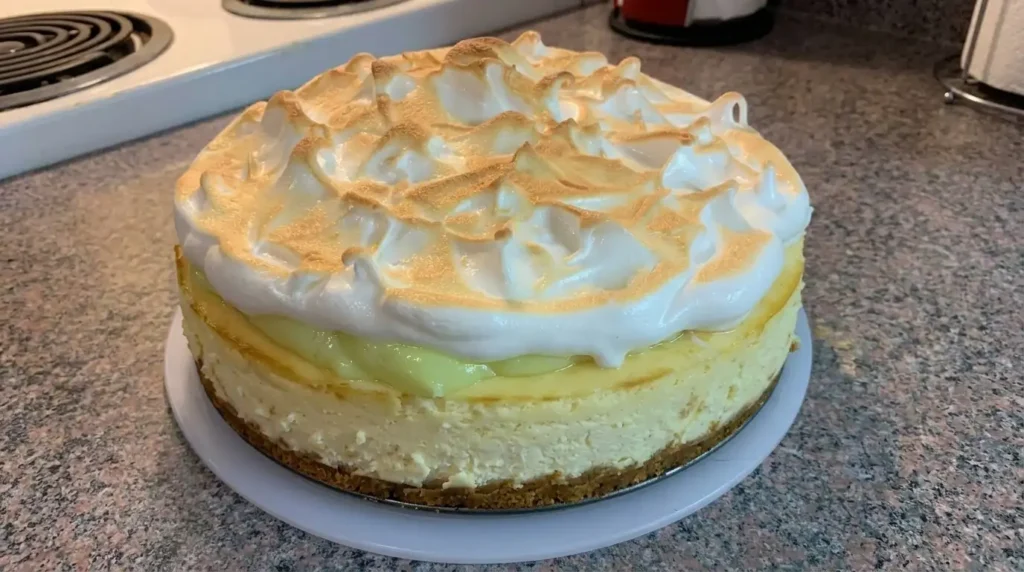
Lemon Meringue Cheesecake
Table of Contents
ToggleCreamy Lemon Meringue Cheesecake Recipe That Tastes Like Sunshine in Every Slice
There are certain desserts that stop a room. Not because they are showy or complicated, but because the first bite makes people put down their forks and just look at each other. This lemon meringue cheesecake is exactly that kind of dessert.
Picture a buttery graham cracker crust packed with a silky, tangy cream cheese filling that tastes like the best lemon curd you have ever had. Now imagine a billowy, torched meringue crown on top — golden at the peaks, soft and marshmallowy underneath. That contrast of textures, the crunch, the creaminess, the cloud-like top, is what makes this recipe genuinely unforgettable.
I made this for the first time on a warm spring afternoon when I needed something to bring to a dinner party and wanted to do better than a store-bought tart. Two hours later, I had something that looked bakery-level and tasted even better. The lemon cheesecake filling hits that perfect sweet-tart note. The toasted meringue adds a subtle smoky sweetness. Every element earns its place.
Why You’ll Love This
- The flavors are bold but balanced — sharp lemon, rich cream cheese, and sweet meringue work together without any one element taking over.
- It looks incredibly impressive but is more forgiving than it appears, especially if you use a water bath.
- You can make the cheesecake base a full day ahead, which takes all the pressure off on serving day.
- The toasted meringue topping means no raw egg white worry, and it adds that gorgeous golden finish that makes people reach for their phones before their forks.
- It works for almost any occasion, from a casual weekend dinner to a holiday centerpiece.
The Backstory
My husband’s mother is one of the most skeptical people I know when it comes to dessert. She has two rules: she does not like anything too sweet, and she does not trust cheesecake. “It’s always too heavy,” she says, every single time. I made this lemon meringue cheesecake for her birthday last year mostly as a personal challenge. She took one cautious bite, went quiet for a moment, and then helped herself to a second slice before anyone else had finished their first. She asked for the recipe before she left. That, honestly, is the highest praise this dessert has ever received, and I have served it at least a dozen times since.
What Makes It Special
- Fresh lemon juice and zest — bottled lemon juice simply cannot replicate the vibrant, aromatic punch that fresh citrus brings to the filling. Zesting the lemon before juicing it is non-negotiable.
- Full-fat cream cheese — this is not the place to cut fat. The richness carries the lemon flavor and gives the cheesecake its signature dense, velvety texture.
- Lemon curd swirl — a layer of bright, glossy lemon curd between the filling and the meringue adds another dimension of tart citrus flavor that deepens with every bite.
- Italian meringue — made with a hot sugar syrup rather than dry sugar, it is stable, glossy, and safe to eat without baking, which means you can torch it beautifully without worrying about the interior.
- Graham cracker and butter crust — simple, buttery, and slightly sandy in texture. It provides the structural base and a neutral sweetness that lets the lemon shine.
Making It Happen
Start with the crust. Crush about 200 grams of graham crackers until fine — a food processor works perfectly, or you can seal them in a zip-lock bag and roll with a pin. Mix the crumbs with melted butter and a small pinch of salt until the mixture resembles wet sand. Press this firmly into the bottom and about halfway up the sides of a 9-inch springform pan. Bake it at 325°F for about 10 minutes until it just begins to smell golden and nutty. Set it aside to cool while you work on the filling.
For the filling, beat the softened full-fat cream cheese with granulated sugar until completely smooth and free of lumps. This step matters. If your cream cheese is even slightly cold, lumps will form and they will not bake out. Once smooth, beat in the sour cream, fresh lemon juice, lemon zest, vanilla extract, and a pinch of salt. Add the eggs one at a time, mixing on low speed after each addition. Overbeating the eggs introduces air, and air causes cracks. Low and slow is the approach here.
Pour the filling into the prepared crust. If you have a jar of good-quality lemon curd, drop small spoonfuls across the top of the filling and drag a toothpick through them gently to create a swirl. This is optional but genuinely worth it.
Wrap the outside of the springform pan tightly in two layers of heavy-duty aluminum foil and place it in a larger roasting pan. Pour hot water into the roasting pan until it reaches about an inch up the sides of the springform. The water bath creates a humid, gentle baking environment that keeps the cheesecake surface from drying out or cracking.
Bake at 325°F for approximately 55 to 65 minutes. The cheesecake is done when the edges are set and the center still has a slight wobble, like gelatin. Turn off the oven, crack the door open, and let the cheesecake cool inside for one hour. Then remove it, let it cool completely at room temperature, and refrigerate for at least four hours, or overnight.
When you are ready to serve, make the Italian meringue. Combine sugar and water in a small saucepan and cook over medium heat, without stirring, until the syrup reaches 240°F on a candy thermometer. While the syrup cooks, begin whipping egg whites in a stand mixer with a pinch of cream of tartar until soft peaks form. Once the syrup hits temperature, carefully pour it in a slow, steady stream down the side of the mixer bowl while the machine runs. Continue beating on high until the meringue is thick, glossy, and holds stiff peaks, and the bowl feels cool to the touch.
Pile the meringue generously onto the chilled cheesecake. Use the back of a spoon to create sweeping peaks and swoops. Then run a kitchen torch over the surface in slow, even circles until the meringue peaks turn golden and the surface develops that characteristic toasted look. Serve immediately, or refrigerate for up to two hours before slicing.
You Must Know
- Room temperature ingredients are non-negotiable. Cold cream cheese or eggs will result in a lumpy batter and uneven baking. Take everything out of the refrigerator at least an hour before you start.
- Do not skip the water bath. It is the single most effective thing you can do to prevent cracks. Yes, it requires wrapping the pan in foil. Yes, it is absolutely worth it.
- Cool gradually. The oven cool-down step is not optional. A sudden temperature drop causes cheesecake to pull away from the sides and crack through the center.
- Make the cheesecake the day before. It needs time to fully set, and the flavor actually improves overnight in the fridge.
- Torch the meringue just before serving. Italian meringue is stable, but for the most dramatic presentation, add the meringue and torch it within a couple of hours of serving.
Serving Ideas and Pairings
Lemon meringue cheesecake does not need much company — it is a full statement on its own. Serve it on its own or with a light scattering of fresh berries alongside. Thinly sliced strawberries or a handful of fresh raspberries add color contrast and a fruity note that plays well against the tart lemon.
For beverages, a cold glass of limoncello served neat makes for an elegant pairing. If you prefer non-alcoholic options, sparkling water with a wedge of lemon works beautifully. Hot tea, particularly Earl Grey or chamomile, complements the citrus notes without competing. If you are serving this at brunch, a cold glass of fresh lemonade alongside it is genuinely excellent.
Make It Different
For a gluten-free version, swap the graham crackers for certified gluten-free digestive biscuits or almond flour mixed with a tablespoon of sugar and enough butter to bind. The texture will be slightly more crumbly but just as good.
For a lime variation, replace the lemon juice and zest entirely with fresh lime. Use a key lime curd if you can find one. The flavor profile shifts to something more tropical and sharp, which pairs beautifully with a coconut-spiked crust made by toasting shredded coconut with the cracker crumbs.
For a dairy-light version, use Neufchâtel cheese in place of full-fat cream cheese. The filling will be slightly less dense but still creamy. Replace the sour cream with full-fat Greek yogurt.
For extra citrus depth, add a teaspoon of orange zest alongside the lemon zest. It rounds out the flavor without overpowering the lemon. Blood orange works especially well in winter when the color contrast against the white meringue is stunning.
For individual servings, make the recipe in a standard muffin tin lined with parchment strips for easy removal. Reduce the bake time to about 20 to 25 minutes and check for that characteristic center wobble.
Storage and Reheating
Cover the finished cheesecake loosely with plastic wrap or a cake dome and refrigerate for up to four days. The meringue will slowly weep a little liquid after the first day, which is normal. It will still taste good.
If you plan to store it for more than a day, consider keeping the cheesecake and meringue separate. Store the baked, chilled cheesecake base covered in the refrigerator, then make and torch the meringue the day you plan to serve it.
Cheesecake does not reheat well and should always be served chilled or at cool room temperature. If it has been in the refrigerator and is very cold, let it sit out for about 20 minutes before serving to allow the texture to soften slightly.
You can freeze the cheesecake base without the meringue. Wrap it tightly in plastic wrap and then in foil and freeze for up to one month. Thaw overnight in the refrigerator and add the meringue fresh before serving.
Success Tips
The biggest hidden variable in cheesecake is oven calibration. Home ovens can run hotter or cooler than the dial suggests, sometimes by as much as 25 degrees. If you find your cheesecakes consistently overbake or crack, invest in an inexpensive oven thermometer. It makes a noticeable difference.
When pouring the hot sugar syrup into the whipping egg whites for the Italian meringue, aim for the space between the whisk and the bowl wall. If the syrup hits the whisk, it will spin out and harden on the sides of the bowl rather than incorporating into the meringue. Slow and steady wins here.
For the cleanest slices, dip your knife in hot water, wipe it dry, and cut. Repeat between each slice. The meringue will compress slightly under the knife but the filling will stay clean and defined if the cheesecake is fully chilled.
Finally, the quality of your lemon curd matters enormously. If you have time, make your own from scratch with butter, eggs, lemon juice, zest, and sugar. It takes about 15 minutes and the difference in brightness and richness is immediately obvious.
Frequently Asked Questions
Can I make this without a water bath? You can, but cracking is significantly more likely. If you choose to skip it, lower your oven temperature by about 25 degrees and place a pan of hot water on the oven rack below the cheesecake. It is not the same as a true water bath, but it adds some moisture to the oven environment.
Why did my meringue weep? Weeping usually happens when meringue sits for too long, especially if there is humidity in the air, or when the cheesecake surface was too cold when the meringue was applied. To minimize weeping, apply meringue to a cheesecake that has been sitting at room temperature for about 15 minutes, and torch it immediately.
Can I use store-bought lemon curd? Yes. Look for a brand made with real butter and real lemon juice rather than artificial flavoring. The lemon curd layer is thin, but the quality does come through in the final flavor.
What if I do not have a kitchen torch? You can place the meringue-topped cheesecake under a broiler set to high for two to three minutes. Watch it constantly and rotate the pan halfway through. It works, though you have less control over the browning than you do with a torch.
How far in advance can I make this? The baked cheesecake base keeps well for up to three days in the refrigerator before adding the meringue. The fully assembled cheesecake with meringue is best eaten within 24 hours of torching, though it will still taste good on day two.
RECIPE CARD
Recipe Name: Lemon Meringue Cheesecake
Prep Time: 40 minutes Cook Time: 1 hour 5 minutes (plus 1 hour oven resting time) Chill Time: 4 hours minimum (overnight recommended) Total Time: Approximately 6 hours (including chilling) Servings: 10 to 12 slices Category: Dessert Difficulty: Intermediate Cuisine: American / French-inspired Yield: One 9-inch cheesecake
Equipment:
- 9-inch springform pan
- Large roasting pan (for water bath)
- Stand mixer or hand mixer with whisk attachment
- Candy thermometer or instant-read thermometer
- Kitchen torch
- Rubber spatula
- Heavy-duty aluminum foil
- Small saucepan
Ingredients
For the Crust:
- 200 g (about 2 cups) graham cracker crumbs
- 85 g (6 tablespoons) unsalted butter, melted
- 1 tablespoon granulated sugar
- Pinch of salt
For the Lemon Cheesecake Filling:
- 680 g (3 blocks / 24 oz) full-fat cream cheese, softened to room temperature
- 200 g (1 cup) granulated sugar
- 120 g (1/2 cup) full-fat sour cream, room temperature
- 60 ml (1/4 cup) fresh lemon juice (about 2 large lemons)
- 1 tablespoon fresh lemon zest
- 1 teaspoon pure vanilla extract
- Pinch of fine salt
- 3 large eggs, room temperature
For the Lemon Curd Layer (optional but recommended):
- 120 g (about 1/2 cup) good-quality lemon curd, store-bought or homemade
For the Italian Meringue:
- 3 large egg whites, room temperature
- 200 g (1 cup) granulated sugar
- 60 ml (1/4 cup) water
- 1/4 teaspoon cream of tartar
Directions
Step 1 — Make the Crust Preheat your oven to 325°F (160°C). Combine the graham cracker crumbs, melted butter, sugar, and salt in a bowl and stir until the mixture resembles damp sand. Press firmly and evenly into the bottom and partway up the sides of your 9-inch springform pan. Bake for 10 minutes, then remove and allow to cool.
Step 2 — Prepare the Filling Beat the softened cream cheese on medium speed until completely smooth, about 3 to 4 minutes. Scrape down the bowl and add the sugar. Beat again until incorporated. Add the sour cream, lemon juice, lemon zest, vanilla, and salt, mixing on low until just combined. Add the eggs one at a time, mixing on low after each addition. Do not overmix.
Step 3 — Assemble and Add Lemon Curd Pour the filling over the cooled crust. Drop small spoonfuls of lemon curd across the top and use a toothpick to swirl lightly. Do not overswirl.
Step 4 — Bake in a Water Bath Wrap the outside of the springform pan securely in two layers of heavy-duty foil. Place in a large roasting pan and pour hot (not boiling) water into the roasting pan until it reaches about 1 inch up the sides of the springform. Bake at 325°F for 55 to 65 minutes. The edges should be set and the center should wobble gently.
Step 5 — Cool Gradually Turn off the oven and crack the door open. Leave the cheesecake inside for 1 hour. Remove, cool to room temperature, then refrigerate for at least 4 hours or overnight.
Step 6 — Make the Italian Meringue Combine sugar and water in a small saucepan. Cook over medium heat without stirring until the syrup reaches 240°F. Meanwhile, whip the egg whites and cream of tartar to soft peaks. With the mixer running on high, pour the hot syrup slowly down the side of the bowl. Continue beating until the meringue is thick, glossy, holds stiff peaks, and the bowl is cool to the touch.
Step 7 — Top and Torch Remove the cheesecake from the refrigerator and release the springform ring. Pile the meringue generously on top and use a spoon to create peaks and swoops. Use a kitchen torch to toast the meringue until golden at the tips. Serve immediately or refrigerate for up to 2 hours before serving.
Notes
- For the cleanest slices, dip your knife in hot water and wipe dry between each cut.
- The cheesecake base can be made up to three days ahead. Add the meringue on the day of serving.
- Homemade lemon curd makes a noticeable difference in flavor if you have time to make it.
- Do not substitute low-fat cream cheese. It will change the texture significantly.
- The meringue is made with a hot sugar syrup, which makes it safe to eat without additional baking.
Nutrition (Per Serving, Based on 12 Slices)
- Calories: Approximately 480 kcal
- Total Fat: 30 g
- Saturated Fat: 17 g
- Cholesterol: 130 mg
- Sodium: 310 mg
- Total Carbohydrates: 46 g
- Sugars: 38 g
- Protein: 7 g
Nutrition values are estimates and may vary based on specific ingredients used.
