
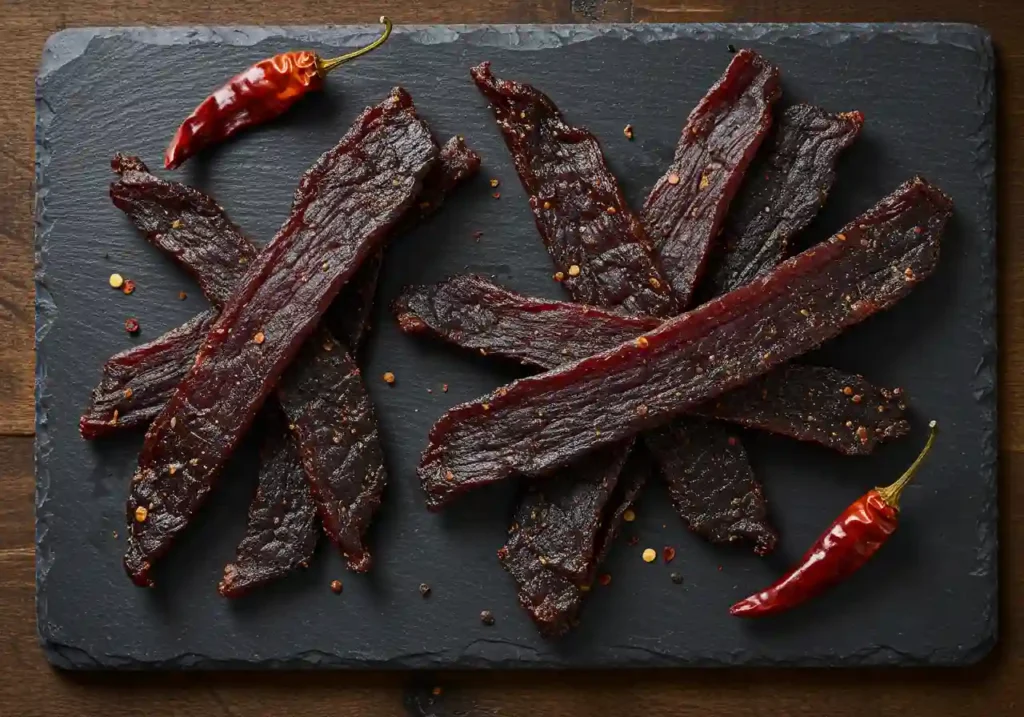
The Best Homemade Beef Jerky Recipe
Table of Contents
ToggleThe Best Homemade Beef Jerky Recipe: An Easy Oven Method
Introduction
There’s something profoundly satisfying about the slow, patient art of making beef jerky. It’s a ritual that fills your kitchen with the warm, smoky, and savory scent of anticipation. I remember my grandfather’s weathered hands carefully arranging thin strips of marinated beef on racks, a tradition passed down from his own father. This recipe is my homage to that legacy—a perfected, modern take on a timeless snack. It’s more than just food; it’s a connection to memory, a labor of love that results in the most incredibly flavorful, chewy, and protein-packed homemade beef jerky you’ll ever taste. Forget the overpriced, preservative-filled bags at the store; this is the real deal.
Why You’ll Love This Recipe
-
Unbeatable Flavor and Quality: You control the ingredients, resulting in a deeply savory, sweet, and smoky jerky with no artificial flavors or excessive sodium.
-
The Ultimate Protein-Packed Snack: Perfect for hiking, road trips, lunchboxes, or a healthy afternoon pick-me-up, this jerky is pure, high-quality fuel.
-
Surprisingly Simple to Make: While it requires patience, the process itself is straightforward and incredibly rewarding. Your oven does most of the work!
-
A Gift from the Heart: A bag of homemade jerky is a uniquely thoughtful and impressive gift for friends, family, and neighbors.
A Story of Success
I’ll never forget the time I brought a batch to a family gathering. My nephew, a notoriously picky eater who survives on a steady diet of plain pasta and chicken nuggets, eyed the jerky with suspicion. After some gentle coaxing, he tentatively took a small piece. His eyes widened. He quietly took another, then another. By the end of the night, he’d shyly asked his mom if they could “make the meat strips” at home. It was a quiet victory, proving that this homemade beef jerky recipe has a magic that can win over even the most hesitant of eaters.
What Makes It Special
This recipe stands out from the rest due to a few key ingredients and techniques:
-
The Sugar-Salt Balance: The combination of dark brown sugar and soy sauce creates a perfect harmony of sweet and salty that caramelizes slightly in the oven.
-
Smoky Depth: Smoked paprika delivers a gentle, smoky flavor that mimics traditional smoking without needing any special equipment.
-
The Secret for Tenderness: A small amount of unseasoned meat tenderizer (containing bromelain) helps break down the muscle fibers just enough, ensuring your jerky is delightfully chewy, not jaw-breakingly tough.
-
Thin, Even Slices: The tip of partially freezing the roast ensures you can achieve those perfect, paper-thin slices crucial for proper drying.
Making It Happen: The Process
The journey to incredible homemade beef jerky begins with selecting a lean cut of beef. Eye of round is ideal, as it’s lean and easy to slice. After a brief stint in the freezer to firm up, you’ll slice it with the grain into uniform strips. This is the most hands-on part, but a sharp knife and a little patience make all the difference.
Next, we build the marinade. In a bowl, the dark brown sugar, soy sauce, and Worcestershire sauce form a rich, umami-packed base. The smoked paprika, pepper flakes, and powders join the party, creating a complex, aromatic blend. Whisk it until the sugar dissolves and the sauce is smooth and inviting.
Now, the magic happens. Submerge all those beef slices into the marinade, ensuring every single piece is lovingly coated. Cover the bowl or transfer everything to a large resealable bag, and let the refrigerator work its magic overnight. This long, slow marination is non-negotiable—it’s what allows the flavors to penetrate deep into the meat.
When you’re ready to dry, preheat your oven to its lowest setting (175°F is perfect). Arrange the marinated strips in a single layer on wire racks set over baking sheets—this allows hot air to circulate all around the meat. Then, you wait. For three to four hours, your home will be filled with an irresistible aroma. Rotate the pans halfway through to ensure even drying. The finished jerky should be dark, leathery, and pliable—it should bend without breaking and feel dry to the touch.
You Must Know: Pro Tips for Success
-
Slice Against the Grain for Tenderness: For a more tender, easier-to-chew jerky, slice the meat against the grain instead of with it.
-
Patience is a Virtue: Do not rush the marinating time. Those 12-24 hours are critical for flavor development and tenderness.
-
The Cool Test: The best way to check for doneness is to remove a piece, let it cool completely to room temperature, and then test it. Jerky straight from the oven will always feel softer.
Serving Ideas
Enjoy your homemade beef jerky straight from the container as a powerful snack. For a hiking or camping trip, mix it with nuts and dried fruit for a classic trail mix. It also makes a fantastic addition to a charcuterie board, pairing wonderfully with sharp cheddar, crisp apples, and hearty crackers. For a drink pairing, a cold craft lager, an iced black coffee, or even a bold red wine like Zinfandel complement its savory-sweet profile beautifully.
Make It Different: Customize Your Jerky
-
Spice Level: Control the heat by adjusting the red pepper flakes. Add a pinch of cayenne pepper for an extra kick.
-
Liquid Aminos: For a gluten-free version, substitute the soy sauce with an equal amount of liquid aminos or tamari.
-
Sweetness: You can reduce the brown sugar by a quarter cup for a less sweet, more savory jerky.
-
Flavor Twists: Add two tablespoons of liquid smoke to the marinade for a more intense smokiness, or a tablespoon of sriracha for a sweet and spicy glaze.
Storage and Reheating Tips
Store your completely cooled jerky in an airtight container, ziplock bag, or glass jar. Properly dried jerky will keep at room temperature for about 1 week. For longer storage, keep it in the refrigerator for up to 2 months, or in the freezer for up to 6 months. If your jerky loses a little of its snap after storage, you can crisp it up by placing the strips on a baking sheet in a 175°F oven for 10-15 minutes.
Success Tips
-
Trim All Fat: Be meticulous about trimming every bit of fat and silver skin from the roast. Fat does not dry out and can cause jerky to spoil faster.
-
Uniformity is Key: Try your best to slice all pieces to the same thickness. This ensures they all finish drying at the same time.
-
Don’t Overcrowd: Arrange the strips on the racks so they are not touching. Overcrowding will lead to steaming instead of drying.
Frequently Asked Questions (FAQ)
Q: Can I use a different cut of beef?
A: Absolutely! While eye of round is ideal, other lean cuts like top round, bottom round, or flank steak will work well. Just remember to trim all visible fat.
Q: Do I really need to use meat tenderizer?
A: It’s highly recommended for achieving a tender chew, but you can omit it if you cannot find it. The jerky may be slightly tougher, but still delicious.
Q: Can I make this in a dehydrator instead?
A: Yes! Follow all steps for prepping and marinating. Then, arrange the strips on your dehydrator trays and dehydrate at 160°F for 4-6 hours, checking periodically for doneness.
Q: How do I know when the jerky is done?
A: The jerky is done when it is dry and leathery to the touch. It should be pliable and bend without breaking, and it should not feel soft or moist in the center when you tear a piece.
Q: Why is my jerky too crispy?
A: Crispy jerky is a sign that it has been over-dried. It likely stayed in the oven too long. Check it earlier next time, remembering it will firm up slightly as it cools.
The Best Homemade Beef Jerky Recipe
| Prep Time: | 30 minutes (plus 12 hours marinating) |
| Cook Time: | 4 hours |
| Total Time: | 16 hours 30 minutes |
| Category: | Snack |
| Difficulty: | Easy |
| Cuisine: | American |
| Yield: | About 1 pound of jerky |
Ingredients
-
1 (3-pound) eye of round roast, trimmed of all fat and silver skin
-
1 cup (packed) dark brown sugar
-
1 cup soy sauce (or liquid aminos for gluten-free)
-
3 tablespoons Worcestershire sauce
-
1 tablespoon smoked paprika
-
1 teaspoon unseasoned meat tenderizer (like McCormick’s)
-
1 teaspoon freshly ground black pepper
-
1 teaspoon red pepper flakes
-
1 teaspoon onion powder
-
½ teaspoon garlic powder
Instructions
-
Prepare the Meat: Place the trimmed roast in the freezer for 1-2 hours until it is firm but not frozen solid. This makes slicing much easier.
-
Slice the Meat: Using a very sharp knife, slice the meat into strips between ⅛ and ¼ inch thick. For a more tender jerky, slice against the grain. For a chewier jerky, slice with the grain.
-
Make the Marinade: In a medium bowl, combine the dark brown sugar, soy sauce, Worcestershire sauce, smoked paprika, meat tenderizer, black pepper, red pepper flakes, onion powder, and garlic powder. Whisk vigorously until the sugar is completely dissolved.
-
Marinate: Place the beef strips in a large bowl or resealable plastic bag. Pour the marinade over the meat, ensuring all pieces are submerged. Cover the bowl or seal the bag, and refrigerate for at least 12 hours, or ideally overnight. Toss or flip the bag once or twice during this time.
-
Preheat Oven: Preheat your oven to 175°F (or its lowest setting). Line two large baking sheets with aluminum foil for easy cleanup and place a wire rack on top of each sheet.
-
Arrange for Drying: Remove the beef strips from the marinade, letting any excess drip off. Arrange the strips in a single layer on the wire racks, ensuring they do not touch.
-
Dry the Jerky: Place both baking sheets in the oven. Dry for 3 to 4 hours, rotating the pans from top to bottom and front to back halfway through the cooking time.
-
Check for Doneness: The jerky is done when it is dark, dry to the touch, and leathery. It should bend without breaking. For the best test, remove a piece, let it cool completely, and then check its texture.
-
Cool and Store: Let the jerky cool completely on the wire racks. Once cool, transfer to an airtight container or bag and store as directed.
Allergy Info:
Contains soy and wheat (from soy sauce and Worcestershire). Use gluten-free tamari and gluten-free Worcestershire sauce to make this recipe gluten-free.
Nutrition (per 1 oz serving):
Calories: 70 | Fat: 1g | Carbohydrates: 5g | Sugar: 4g | Protein: 9g | Sodium: 450mg
Note: Nutrition is an estimate and will vary based on specific ingredients and portion sizes.
