
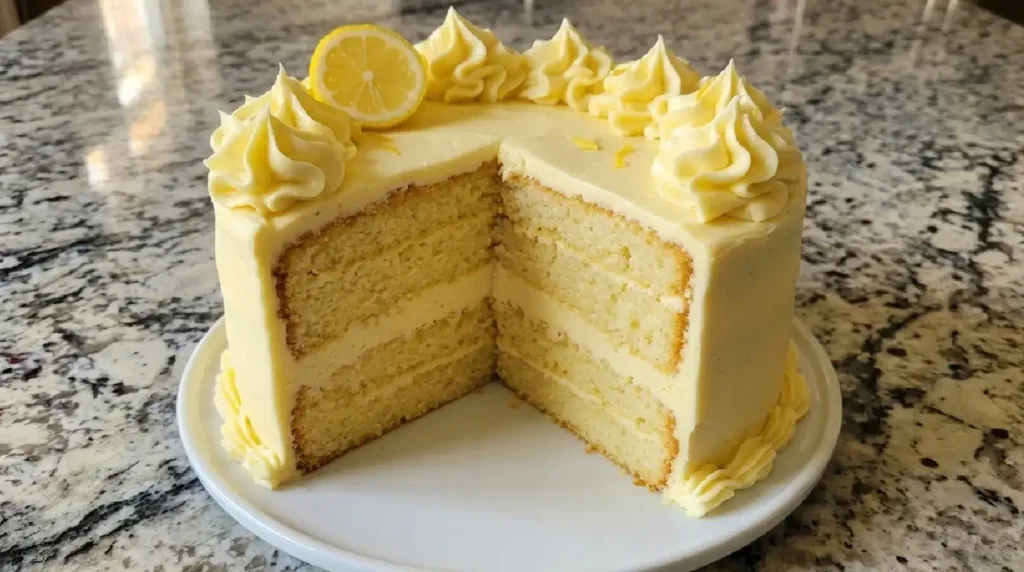
Vanilla Lemon Layer Cake
There’s a certain kind of magic that happens when you pair the warm, comforting embrace of vanilla with the bright, sunny zing of lemon. This Vanilla Lemon Layer Cake is the embodiment of that magic. I first made it for a friend’s spring garden party, hoping for something that felt both elegant and joyful. What emerged from my kitchen was more than just a cake; it was a conversation piece. The moment someone cut into it, revealing the brilliant yellow curd nestled between tender vanilla layers, and the first bite melted in their mouth, I knew this recipe was a keeper. It’s a labor of love, yes, but one that pays you back in pure, unadulterated delight.
Table of Contents
ToggleWhy You’ll Love This Vanilla Lemon Layer Cake
-
It’s a Perfect Flavor Balance: The rich, floral notes of real vanilla bean create a beautiful foundation that makes the tangy, homemade lemon curd pop without being overly sharp.
-
Impresses Without Effort: The stunning visual of the layered curd inside a pristine white cake makes it look like it came from a professional bakery, guaranteeing “wows” from your guests.
-
Textural Heaven: You get the super-moist, tender crumb of the cake, the silky-smooth intensity of the curd, and the impossibly light, creamy buttercream all in one forkful.
-
Make-Ahead Friendly: Every component can be made days in advance, taking the stress out of assembling a beautiful dessert for a special occasion.
I’ll never forget serving this to my uncle, a man whose dessert preferences begin and end with plain chocolate ice cream. He eyed the cake with suspicion, took a small sliver, and then proceeded to quietly help himself to a second, much larger slice. “It’s not too sweet,” he grumbled, which from him is the highest possible praise. It’s a cake that wins over even the most stubborn of skeptics.
What Makes It Special
The magic of this layer cake isn’t an accident. It’s built on a foundation of quality ingredients, each playing a crucial role.
-
Real Vanilla Bean: Scraping the tiny seeds from a vanilla bean pod might seem like a small step, but it infuses the cake with a depth and aromatic complexity that vanilla extract alone can’t achieve.
-
Fresh Lemon Juice & Zest: Using freshly squeezed lemon juice and the zest of three whole lemons is non-negotiable. The zest is where the potent, fragrant citrus oils live, giving the curd its powerful, sunny flavor.
-
Italian Meringue Buttercream: While it requires a candy thermometer, this style of buttercream is less sweet than its American counterpart and has an ethereally light, silky texture that melts on the tongue.
-
Cake Flour: Using cake flour instead of all-purpose is the secret to a delicate, soft, and tender cake crumb that doesn’t feel dense.
Making It Happen: A Step-by-Step Narrative
This recipe is a journey, so let’s break it down into three acts: the cake, the curd, and the buttercream.
First, the Vanilla Bean Cake. Start by preheating your oven and preparing your pans. In the bowl of your stand mixer, you’ll whisk together your dry ingredients. Now for the star: split your vanilla bean and scrape those fragrant black seeds into the bowl, along with the soft butter and most of the milk. Mixing this on low first, then high, will creamilize the mixture, giving you an incredibly light base. In a separate bowl, gently whisk the egg whites with the remaining milk and vanilla extract. Adding this in stages ensures a smooth, perfectly emulsified batter. Divide it among your pans and bake until the tops are springy and a lovely pale gold.
While the cakes cool, craft the Lemon Curd. This is where the vibrant heart of the cake comes to life. In a saucepan, you’ll melt half the butter with sugar, lemon zest, and that glorious fresh juice. In a separate bowl, whisk the egg yolks and remaining sugar. This next step is key: you’ll slowly temper the hot lemon mixture into the egg yolks, whisking constantly to avoid scrambling them. Returning it all to the heat lets it thicken into a luxurious, tangy custard. Straining it ensures a perfectly silky texture, and pressing plastic wrap directly on the surface prevents a skin from forming as it chills.
Finally, the Italian Meringue Buttercream. This is the most technical part, but don’t be intimidated. You’ll start by cooking sugar and water to a soft-ball stage (238°F on a candy thermometer). As it heats, whip your egg whites to soft peaks. Once the sugar syrup is ready, you’ll slowly pour it down the side of the bowl into the whipping egg whites. The hot syrup cooks the eggs, creating a stable, glossy meringue. Keep whipping until the bowl feels cool to the touch. Then, and only then, do you begin adding the soft butter, one piece at a time. It might look soupy or curdled for a moment, but have faith—keep whipping, and it will suddenly transform into a voluminous, dreamily smooth buttercream.
Assembly is your moment of glory. Place your first cake layer on a stand and pipe a “dam” or wall of buttercream around the outer edge. This is your barrier that will hold the lemon curd in place. Spoon a generous layer of curd inside this wall, then top with the next cake layer and repeat. Once the final layer is on, use the remaining buttercream to create a beautiful, smooth finish over the entire cake.
You Must Know: Tips for Success
-
Ingredient Temperature is Crucial: Your butter for the cake and buttercream, as well as your eggs for the meringue, must be at true room temperature for proper emulsification and volume.
-
Don’t Rush the Meringue: The egg white and sugar meringue must be completely cool to the touch before you add the butter, or the heat will melt the butter and your frosting will not come together.
-
The Buttercream “Curdle” is Normal: When you first add the butter to the meringue, it may look separated and curdled. Do not stop mixing! Just keep the mixer going on medium-high, and it will suddenly whip into a smooth, creamy perfection.
-
Chill Before Serving: Let the assembled cake chill in the refrigerator for at least an hour before slicing. This firms everything up, allowing for clean, beautiful slices that showcase the layers.
Serving Your Masterpiece
This vanilla lemon layer cake is a star on its own, but a few simple accompaniments can elevate it further. Serve it with a cup of strongly brewed English Breakfast tea or a lightly sparkling Prosecco to cut through the richness. For a truly decadent touch, a few fresh raspberries or a drizzle of a simple raspberry coulis on the plate complements the citrus notes beautifully.
Make It Different: Customization Ideas
-
For a Flavor Twist: Add a tablespoon of poppy seeds to the cake batter for a classic lemon-poppy seed variation. A thin layer of seedless raspberry jam under the lemon curd is also divine.
-
For a Dietary Swap: To make a dairy-free version, use high-quality plant-based butter and milk. The lemon curd can be made with a dairy-free butter alternative as well.
-
For a Simpler Frosting: If the Italian meringue feels like a step too far, a simple Swiss meringue buttercream or even a whipped cream cheese frosting would be lovely.
Storing Your Vanilla Lemon Layer Cake
Store the cake, covered in a cake carrier or loosely tented with plastic wrap, in the refrigerator for up to 4 days. Because of the buttercream and curd, it should not be left out at room temperature for more than a few hours. The cake can also be frozen, whole or in slices. Wrap it tightly in several layers of plastic wrap and then aluminum foil. Thaw overnight in the refrigerator before serving.
Frequently Asked Questions
1. Can I use all-purpose flour instead of cake flour?
You can, but the texture will be slightly denser. For a closer result, replace 2 tablespoons of every cup of all-purpose flour with cornstarch to mimic the lower protein content of cake flour.
2. My lemon curd is too runny. What happened?
It likely needed another minute or two on the heat. It should coat the back of a spoon, and you should be able to draw a clear line through it with your finger. If it’s runny, you can gently reheat it while whisking until it thickens further.
3. Can I make this into cupcakes?
Absolutely! Divide the cake batter into lined muffin tins and bake for 18-22 minutes. Core the center of the cooled cupcakes, fill with lemon curd, and top with a swirl of buttercream.
4. I don’t have a stand mixer. Can I make this by hand?
You can, but it will require some elbow grease, especially for the buttercream. A strong hand mixer is a good alternative for the cake and meringue steps.
5. The buttercream is too soft and soupy. How can I fix it?
This usually means the meringue was still too warm when the butter was added. Pop the entire bowl into the refrigerator for 15-20 minutes, then re-whip. It should come together.
Recipe Card: Vanilla Lemon Layer Cake
Prep time: 1 hour 30 minutes
Cook time: 30 minutes
Total time: 2 hours (plus chilling time)
Category: Dessert
Difficulty: Intermediate
Cuisine: American
Yield: One 8-inch, 3-layer cake (12 servings)
Ingredients
For the Vanilla Bean Cake:
▢3 cups cake flour (325 grams)
▢2 cups sugar (400 grams)
▢4 ½ teaspoons baking powder (12 grams)
▢½ teaspoon salt (2 grams)
▢1 vanilla bean
▢1 cup + 2 tablespoons unsalted butter, at room temperature (254 grams)
▢1 ⅓ cup whole milk (11 fl oz)
▢5 large egg whites
▢1 tablespoon vanilla extract
For the Lemon Curd:
▢1 cup unsalted butter, cut into cubes (113 grams)
▢1 cup granulated sugar (230 grams)
▢1 cup freshly squeezed lemon juice (8 fl oz, about 3-4 lemons)
▢Zest of 3 lemons
▢10 large egg yolks
For the Italian Meringue Buttercream:
▢1 cup granulated sugar (230 grams)
▢¼ cup water (2 fl oz)
▢4 large egg whites
▢2 cups unsalted butter, at room temperature (1 pound, 452 grams)
▢1 tablespoon vanilla extract
Instructions
-
For the Cake: Preheat oven to 350°F (175°C). Grease, flour, and line three 8-inch round cake pans with parchment paper.
-
In the bowl of a stand mixer fitted with the paddle attachment, combine cake flour, sugar, baking powder, and salt. Mix on low for 30 seconds to combine.
-
Split the vanilla bean and scrape the seeds into the dry ingredients. Add the soft butter and 1 cup of the milk. Mix on low until combined, then increase speed to high and beat for 3-4 minutes until light and fluffy, scraping the bowl as needed.
-
In a separate bowl, whisk the remaining ⅓ cup of milk with the egg whites and vanilla extract. Add this mixture to the batter in three parts, mixing on medium speed until just combined after each addition.
-
Divide the batter evenly between the prepared pans. Bake for 28-32 minutes, or until a toothpick inserted into the center comes out clean. Let cool in pans for 10 minutes before inverting onto a wire rack to cool completely.
-
For the Lemon Curd: In a medium saucepan, combine ½ cup of the butter, ½ cup of the sugar, lemon zest, and lemon juice. Heat over medium, stirring until the butter melts and sugar dissolves. Bring to a gentle boil.
-
In a heatproof bowl, whisk the egg yolks with the remaining ½ cup of sugar. Slowly pour the hot lemon mixture into the egg yolks while whisking constantly. Return the entire mixture to the saucepan.
-
Cook over medium-low heat, stirring constantly, for 4-5 minutes until the curd has thickened enough to coat the back of a spoon. Remove from heat and stir in the remaining ½ cup of butter until melted and smooth.
-
Strain the curd through a fine-mesh sieve into a bowl. Press plastic wrap directly onto the surface and refrigerate for at least 30 minutes, or until firm.
-
For the Buttercream: Combine sugar and water in a small saucepan over medium heat. Bring to a boil, stirring to dissolve sugar. Once boiling, stop stirring and attach a candy thermometer. Cook until it reaches 238°F (114°C).
-
Meanwhile, in a clean stand mixer bowl with the whisk attachment, whip the egg whites on medium-high speed until soft peaks form.
-
Once the sugar syrup is at temperature, with the mixer running on medium speed, slowly and carefully pour the hot syrup in a thin stream down the side of the bowl into the whipping egg whites.
-
Increase speed to high and whip until the meringue is glossy, stiff, and the bowl feels cool to the touch (about 10-15 minutes).
-
Switch to the paddle attachment. With the mixer on medium speed, add the soft butter, one tablespoon at a time, waiting until each piece is incorporated before adding the next. The mixture may look curdled, but it will become smooth. Once all butter is added, add the vanilla and whip on high for 2-3 minutes until smooth and creamy.
-
To Assemble: Place one cake layer on a serving plate. Pipe a border of buttercream around the top edge. Spread about 1 cup of lemon curd inside the border. Top with the second cake layer and repeat. Place the final cake layer on top.
-
Use the remaining buttercream to frost the top and sides of the cake. Chill for at least 1 hour before slicing. Serve at room temperature.
