
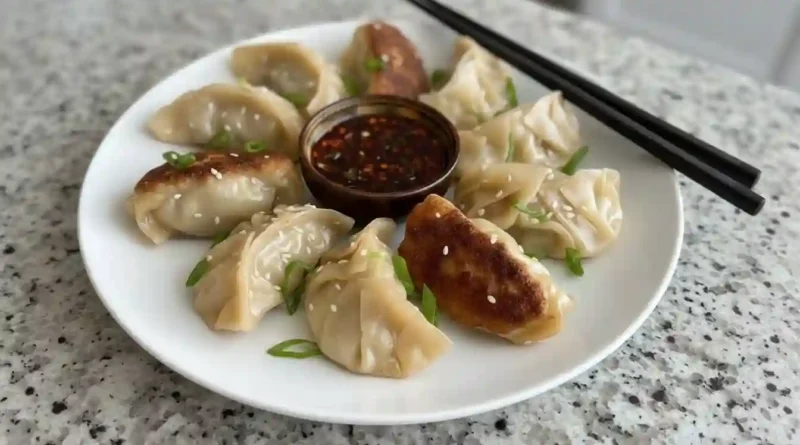
Best Pan Fried Chicken Dumplings
Best Pan Fried Chicken Dumplings (Potstickers) Recipe: Crispy and Juicy
There is a specific sound that signals the start of a great meal: the aggressive sizzle of a dumpling hitting a hot, oiled pan. It promises a golden, crispy bottom that shatters slightly when you bite into it, giving way to a tender wrapper and a savory, juicy filling. Making Pan Fried Chicken Dumplings, or potstickers, has become something of a ritual in my kitchen. It is one of those meals that feels therapeutic to assemble—a tactile break from screens and stress—resulting in a dish that feels incredibly generous.
The beauty of this chicken potsticker recipe lies in the balance. While pork is traditional, chicken offers a lighter vessel for the punchy aromatics like ginger, garlic, and sesame oil. I started making these when I wanted something that felt like comfort food but didn’t leave me feeling heavy. The result is a savory, aromatic dumpling that disappears from the plate faster than you can fry the next batch.
Why You’ll Love This
-
Texture Heaven: You get the best of both worlds with the “fry-steam-fry” method. The bottoms are deeply golden and crunchy, while the tops remain soft and chewy.
-
Meal Prep Gold: These freeze beautifully. You can make a massive batch on a Sunday and cook them straight from the freezer on a busy Tuesday night.
-
Flavor Bomb: By using chicken bouillon and oyster sauce inside the meat mixture, every bite is seasoned from the inside out. No bland fillings here.
-
Lighter Option: Using ground chicken creates a filling that is juicy but not greasy, making them easy to eat by the dozen.
The Unexpected Fan
I once served these to a friend who is notoriously devoted to red meat and generally skeptical of anything labeled “ground chicken.” He usually associates chicken fillings with being dry or flavorless. I didn’t say anything; I just set the plate of steaming, golden-brown potstickers down with a side of chili oil and soy sauce. After the first bite, the conversation completely stopped. He finished his share and then casually pulled the serving platter closer to his side of the table. He couldn’t believe how juicy the filling was, thanks largely to the napa cabbage and sesame oil. Now, he asks for the “chicken ones” specifically whenever he comes over.
What Makes It Special
-
Napa Cabbage: This isn’t just filler. The cabbage adds essential moisture and a subtle sweetness that keeps the lean chicken tender.
-
Chicken Bouillon: This is the secret weapon. It amplifies the poultry flavor and adds a savory depth that salt alone cannot achieve.
-
Fresh Aromatics: We use a heavy hand with fresh ginger, garlic, and green onions. This trio cuts through the richness and provides that signature dumpling shop scent.
-
Oyster Sauce: This adds a rich, caramel-colored umami kick that binds the flavors together.
Making It Happen
The process of making dumplings is actually quite simple once you get into the rhythm. It starts with the cabbage. You have to treat it right by salting it and letting it sit. This draws out the excess water. If you skip this, your dumplings will be soggy and fall apart. Once the cabbage has wept its moisture, rinse the salt off and squeeze it aggressively—really wring it out like a towel.
Next, you build the flavor. In a large bowl, combine your ground chicken with that prepped cabbage and the rest of the ingredients: the scallions, garlic, ginger, and sauces. Here is a pro move: before you fold dozens of dumplings, take a tiny piece of the meat mixture and fry it in a pan. Taste it. Does it need more pepper? More soy? Adjust it now.
Then comes the folding. Set up a station with a small bowl of water and your wrappers. Place a spoonful of filling in the center, wet the edges, and fold. You can do simple pleats—folding the front wrapper toward the center while pressing it against the back flat wrapper—or just seal them into half-moons if you are in a rush. The taste is the same!
Finally, the cooking method is what turns a dumpling into a potsticker. You sear the bottoms in oil until they are crispy and golden. Then, you introduce water to the hot pan and cover it immediately. The steam cooks the dough and the meat through. Once the water evaporates, let them fry for another minute to re-crisp the bottom.
You Must Know
-
Squeeze the Cabbage: I cannot stress this enough. If the cabbage is wet, the filling shrinks and releases water during cooking, separating the meat from the wrapper.
-
Cover the Wrappers: Dumpling skins dry out incredibly fast. Keep a damp paper towel over your stack of wrappers and your finished dumplings while you work.
-
Don’t Overfill: It is tempting to stuff them, but a bursting dumpling loses its juices in the pan. stick to a small spoonful.
-
The Sizzle Test: When you add the water for steaming, the oil will splatter if you aren’t quick with the lid. Have the lid in one hand and the water in the other.
Serving Ideas
These chicken dumplings are a meal on their own, but they play well with sides. I love serving them with a smashed cucumber salad dressed in vinegar and garlic to cut through the savory notes. Steamed jasmine rice or baby bok choy with oyster sauce are also excellent companions.
For drinks, you want something that cleanses the palate. An ice-cold lager is the classic pairing, but a crisp, dry Riesling or a sparkling ginger soda also works wonders with the ginger and garlic notes in the filling.
Make It Different
-
Spicy Kick: Add a tablespoon of chili crisp or chopped fresh chilies directly into the meat mixture for heat from within.
-
Mushroom Umami: If you want to stretch the meat or add earthiness, finely chopped shiitake mushrooms are a fantastic addition.
-
Turkey Swap: Ground turkey works almost identically to chicken in this recipe if that is what you have on hand.
-
Gluten-Free: You can make this filling gluten-free by using tamari instead of soy sauce and finding gluten-free wrappers (or making your own with rice flour), though the texture of the wrapper will differ.
Storage and Reheating
Freezing: This is the best way to store them. Line a baking sheet with parchment paper and lay the uncooked dumplings out in a single layer, ensuring they aren’t touching. Freeze them until solid (about an hour), then transfer them to a freezer bag. They will keep for 3 months. Cook them straight from frozen; just add an extra minute or two to the steaming time.
Reheating: Avoid the microwave; it makes the dough gummy. Reheat cooked dumplings in a pan with a little oil to crisp up the bottom again, adding a splash of water to steam them through.
Success Tips
-
Non-Stick is King: Unless you are a seasoned pro with a cast iron or carbon steel wok, use a non-stick pan to ensure the “potstickers” don’t stick too much to the pot.
-
Cold Filling: If the meat mixture is cold, it is easier to handle and fold. You can mix the filling an hour ahead and chill it.
-
Space Them Out: When cooking, leave a little space between dumplings. If they touch while the dough is wet and steaming, they will fuse together and tear when you try to separate them.
Frequently Asked Questions
Can I bake these instead of pan-frying?
While you can bake them, the texture will be more like a crunchy pastry than a traditional dumpling. You miss out on the soft, steamed top. If you want to avoid frying, boiling them (for water dumplings) is a better alternative.
Why is my filling tough?
This usually happens if the meat is over-mixed or if there isn’t enough fat/moisture. The sesame oil and the napa cabbage are crucial for tenderness. Also, avoid buying ultra-lean ground chicken breast; a mix with some dark meat is better.
What kind of wrappers should I buy?
Look for “Gyoza” or “Potsticker” wrappers (usually circular) in the refrigerated section. Wonton wrappers (usually square) are thinner and better for soups, but they can work in a pinch if you trim the corners.
My dumplings are sticking to the pan and tearing. What did I do wrong?
This usually means the heat was too high or you tried to move them too soon. Let the crust form fully before adding water. Also, ensure you have enough oil in the pan initially.
Do I need to cook the meat before filling?
No, the meat goes in raw. It cooks perfectly during the steaming portion of the process.
Recipe Card
Prep time: 45 minutes
Cook time: 15 minutes
Total time: 1 hour
Servings: 6
Category: Dinner / Appetizer
Difficulty: Intermediate
Cuisine: Asian Fusion
Yield: 40-50 dumplings
Equipment
-
Large mixing bowl
-
Non-stick frying pan with lid
-
Knife and cutting board
-
Baking sheet (for freezing)
Ingredients
-
1 lb ground chicken
-
1 lb circular dumpling wrappers
-
2 cups napa cabbage, chopped
-
1 tsp salt (for sweating cabbage)
-
4 green onions, sliced
-
6 garlic cloves, minced
-
2 inch piece of ginger, minced
-
1 tbsp soy sauce
-
1 tbsp oyster sauce
-
1 tbsp sesame oil
-
1 tbsp chicken bouillon
-
1 tsp white pepper
-
For serving: Dumpling dipping sauce, green onions, sesame seeds
Instructions
-
Prep the Cabbage: Add the chopped napa cabbage and salt to a bowl. Toss to coat evenly. Let it sit for 10 minutes to draw out the moisture. Rinse the salt off thoroughly with cold water, then squeeze the cabbage firmly with your hands or a cheesecloth to release excess moisture. It should be relatively dry.
-
Make the Filling: In a large bowl, combine the ground chicken, prepared napa cabbage, green onions, minced garlic, minced ginger, soy sauce, oyster sauce, sesame oil, chicken bouillon, and white pepper. Mix until well combined and the mixture looks sticky.
-
Taste Test: Pan fry a small, coin-sized piece of the filling. Taste it and adjust the seasoning (salt, soy, or pepper) to your liking before you start folding.
-
Fold the Dumplings: Set up a workspace with a small bowl of water. Hold a wrapper in your hand and wet the edges with your finger. Place a small spoonful of filling in the center. Fold the wrapper in half over the filling. Pinch the center, then make about 3 pleats on the front side of the wrapper towards the middle, pressing against the flat back side. Repeat on the other side. Pinch the top firmly to seal.
-
Protect the Dough: Keep your stack of wrappers and the finished folded dumplings covered with a damp towel or plastic wrap so they don’t dry out and crack while you work.
-
Pan Fry: Heat a drizzle of oil in a non-stick pan over medium heat. Arrange dumplings in the pan (about 10-12 at a time, do not overcrowd). Sear for about 2 minutes until the bottoms are golden brown.
-
Steam: Carefully add just enough water to cover the bottom of the pan (about 1/4 cup). Immediately cover with a lid. Steam for 5 minutes.
-
Finish: Remove the lid. If there is water left, let it boil off. Allow the dumplings to fry for another minute to re-crisp the bottoms.
-
Serve: Plate the potstickers immediately, garnished with sesame seeds and green onions, alongside your favorite dipping sauce.
Notes
If cooking from frozen, do not thaw the dumplings first. Place frozen dumplings into the hot oil and simply increase the steaming time to 7-8 minutes.
Nutrition
Calories: 280kcal (per serving of 6-7 dumplings) | Carbohydrates: 32g | Protein: 18g | Fat: 9g | Sodium: 750mg | Fiber: 2g
