
Moist and Tender Brown Butter Cornbread Recipe
Table of Contents
ToggleThis Brown Butter Trick Makes The Most Incredible Cornbread
I used to think of cornbread as a side note, a humble accompaniment to a bowl of chili or a plate of ribs. That was until a chilly autumn afternoon when I decided to experiment. I browned a stick of butter on a whim, letting it turn a deep, nutty amber, and folded it into my classic batter. The result wasn’t just cornbread; it was a revelation. The moment it came out of the oven, the kitchen was filled with an aroma that was both sweet and deeply savory. The first bite was a study in contrasts: a crispy, golden crust giving way to an impossibly moist and tender crumb that practically melted on the tongue. This moist and tender brown butter cornbread recipe became an instant staple, the kind of dish you make once and are then forever asked to bring to every gathering.
Why You’ll Love This Brown Butter Cornbread
-
Unforgettable Flavor: Brown butter adds a rich, nutty depth that transforms this from a simple quick bread into something truly sophisticated.
-
Perfect Texture: The combination of sour cream and buttermilk guarantees a supremely moist and tender crumb with no hint of dryness.
-
Surprisingly Simple: While it tastes like it came from a professional bakery, the method is straightforward and uses simple pantry ingredients.
-
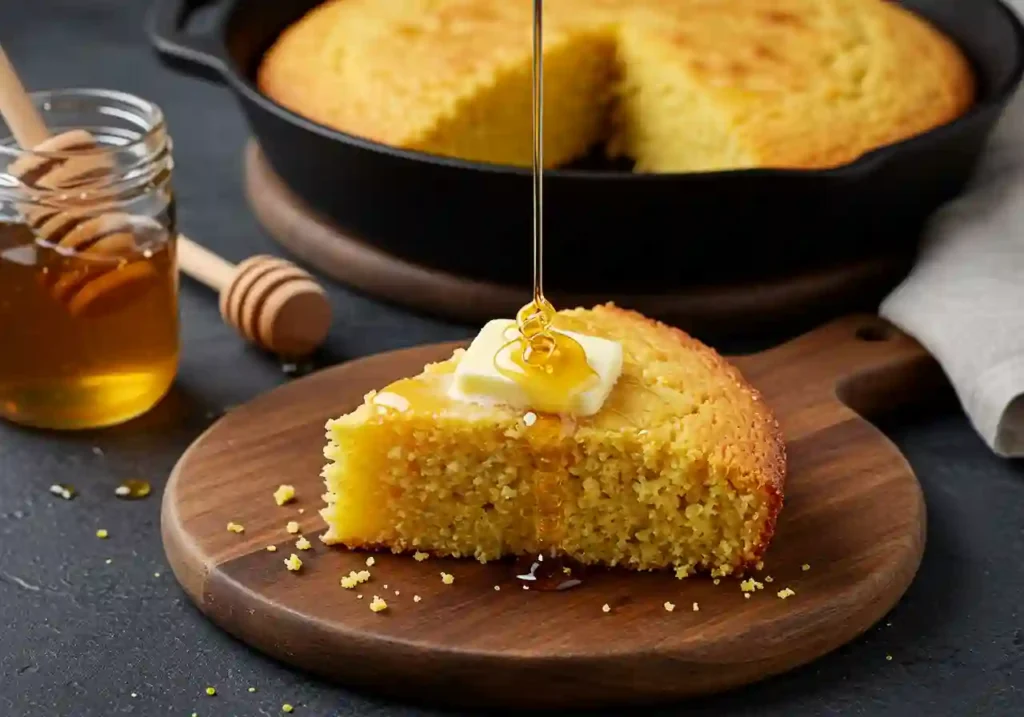
The Ultimate Comfort Food: Serve it warm from the skillet with a pat of butter and a drizzle of honey for a truly soul-satisfying experience.
A Convert at the Table
I’ll never forget serving this to my friend’s son, a renowned picky eater who viewed anything unfamiliar with deep suspicion. He eyed the skillet warily, but the golden crust and warm smell won him over. He took a small, hesitant bite. Then another. Before long, he’d eaten an entire wedge and quietly asked for another. His mother looked at me, astonished. “He never eats cornbread,” she whispered. It’s a testament to the magic of brown butter—it creates a flavor so compelling, it can win over even the toughest critic.
What Makes It Special
-
Brown Butter: This is the star. Lightly toasting the milk solids in the butter creates a complex, nutty aroma that is the soul of this recipe.
-
Cultured Buttermilk: Its slight tanginess balances the sweetness and adds incredible tenderness to the crumb.
-
Sour Cream: This is the secret weapon for moisture, contributing a rich creaminess that ensures every single bite is lush and never dry.
-
Cast Iron Skillet: Baking in a preheated skillet creates an irresistibly crispy, golden crust that you simply can’t get from a regular pan.
Making It Happen: A Step-by-Step Narrative
Start by placing your stick of butter right into a cold 10-inch cast iron skillet. Pop the whole thing into a 425°F oven and let the oven do the work of melting and browning the butter. You’ll know it’s ready when it smells wonderfully nutty and has little brown bits at the bottom. Carefully pull the skillet out—the handle will be very hot!
Pour that gorgeous browned butter into a heatproof bowl, leaving just a tablespoon behind in the hot skillet to grease it. In a large bowl, whisk together your dry ingredients: the cornmeal, flour, sugar, salt, baking powder, and baking soda. In another bowl, whisk the eggs, sour cream, and buttermilk until smooth. Now, slowly whisk that reserved brown butter into the wet ingredients. It will emulsify into a creamy, beautiful base.
Create a well in the center of your dry ingredients and pour the wet mixture in. Gently fold everything together until the flour just disappears; a few lumps are perfectly fine. Swirl the hot skillet to coat it with the melted butter, then spoon in the thick batter, smoothing the top lightly.
Bake for 20 to 25 minutes. You’re waiting for a light golden brown top and a wooden skewer that comes out clean. The hardest part is letting it rest for a full 10 minutes before slicing into it, but this patience is rewarded with the perfect texture.
You Must Know
-
Don’t Walk Away from the Butter: Brown butter goes from perfect to burnt in seconds. Keep a close eye on it through the oven window.
-
Avoid Overmixing: Stir the batter until the ingredients are just combined. Overmixing is the primary cause of tough, dense cornbread.
-
Preheat is Key: A screaming hot skillet is what gives you that phenomenal crispy crust.
-
Let it Rest: Allowing the cornbread to cool for 10 minutes allows the structure to set, making it easier to slice and improving the texture.
Serving Ideas
This versatile cornbread is the perfect partner for a cozy weeknight dinner or a festive holiday spread. Serve it alongside a big pot of spicy chili, a hearty beef stew, or a pile of fall-off-the-bone ribs. For a Southern-inspired brunch, it’s fantastic with collard greens and black-eyed peas. Always serve it warm with extra softened butter and a generous drizzle of raw honey. For drink pairings, a cold glass of milk is a classic choice, or a crisp, hoppy IPA beer to contrast the richness. A chilled iced tea also works beautifully.
Make It Different
-
Spicy Kick: Add a finely diced jalapeño or a pinch of cayenne pepper to the dry ingredients.
-
Cheesy & Herby: Fold in ½ cup of shredded sharp cheddar cheese and two tablespoons of chopped fresh chives into the batter.
-
Sweet Tooth: Increase the sugar to 6 tablespoons for a sweeter, more cake-like cornbread.
-
Gluten-Free: Substitute the all-purpose flour with a 1:1 gluten-free baking blend.
-
Dairy-Free: Use plant-based butter, vegan sour cream, and a vegan buttermilk alternative (add 1 tbsp lemon juice to ½ cup unsweetened soy or oat milk).
Storage and Reheating Tips
Leftover cornbread can be stored in an airtight container at room temperature for one day, or in the refrigerator for up to 3 days for best quality. To reheat and restore that just-baked magic, warm individual slices in a toaster oven or a regular oven at 350°F for 5-10 minutes. For a real treat, warm a wedge in a buttered skillet over medium heat until the edges are crispy again.
Success Tips
For the absolute best results, make sure your ingredients like eggs, sour cream, and buttermilk are at room temperature. This helps them emulsify with the brown butter more easily, creating a smoother batter and a more even rise. If you don’t have a cast iron skillet, you can use a similar-sized ovenproof baking dish or even a cake pan, though the crust won’t be quite as perfect.
Frequently Asked Questions (FAQ)
Can I use regular milk instead of buttermilk?
You can make a quick substitute by adding 1 tablespoon of lemon juice or white vinegar to a measuring cup, then adding enough milk to reach the ½ cup line. Let it sit for 5 minutes before using.
My cornbread is too crumbly. What happened?
This is usually a sign of overbaking. Try checking for doneness a few minutes earlier next time. Using the correct ratio of wet ingredients, like the sour cream and buttermilk, is also crucial for binding and moisture.
Why did my brown butter burn?
All ovens are different. If yours runs hot, check the butter early and often. It should be a deep amber color with a nutty scent, not black and acrid.
Can I make this into muffins?
Absolutely! Grease a muffin tin well and fill the cups ⅔ full. Bake at 375°F for 15-18 minutes, or until a tester comes out clean.
What’s the best type of cornmeal to use?
For this moist and tender brown butter cornbread recipe, a fine or medium-ground yellow cornmeal is ideal. It provides the classic flavor without making the texture too gritty.
Moist and Tender Brown Butter Cornbread Recipe
This brown butter cornbread recipe is the ultimate comfort food. With a crispy crust, moist and tender crumb, and an incredible nutty flavor, it’s a guaranteed crowd-pleaser.
Prep Time: 15 minutes
Cook Time: 25 minutes
Total Time: 40 minutes
Category: Side Dish, Bread
Difficulty: Easy
Cuisine: American
Yield: 8 servings
Ingredients
-
7 tablespoons unsalted butter, plus more for serving
-
1 cup (about 5 ounces) fine yellow cornmeal
-
1 cup (about 5 ounces) all-purpose flour
-
4 tablespoons sugar
-
1 teaspoon kosher salt
-
2 teaspoons baking powder
-
1/4 teaspoon baking soda
-
2 large eggs
-
6 ounces (about 3/4 cup) sour cream
-
4 ounces (about 1/2 cup) cultured buttermilk
-
Honey, for serving
Directions
-
Adjust oven rack to center position and preheat oven to 425°F. Place butter in a 10-inch cast iron skillet. Transfer skillet to oven and heat until butter is melted and well browned, 10 to 20 minutes. Pour browned butter into a heatproof cup or bowl, leaving about 1 tablespoon remaining in skillet.
-
In a large bowl, combine cornmeal, flour, sugar, salt, baking powder, and baking soda.
-
In a separate medium bowl, add eggs, sour cream, and buttermilk and whisk together. Whisking constantly, slowly drizzle in the reserved browned butter.
-
Pour the wet ingredients into the dry ingredients and stir until just combined and no dry streaks remain.
-
Swirl the hot skillet to coat all surfaces with the melted butter. Spoon the batter into the skillet, smooth the top lightly, and return to the oven.
-
Bake until light golden brown on top and a wooden skewer inserted into the center comes out clean, 20 to 25 minutes.
-
Let cool in the skillet for 10 minutes before slicing. Serve warm with extra butter and honey.
Notes
Allergy Info: Contains gluten, dairy, and eggs.
Nutrition: Nutritional information is an estimate and may vary based on specific ingredients used.
