
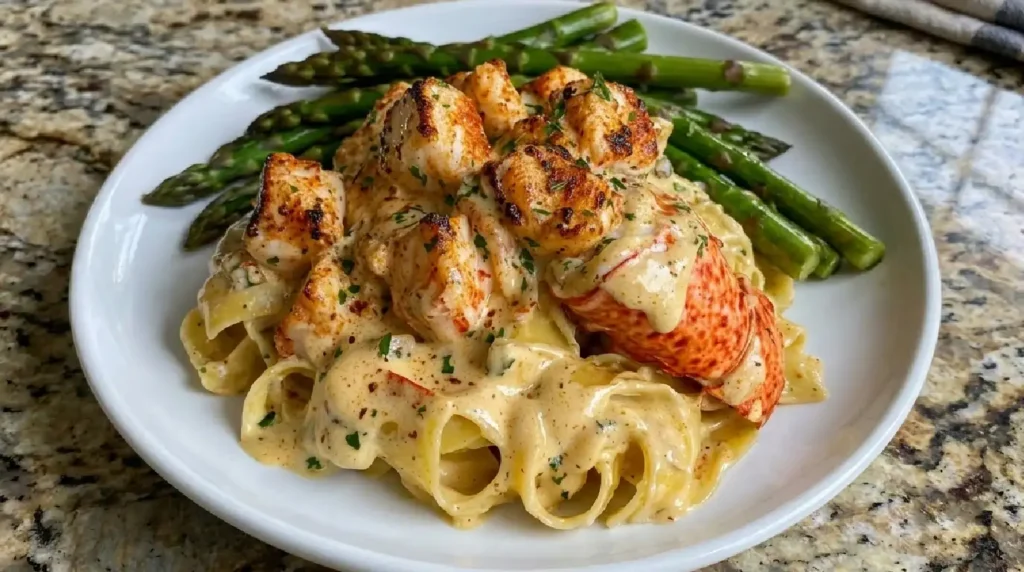
Cajun Butter Lobster Tail with Creamy Garlic Pasta & Roasted Asparagus Recipe
Table of Contents
ToggleCajun Butter Lobster Tail with Creamy Garlic Pasta & Roasted Asparagus Recipe
Introduction
There’s something about the sizzle of butter hitting a hot pan that makes you feel like you’re about to create something special. This Cajun butter lobster tail with creamy garlic pasta and roasted asparagus is one of those dishes that sounds fancy enough for a restaurant but lives quietly in your weeknight repertoire. The first time I made this, I wasn’t expecting much—just a Tuesday night experiment with ingredients I had on hand. But the moment that tender lobster tail caramelized in spiced butter, releasing that briny, sweet aroma, I understood why people reserve entire evenings for seafood dinners. What makes it different from typical lobster recipes is the careful balance: the heat from Cajun seasoning plays against the richness of brown butter, while the pasta absorbs all those golden, garlicky undertones. It’s not complicated, but it feels intentional.
Why You’ll Love This
This recipe checks every box for a special-occasion dinner that doesn’t require special-occasion stress.
- The lobster tail cooks in under 15 minutes, making this achievable on nights when you want something indulgent but don’t have hours to spend in the kitchen.
- Buttery, tender lobster with a subtle smoky kick from Cajun spices provides that restaurant-quality protein without the restaurant price tag.
- The creamy garlic pasta soaks up all the pan drippings and butter sauce, transforming a simple pasta into something worth remembering.
- Roasted asparagus adds bright, earthy contrast that balances the richness of the butter and cream.
- You can prep everything ahead and cook it all in one evening, making it perfect for date night or impressing guests without spending the whole day in the kitchen.
The Backstory
My sister has always been the skeptic at the dinner table. She’ll politely eat whatever I make, but you can tell when something isn’t landing. So when I announced I was making lobster tail for family dinner, I braced for the “that sounds nice” followed by her usual preference for simple chicken. But something happened when she tasted this dish. The butter had caramelized just enough to turn golden and nutty. The Cajun spices—paprika, cayenne, garlic, and thyme—were present but never overwhelming, and the pasta underneath soaked up every drop of that seasoned butter. She actually came back for seconds and asked for the recipe. That moment convinced me this isn’t just a dish; it’s the kind of thing that changes minds about what simple home cooking can be.
What Makes It Special
The magic here isn’t in complexity—it’s in knowing which ingredients do the heavy lifting.
- Lobster tail: Sweet, tender, and naturally briny; the star that needs just enough support from butter and spice.
- Cajun butter: A blend of smoked paprika, cayenne, garlic powder, onion powder, dried thyme, and a pinch of black pepper creates depth without heat that overwhelms.
- Brown butter: Toasting butter until the milk solids turn golden adds a nutty, complex flavor that a simple melted butter can’t match.
- Heavy cream and garlic: These transform pasta into something creamy and luxurious without tasting heavy; the garlic keeps it bright.
- Fresh asparagus: Roasted until the tips char slightly, it brings a subtle bitterness and tender-crisp texture that cuts through the richness.
Making It Happen
Start by patting your lobster tails dry and bringing them to room temperature for about 15 minutes. This helps them cook evenly without the outside toughening before the inside is tender. While they sit, prepare your Cajun butter by mixing softened butter with smoked paprika, cayenne pepper, minced garlic, onion powder, dried thyme, salt, and black pepper. The mixture should look rusty-orange and smell intentionally spiced.
Get a large pot of salted water boiling for the pasta—this is your seasoning foundation, so don’t skimp on salt. While water heats, toss your asparagus spears with olive oil, salt, and pepper on a baking sheet. Slide them into a 425-degree oven; they’ll roast for about 12-15 minutes until the tips brown slightly and the stalks become tender-crisp.
In a large skillet, heat a knob of butter over medium-high heat. Once it foams and turns golden, add your lobster tails meat-side down. They only need about 4-5 minutes per side for a 6-ounce tail. Watch for the meat to turn opaque and slightly firm; you’re aiming for that point just before it becomes rubbery. Spread a generous amount of Cajun butter over each tail in the last minute of cooking, letting it melt and coat the meat.
Drop your pasta into boiling water and cook according to package directions until just al dente. In another skillet, melt butter gently and add minced garlic, letting it soften for about a minute without browning. Pour in heavy cream, season with salt and pepper, and let it warm through. Add the drained pasta directly to this cream sauce, tossing gently so every strand gets coated.
Plate everything warm: a nest of creamy pasta, roasted asparagus leaning against it, and your golden lobster tail on top, drizzling any remaining pan butter over the pasta. The whole dish comes together in about 25 minutes.
You Must Know
These tips make the difference between a good dish and one you’ll want to make again.
- Lobster tail quality matters. Buy fresh or thaw properly, and use it the same day for best flavor and texture. Frozen tails should thaw in the refrigerator overnight, never at room temperature.
- Don’t skip the room-temperature step for lobster. Meat that starts cool will cook unevenly, leaving the outer edges overcooked while the center stays slightly translucent.
- Brown your butter correctly. It should smell nutty and toasty, not burnt. If it smells acrid or turns dark brown, start over; burnt butter will ruin the entire dish.
- Taste your pasta water. It should be as salty as the sea. This is your only real seasoning opportunity for the pasta itself.
- Fresh garlic in the cream sauce is non-negotiable. Garlic powder or jarred garlic will taste flat compared to freshly minced cloves.
Serving Ideas & Pairings
Serve this with a crisp white wine like Sauvignon Blanc or Pinot Grigio, which cuts through the richness and complements the briny sweetness of lobster. A light salad with lemon vinaigrette beforehand balances the heavier pasta. If you want a starch beyond the pasta, crusty bread is never unwelcome for soaking up any remaining butter sauce. Add a simple green salad with arugula and a squeeze of lemon on the side for freshness.
Make It Different
This dish is flexible once you understand its structure.
- Substitute shrimp for lobster if you prefer something lighter or more budget-friendly. Use large tail-on shrimp and reduce cooking time to 2-3 minutes per side.
- Make it spicier by increasing the cayenne pepper or adding fresh red pepper flakes to the butter.
- For a lighter version, replace heavy cream with half-and-half or a combination of cream and pasta water to thin the sauce while maintaining richness.
- Swap asparagus for broccolini, green beans, or roasted Brussels sprouts if that’s what you have on hand.
- Add sun-dried tomatoes or fresh basil to the cream sauce for an Italian twist instead of pure Cajun vibes.
- Go dairy-free by using coconut cream in place of heavy cream and olive oil instead of butter (though you’ll lose some of that buttery depth).
Storage & Reheating
Lobster is best enjoyed immediately, but leftovers keep well for up to two days in an airtight container. Store the pasta, asparagus, and any remaining lobster separately if possible to prevent the pasta from absorbing excess moisture.
To reheat, place the pasta in a skillet over medium heat with a splash of cream or pasta water, stirring gently until warmed through. The asparagus reheats beautifully in a 350-degree oven for about 5 minutes. For lobster, reheat it gently in a low oven (275 degrees) for 5-8 minutes, just until warm; high heat will toughen it further. Alternatively, eat cold lobster straight from the refrigerator over the next day’s salad—it’s surprisingly good.
Success Tips
The subtle touches separate decent dishes from ones people remember.
- Add lemon zest to your Cajun butter for brightness that cuts through the richness without making it taste acidic.
- Finish the pasta with a knob of cold butter right before serving; it creates a glossy, silky finish.
- Don’t crowd the pan when cooking lobster. If you’re making this for more than two people, work in batches so each tail gets a proper sear.
- Reserve a cup of pasta water before draining. A splash of this starchy liquid thinned the cream sauce slightly if it becomes too thick, and it helps the pasta absorb the sauce better.
- Serve on warmed plates. Cold plates will cool your food quickly, and you lose the aroma and some of the flavor sensation.
Frequently Asked Questions
Can I make this with frozen lobster tails?
Yes, but thaw them properly first. Move frozen tails to the refrigerator and let them thaw for 12-24 hours. Never use hot water or leave them on the counter—this causes uneven thawing and can make the meat tough or mushy.
How do I know when the lobster is done cooking?
Look for meat that has turned from translucent to opaque throughout. It should feel slightly firm when you press it gently but still have a little give. Overcooked lobster becomes rubbery and loses its sweet flavor, so it’s better to undercook slightly than overcook.
Can I make the Cajun butter ahead of time?
Absolutely. Mix the Cajun butter 1-2 days in advance and keep it covered in the refrigerator. Let it soften for about 10 minutes before using. You can even freeze it for up to a month, though for best flavor, use it within a few days.
What if I don’t have heavy cream?
Half-and-half works, though the sauce will be slightly thinner. You can also use a combination of whole milk and butter to create a lighter cream sauce, or use coconut cream for a dairy-free option. Greek yogurt adds richness but has a tangier flavor.
How much lobster tail per person?
A 6-ounce tail is a generous serving for one person, especially with pasta and asparagus. If your guests are hearty eaters or lobster lovers, go with 8 ounces per person. For a lighter meal or when serving appetizers, a 4-ounce tail works fine.
Recipe Card Info
Prep Time: 15 minutes
Cook Time: 25 minutes
Total Time: 40 minutes
Servings: 2
Category: Main Course
Difficulty: Intermediate
Cuisine: Cajun-Inspired Seafood
Yield: 2 servings
Equipment: Large skillet, medium saucepan, baking sheet, pasta pot, wooden spoon, tongs, measuring spoons, measuring cups, knife, cutting board
Ingredients
For the Cajun Butter Lobster Tail:
- 2 lobster tails (6 ounces each)
- 6 tablespoons unsalted butter
- 1 teaspoon smoked paprika
- 1/2 teaspoon cayenne pepper
- 1 teaspoon garlic powder
- 1/2 teaspoon onion powder
- 1/2 teaspoon dried thyme
- Salt and black pepper to taste
- 2 tablespoons butter for searing
For the Creamy Garlic Pasta:
- 8 ounces pasta (fettuccine or pappardelle recommended)
- 3 tablespoons unsalted butter
- 4 cloves fresh garlic, minced
- 1 cup heavy cream
- Salt and white pepper to taste
- 1 tablespoon fresh lemon zest (optional but recommended)
For the Roasted Asparagus:
- 8 ounces fresh asparagus, trimmed
- 2 tablespoons olive oil
- Salt and pepper to taste
Directions
Pat the lobster tails dry with paper towels and allow them to sit at room temperature for 15 minutes before cooking. In a small bowl, combine softened butter with smoked paprika, cayenne pepper, garlic powder, onion powder, dried thyme, salt, and black pepper to create the Cajun butter. Set aside.
Preheat your oven to 425 degrees. Toss trimmed asparagus spears with olive oil, salt, and pepper, spreading them in a single layer on a baking sheet. Place in the oven and roast for 12-15 minutes, or until the tips brown slightly and the stalks become tender-crisp. Remove and set aside.
Bring a large pot of salted water to a rolling boil. Once boiling, add pasta and cook according to package directions until just al dente. Drain and set aside, reserving 1 cup of pasta water.
While the pasta cooks, heat 2 tablespoons of butter in a large skillet over medium-high heat. Once the butter foams and turns golden, carefully place the lobster tails meat-side down in the pan. Cook for 4-5 minutes without moving them, allowing the meat to sear and turn golden. Flip and cook for another 3-4 minutes. In the final minute, spread a generous amount of Cajun butter over each tail, allowing it to melt and coat the meat. Transfer to a plate and keep warm.
In a separate medium saucepan, melt 3 tablespoons of butter over medium heat. Add the minced garlic and cook for about 1 minute, stirring constantly, until fragrant but not browned. Pour in the heavy cream, season with salt and white pepper, and heat through without boiling, about 2-3 minutes. Add the cooked pasta directly to the cream sauce, tossing gently until every strand is coated. If the sauce seems too thick, add a splash of reserved pasta water to reach your desired consistency. Finish with lemon zest if using.
To plate, create a nest of creamy pasta in the center of each warm dish. Lean the roasted asparagus against the pasta, and place a lobster tail on top, allowing any remaining pan butter to drizzle over the pasta. Serve immediately while everything is warm.
Notes: For best results, cook the lobster and pasta components separately and combine just before serving to ensure everything reaches the table at the right temperature. Lobster continues to cook slightly from residual heat, so remove it from the pan just before it reaches your desired doneness. This dish is best served immediately but can be gently reheated if necessary.
Nutrition Information (per serving): Approximately 850 calories | 52g protein | 68g carbohydrates | 42g fat | 18g saturated fat | 185mg cholesterol | 720mg sodium | 4g fiber | 4g sugar
