Caramel Chocolate Cake
Table of Contents
ToggleCaramel Chocolate Cake Recipe That Will Change How You Think About Chocolate Cake
There are chocolate cakes, and then there is this chocolate cake. The kind that leaves a faint caramel-butter smell in your kitchen for hours after it comes out of the oven. The kind where the frosting is so silky and rich that you catch yourself licking the spatula twice, maybe three times, before the cake even hits the table.
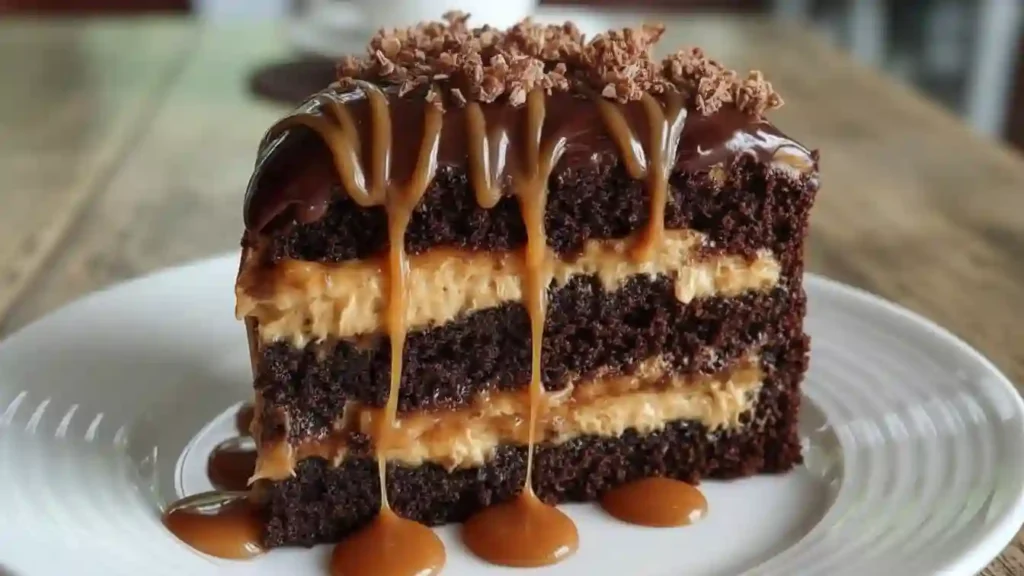
This Caramel Chocolate Cake Recipe starts with deep, dark cocoa layers that are tender and moist at the center, with just the right amount of structure at the edges. Then comes the caramel — a slow-cooked, buttery, golden caramel sauce that gets folded into a whipped chocolate buttercream and drizzled in generous ribbons over the finished cake. Every bite is layered: bitter, sweet, creamy, and just slightly smoky from the caramelized sugar.
I made this for the first time on a cold November afternoon when I needed a celebration cake that felt genuinely special — not just visually, but in the mouth. It took a few trials to get the caramel integration just right, but once it clicked, this became the most-requested recipe in my rotation. It is not a weeknight dessert. It is a Saturday afternoon project, the kind that rewards patience and good ingredients.
Why You’ll Love This
- The combination of dark chocolate and golden caramel creates a flavor profile that is complex without being complicated — deeply satisfying and far from ordinary.
- Both the cake layers and the caramel sauce can be made a day ahead, which breaks the process into manageable steps and actually improves the final texture.
- This recipe uses pantry staples — cocoa powder, butter, brown sugar, heavy cream — no specialty chocolate bars or obscure ingredients required.
- The visual payoff is stunning. Caramel dripping down dark chocolate frosting looks dramatic and impressive without requiring advanced decorating skills.
- It scales beautifully. The recipe makes two 9-inch layers, but you can easily double it for a four-layer showstopper.
The Backstory
My neighbor Reza, a man who has spent the better part of forty years insisting he does not have a sweet tooth, came over for a small dinner last winter. I had made this cake for dessert mostly because I wanted an excuse to bake it again. Reza accepted a thin slice out of politeness. He was quiet for a moment, fork halfway to his plate, and then asked if he could have another piece. Then he asked for the recipe, which — if you know Reza — is the equivalent of standing ovation. He later told me it was the caramel that got him. “It doesn’t taste like candy,” he said. “It tastes like something real.” That description has stayed with me, and I think it captures exactly what makes this cake worth making.
What Makes It Special
- Dutch-process cocoa powder: Darker, earthier, and less acidic than natural cocoa, it gives the cake layers a rich, almost fudgy depth without any bitterness.
- Browned butter in the caramel: Taking the butter one step further into golden-brown territory before adding the sugar adds a nutty, toasty layer to the caramel that sets it apart from basic versions.
- Brown sugar in the cake batter: A portion of brown sugar replaces white throughout the cake, contributing warmth and a subtle molasses note that ties the chocolate and caramel together seamlessly.
- Hot coffee in the batter: Replacing hot water with brewed coffee intensifies the chocolate flavor without making the cake taste like coffee at all.
- Heavy cream caramel sauce: A proper cream-based caramel, not a shortcut dulce de leche, gives you that glossy, pourable texture and genuine buttery richness that holds up against the bold chocolate layers.
Making It Happen
Start with the caramel sauce, since it needs time to cool completely before you use it. In a heavy-bottomed saucepan over medium heat, melt unsalted butter until it begins to foam and then turn golden brown — you’ll smell a warm, nutty fragrance. Add granulated sugar and stir constantly as it melts into a deep amber liquid. The color is your guide here: pale gold is too soon, deep mahogany is too far. Aim for a rich copper tone. Pull the pan off the heat, slowly pour in the warm heavy cream while whisking steadily (it will bubble furiously), then stir in a generous pinch of flaky salt. Pour into a glass jar and let it cool to room temperature, then refrigerate until firm but still scoopable.
For the cake layers, preheat your oven to 350 degrees Fahrenheit and grease two 9-inch round cake pans, lining the bottoms with parchment. In a large bowl, whisk together the flour, Dutch-process cocoa, baking soda, baking powder, and salt until fully combined. In a separate bowl, whisk together the eggs, buttermilk, vegetable oil, vanilla extract, and both sugars until smooth and slightly glossy. Pour the wet ingredients into the dry, stir until just combined, then stream in the hot coffee and mix until the batter is thin and uniform. Don’t be alarmed by how loose it looks — that’s exactly right.
Divide the batter evenly between the prepared pans and bake for 30 to 35 minutes, until a toothpick inserted in the center comes out with just a few moist crumbs. Let the cakes cool in their pans for 15 minutes, then turn them out onto a wire rack. Cool completely before frosting — this step is non-negotiable. Warm cake and buttercream are a disaster.
For the caramel chocolate buttercream, beat room-temperature unsalted butter until pale and fluffy, about four minutes. Add sifted powdered sugar in two additions, mixing slowly at first. Then add cocoa powder, a splash of heavy cream, and about three tablespoons of your cooled caramel sauce. Beat on high for two minutes until the frosting is silky and holds its shape. If it looks too stiff, add cream a teaspoon at a time.
To assemble, place one cake layer on your serving plate. Spread a layer of buttercream, then drizzle two tablespoons of caramel sauce over the top. Place the second layer gently on top and apply a thin crumb coat of frosting all over. Refrigerate for 20 minutes to set, then apply the final layer of buttercream smoothly. For the finish, warm the remaining caramel slightly until pourable and drizzle it over the top edge of the cake in slow, deliberate streams, letting it cascade naturally down the sides.
You Must Know
- Do not rush the cooling. If your cake layers are even slightly warm when you frost them, the buttercream will slide and the caramel will pool instead of drip. Give yourself at least two hours of cooling time, or bake the layers the day before.
- When making the caramel, use a light-colored pan so you can clearly monitor the sugar’s color change. Dark pans make it nearly impossible to gauge doneness, and over-caramelizing leads to a bitter, acrid taste.
- Measure your cocoa powder by spooning it into the measuring cup and leveling off — do not scoop directly from the container. Packed cocoa makes the cake dry and dense.
- Room temperature ingredients are not optional in buttercream. Cold butter will not emulsify properly, and you’ll end up with a lumpy, broken frosting. Set your butter out at least an hour before you start.
- If your caramel sauce seizes or turns grainy, do not throw it out. Return it to low heat with a tablespoon of water and stir gently until it smooths out again.
Serving Ideas and Pairings
This cake stands entirely on its own, but it pairs beautifully with a scoop of vanilla bean ice cream or a dollop of lightly sweetened whipped cream to cut through the richness. A simple side of fresh raspberries or sliced strawberries adds brightness and a bit of tart contrast that complements the caramel.
For beverages, a dark roast coffee or an espresso is the natural companion — the bitterness echoes the cocoa and makes the caramel taste even sweeter by contrast. If you’re serving it as a dinner party dessert, a small glass of Amontillado sherry or a tawny port works remarkably well. For non-alcoholic options, a cold glass of whole milk is classic and unbeatable.
Make It Different
Gluten-free version: Substitute a 1:1 gluten-free flour blend for the all-purpose flour. The texture will be slightly denser, but the flavor holds up well.
Dairy-free adaptation: Replace the buttermilk with oat milk mixed with a teaspoon of apple cider vinegar. Use coconut cream in place of heavy cream for the caramel and full-fat coconut cream for the buttercream. The caramel will be slightly less firm but still delicious.
Salted caramel variation: Double the flaky salt in the caramel sauce and add a finishing sprinkle of sea salt flakes over the top drizzle for a more pronounced sweet-salty contrast.
Espresso-chocolate version: Add a teaspoon of instant espresso powder directly to the buttercream along with the cocoa for a mocha-caramel frosting that is deeply complex.
Single-layer sheet cake: Pour all the batter into a greased 9×13-inch pan and bake at 350 degrees for 35 to 40 minutes. Frost directly in the pan and drizzle with caramel. Easier to transport, just as good to eat.
Smaller batch: This recipe halves cleanly into a single 9-inch layer cake baked in a lower pan, or six to eight cupcakes baked for 18 to 22 minutes.
Storage and Reheating
Unfrosted cake layers wrap tightly in plastic wrap and keep at room temperature for up to two days, or in the freezer for up to three months. The caramel sauce keeps in a sealed jar in the refrigerator for two weeks.
A fully frosted and assembled cake can be stored at room temperature (in a cool kitchen, covered loosely with a cake dome) for up to two days. In warm weather or if your kitchen runs hot, store it in the refrigerator and bring it out 45 minutes before serving — cold buttercream is dense and muffled in flavor, while room-temperature buttercream is light, creamy, and expressive.
To reheat individual slices, 10 to 12 seconds in the microwave softens the frosting slightly and brings the cake back to that just-baked texture. Do not overheat or the caramel will run everywhere.
Success Tips
The single most impactful thing you can do for this cake is use high-quality Dutch-process cocoa. The difference between a budget store-brand cocoa and a good Dutch-process cocoa like Cacao Barry or Droste is profound — you will taste it in every bite. Similarly, use real unsalted butter throughout, not margarine or oil-based substitutes. The fat content and milk solids in butter are essential to both the caramel’s texture and the frosting’s flavor.
Take the caramel to a true deep amber before adding the cream. Undercooked caramel tastes like sweetened butter — pleasant enough, but missing the complexity that makes this cake remarkable. The slight edge of bitterness from a properly darkened caramel is exactly what balances the sweetness of the chocolate cake.
When drizzling the final caramel over the assembled cake, do it slowly and in thin streams. Work from the edge inward, letting gravity pull the caramel down the sides naturally rather than pushing it. Rushing this step produces uneven, thick drips instead of the graceful cascades that make this cake look as good as it tastes.
Frequently Asked Questions
Can I make this cake without a stand mixer? Yes, absolutely. A hand mixer works perfectly well for both the caramel chocolate buttercream and the cake batter. The batter itself can actually be mixed by hand with a whisk for the wet-to-dry combination — it just requires a bit more elbow grease. The buttercream, however, genuinely benefits from electric beaters, since achieving that silky, airy texture by hand alone is very difficult.
What can I use instead of buttermilk? Mix 1 tablespoon of white vinegar or fresh lemon juice with enough whole milk to reach 1 cup. Let it sit for five minutes until it curdles slightly. This homemade substitute works identically to store-bought buttermilk in terms of the chemical reaction and moisture it provides to the batter.
My caramel turned grainy and crystallized. What went wrong? Crystallization typically happens when sugar crystals from the sides of the pan fall back into the melting sugar, or when the mixture is stirred too vigorously once it starts to melt. To prevent it, use a wet pastry brush to wash down any sugar crystals from the sides of the pan while the sugar melts, and stir only minimally. If it has already seized, add a tablespoon of water and return to low heat, stirring gently until smooth.
Can I use salted butter instead of unsalted? You can, with a small adjustment. Salted butters vary significantly in their salt content by brand, so using them makes it harder to control the final saltiness of both the caramel and the frosting. If salted is what you have, reduce any added salt in the recipe by half and taste as you go.
How far in advance can I assemble this cake? The fully assembled, frosted cake can be made up to 24 hours ahead and stored in the refrigerator. Apply the final caramel drizzle on the day you plan to serve it — adding it too early can cause it to absorb into the frosting and lose its glossy, defined appearance. Bring the finished cake to room temperature for 45 minutes before serving.
Recipe Card
Recipe Name: Caramel Chocolate Cake Recipe
Prep Time: 45 minutes
Cook Time: 35 minutes
Cooling & Assembly Time: 1 hour 30 minutes
Total Time: 2 hours 50 minutes
Servings: 12 slices
Category: Dessert / Celebration Cake
Difficulty: Intermediate
Cuisine: American
Yield: One 2-layer 9-inch round cake
Equipment
- Two 9-inch round cake pans
- Parchment paper
- Stand mixer or hand mixer
- Heavy-bottomed medium saucepan
- Wire cooling rack
- Offset spatula
- Glass jar or heatproof bowl (for caramel)
- Whisk
- Two large mixing bowls
Ingredients
For the Chocolate Cake Layers:
- 2 cups (250g) all-purpose flour
- 3/4 cup (75g) Dutch-process cocoa powder, sifted
- 2 teaspoons baking soda
- 1 teaspoon baking powder
- 1 teaspoon fine salt
- 1 cup (200g) granulated sugar
- 3/4 cup (165g) packed light brown sugar
- 2 large eggs, room temperature
- 1 cup (240ml) buttermilk, room temperature
- 1/2 cup (120ml) vegetable oil
- 2 teaspoons pure vanilla extract
- 1 cup (240ml) hot brewed coffee
For the Browned Butter Caramel Sauce:
- 4 tablespoons (57g) unsalted butter
- 1 cup (200g) granulated sugar
- 1/2 cup (120ml) heavy cream, warmed
- 1/2 teaspoon flaky sea salt
For the Caramel Chocolate Buttercream:
- 1 cup (227g) unsalted butter, room temperature
- 3 cups (360g) powdered sugar, sifted
- 1/2 cup (50g) Dutch-process cocoa powder, sifted
- 3 tablespoons cooled caramel sauce (from above)
- 3 to 4 tablespoons heavy cream
- 1 teaspoon pure vanilla extract
- Pinch of fine salt
Instructions
Step 1 — Make the Caramel Sauce In a heavy-bottomed medium saucepan over medium heat, melt the butter, swirling occasionally, until it turns golden brown and smells nutty — about 4 to 5 minutes. Add the granulated sugar all at once and stir constantly as it melts, watching carefully for a deep copper-amber color. Remove from heat and slowly pour in the warm heavy cream in a thin stream while whisking continuously (the mixture will bubble aggressively). Stir in the flaky salt. Pour into a glass jar and cool to room temperature, then refrigerate for at least 30 minutes.
Step 2 — Preheat and Prepare Pans Preheat the oven to 350 degrees Fahrenheit (175 degrees Celsius). Grease two 9-inch round cake pans and line the bottoms with parchment paper circles. Set aside.
Step 3 — Mix the Dry Ingredients In a large bowl, whisk together the flour, cocoa powder, baking soda, baking powder, and salt until evenly combined and no lumps remain.
Step 4 — Mix the Wet Ingredients In a separate large bowl, whisk the eggs, buttermilk, vegetable oil, vanilla extract, granulated sugar, and brown sugar together until smooth and slightly glossy.
Step 5 — Combine and Add Coffee Pour the wet ingredients into the dry ingredients and stir until just combined. Stream in the hot brewed coffee and mix until the batter is smooth and thin. Do not overmix.
Step 6 — Bake the Layers Divide the batter evenly between the two prepared pans. Bake for 30 to 35 minutes, until a toothpick inserted in the center comes out with a few moist crumbs. Cool in pans for 15 minutes, then turn out onto a wire rack to cool completely.
Step 7 — Make the Buttercream Beat the room-temperature butter in a stand mixer on medium-high for 4 minutes until pale and fluffy. Add the sifted powdered sugar in two additions, mixing on low first. Add the sifted cocoa powder, 3 tablespoons of cooled caramel sauce, vanilla, salt, and 3 tablespoons of heavy cream. Increase speed to high and beat for 2 minutes until silky and light. Add the remaining tablespoon of cream if needed to reach a spreadable consistency.
Step 8 — Apply the Crumb Coat Place one cooled cake layer on a serving plate. Spread an even layer of buttercream on top, then drizzle 2 tablespoons of caramel sauce over the buttercream. Place the second layer on top. Apply a thin crumb coat of buttercream all over the outside of the cake. Refrigerate for 20 minutes.
Step 9 — Final Frost and Caramel Drizzle Apply the final layer of buttercream smoothly over the entire cake using an offset spatula. Slightly warm the remaining caramel sauce until just pourable. Working slowly, drizzle the caramel in thin streams around the top edge of the cake, allowing it to cascade naturally down the sides. Add a final swirl of caramel across the top surface.
Step 10 — Serve Allow the caramel to set for 10 minutes before slicing. Serve at room temperature for the best flavor and texture.
Notes
- The caramel sauce and cake layers can both be made one day ahead. Wrap cooled cake layers in plastic wrap and store at room temperature. Refrigerate the caramel.
- If the caramel sauce becomes too thick to drizzle after refrigeration, microwave it in 5-second intervals, stirring between each, until it reaches a pourable consistency.
- For a more intense caramel flavor in the frosting, increase the caramel addition to 4 or 5 tablespoons, reducing the heavy cream accordingly to maintain the right consistency.
- This cake is fully vegetarian. For a dairy-free version, use oat milk with vinegar in place of buttermilk, coconut cream in place of heavy cream, and a high-quality vegan butter throughout.
Nutrition (Per Serving, Approximate)
- Calories: 620
- Total Fat: 32g
- Saturated Fat: 18g
- Cholesterol: 95mg
- Sodium: 390mg
- Total Carbohydrates: 82g
- Dietary Fiber: 3g
- Sugars: 62g
- Protein: 6g
Nutritional values are estimates based on standard ingredient amounts and will vary depending on specific brands and portion sizes used.