
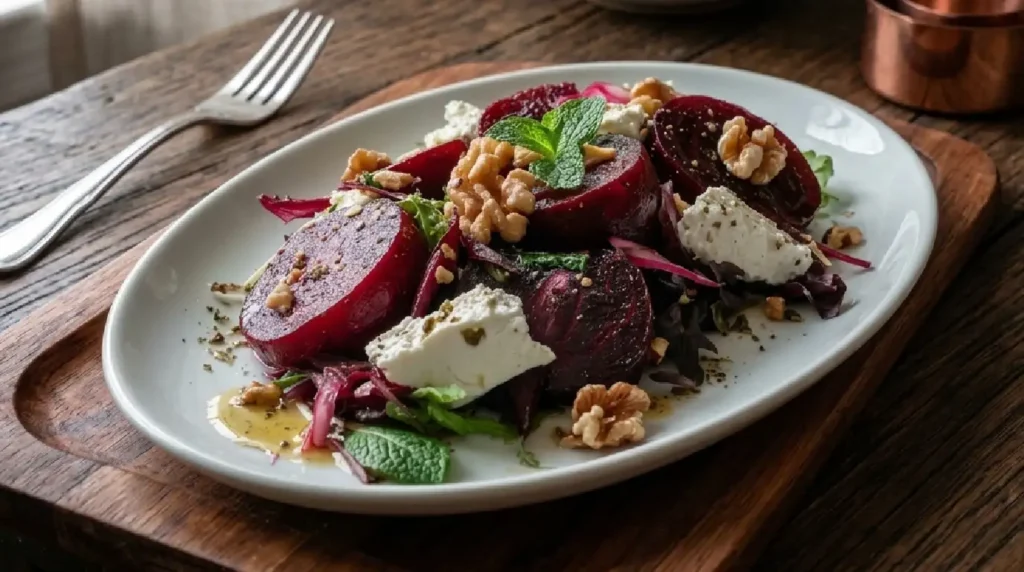
Roasted Beet Salad with Feta and Walnuts
Table of Contents
ToggleRoasted Beet Salad with Feta and Walnuts: A Simple Recipe with Bold Flavors
There’s something deeply satisfying about a salad that doesn’t apologize for being a salad. This roasted beet salad with feta and walnuts is exactly that—earthy, creamy, nutty, and genuinely craveable. The beets become sweet and tender in the oven, their natural sugars concentrating into something almost caramel-like. Then you add tangy feta, toasted walnuts for crunch, and a simple vinaigrette that ties everything together. It’s the kind of dish that convinces people they actually want to eat vegetables.
What I love most about this recipe is how straightforward it is. You roast beets, crumble some cheese, toast some nuts, and dress it. No complicated techniques. No stress. Yet somehow it feels restaurant-quality on a plate.
Why You’ll Love This
- Naturally sweet and savory balance: The roasted beets provide natural sweetness that pairs beautifully with tangy feta and bitter greens, creating a flavor profile that feels complete without heavy dressings.
- Minimal active cooking time: While the beets roast, you’re free to do other things. Actual hands-on work takes maybe 15 minutes total.
- Works for any occasion: This salad fits equally well at a casual weeknight dinner, a packed lunch, or a dinner party. People always assume it took more effort than it did.
- Endlessly adaptable: Swap in goat cheese for feta, use pecans instead of walnuts, add greens or keep it simple. The foundation works with countless variations.
- Genuinely satisfying: Despite being vegetable-focused, the combination of textures and flavors keeps you full. The nuts and cheese provide substance that prevents the “still hungry” feeling after salad.
The Backstory
My sister-in-law, Emma, is one of those people who views salad as punishment for eating too much bread. She’ll pick at leaves with obvious resignation at family dinners. But then I made this roasted beet salad at a gathering, and something shifted. She went back for seconds. When I told her the main ingredient was beets, she looked genuinely surprised. “Beets?” she said. “I thought I hated beets.” Turns out she’d only ever tried them from a can, cold and mushy. Roasted beets taste almost like a different vegetable entirely—tender, sweet, with a completely different texture. Now Emma asks me to make it whenever we visit. That’s when you know a recipe has won someone over.
What Makes It Special
- Roasted beets: Roasting concentrates their natural sweetness and gives them a silky texture. Unlike boiled or canned beets, they have presence on the plate and actual personality in your mouth.
- Creamy feta cheese: The tanginess cuts through the beet’s sweetness and adds a creaminess that doesn’t require mayo or heavy dressings. A little goes a long way.
- Toasted walnuts: Walnuts bring warmth, earthiness, and the kind of crunch that makes each bite interesting. Toasting them first intensifies their flavor dramatically.
- Quality greens (if using): A bed of arugula or mixed greens adds peppery notes and textural contrast without overwhelming the star ingredients.
- Simple vinaigrette: A basic red wine vinegar and olive oil dressing keeps the focus on the vegetables themselves rather than masking them with heavy sauces.
Making It Happen
Start by preheating your oven to 400°F. Take your beets—about 1 to 1.5 pounds of medium beets work perfectly—and scrub them under running water to remove any soil. Don’t peel them yet; the skin protects the beets during roasting and comes off effortlessly afterward. Cut them into roughly half-inch chunks (leave smaller beets whole if they’re tiny). Toss them with olive oil, salt, and pepper, then spread them on a baking sheet in a single layer.
The beets roast for about 25 to 35 minutes, depending on their size and your oven’s personality. You’ll know they’re done when a fork slides through easily and the edges are just starting to caramelize. They should smell deeply sweet and earthy. While they roast, prepare everything else.
Toast your walnuts in a dry skillet over medium heat for about 3 to 4 minutes, stirring occasionally, until they’re fragrant and their edges darken slightly. This step is non-negotiable—it transforms walnuts from okay to genuinely delicious. Set them aside to cool, then roughly chop them.
Make your vinaigrette by whisking together 3 tablespoons of red wine vinegar, 1 tablespoon of Dijon mustard, 1 minced garlic clove, and a pinch of salt and pepper. Slowly drizzle in about 6 tablespoons of olive oil while whisking until emulsified. You want it balanced between acidic and silky.
Once the beets cool enough to handle, rub them gently with a paper towel—the skin slides right off. If you’re using fresh greens, toss them lightly with just a touch of the vinaigrette and arrange on a platter or individual plates. Top with the roasted beets, scatter the feta cheese (about half a cup of crumbled feta works well), and sprinkle the toasted walnuts over everything. Drizzle with the remaining vinaigrette, taste for seasoning, and serve.
You Must Know
- Don’t skip toasting the walnuts: Raw or untoasted walnuts taste bitter and flat. A few minutes in a hot skillet completely changes their character.
- Let the beets cool before peeling: You can handle them without burning yourself, and the skin comes off more easily once they’ve cooled slightly.
- Make the vinaigrette first: It needs to be ready so you can dress the greens before serving. A dressed salad sitting for minutes gets soggy.
- Taste as you go: The tanginess of your feta and the strength of your vinegar might vary, so adjust seasonings before plating. Better to taste a small bite now than discover it needs salt after serving.
- Don’t overdress it: One of the easiest mistakes is using too much dressing. The beets are already flavorful—you want to enhance, not mask them.
Serving Ideas & Pairings
This salad pairs beautifully with grilled chicken breast or pan-seared salmon for a light protein addition. If you want something vegetarian but more substantial, serve it alongside grilled halloumi or chickpea fritters.
For beverages, a crisp white wine like Sauvignon Blanc or a dry rosé complements the beets and feta well. If you prefer non-alcoholic options, sparkling water with lemon or a bright herbal tea works nicely.
As a side dish, it balances heavier mains like roasted lamb or beef beautifully. The acidity and earthiness cut through rich proteins without competing for attention.
Make It Different
For a different cheese profile: Substitute goat cheese for a tangier option, or use creamy burrata for richness. Both add their own dimension while keeping the overall concept intact.
For nut variations: Pecans offer a slightly sweeter, buttery note compared to walnuts’ earthiness. Pistachios bring a bright, almost floral quality. Toasted pumpkin seeds add a different kind of crunch if you prefer to avoid tree nuts.
For more texture and flavor: Add fresh orange segments for citrus brightness and natural sweetness. Pomegranate arils add tartness and visual pop. Thinly sliced red onion brings sharp bite if you want more complexity.
For different greens: Skip greens entirely and serve it as a warm beet and feta salad. Or use spinach, kale, or watercress instead of arugula. Each green brings a different flavor note.
For dietary needs: This recipe is naturally vegetarian and gluten-free. For vegan versions, substitute the feta with crumbled tofu or use a plant-based feta alternative, though the flavor profile changes noticeably.
For a warm preparation: Serve the beets while still warm or at room temperature rather than chilled, which brings out their sweetness even more. The cheese will soften slightly—many people prefer this texture.
Storage & Reheating
Store roasted beets in an airtight container in the refrigerator for up to 5 days. The vinaigrette keeps separately for about a week. Don’t dress the greens until you’re ready to eat—they’ll wilt within 30 minutes. The walnuts should be stored separately in a cool place to maintain their crunch.
To reheat, simply warm the beets gently in a 300°F oven for about 10 minutes if you prefer them warm, or serve them cold directly from the refrigerator. The feta is best served at room temperature, so let it sit out briefly if you’ve refrigerated it.
You can also freeze roasted beets for up to 3 months. Thaw them overnight in the refrigerator before using. This works well if you roast a large batch for multiple meals.
Success Tips
The difference between good and great often comes down to small details. Beets bleed their color into everything around them—this is part of their charm, but if you have delicate greens you want to stay bright green, dress them separately and add the beets just before eating.
Water content matters more than you’d think. After roasting and peeling your beets, pat them dry with paper towels. Excess moisture will make your salad watery. Similarly, if your beets release a lot of liquid as they cool, drain it off.
The ratio of acid to oil in your vinaigrette should taste slightly tangy on its own—when it coats the warm beets, it feels perfectly balanced. Taste it plain before combining everything.
Consider the temperature at which you serve it. Warm beets with room-temperature cheese and greens create interesting textural contrasts that cold beets don’t quite achieve. There’s no single “correct” temperature—just be intentional about it.
Frequently Asked Questions
Can I make this salad ahead of time?
Yes, but store components separately. Keep roasted beets in one container, greens in another, and walnuts and feta in their own spaces. The vinaigrette keeps fine for several days. Assemble within 30 minutes of serving to prevent wilting. This makes it perfect for meal prep—you’ll have a salad’s worth of components ready to combine whenever you want.
Are canned beets acceptable if I’m short on time?
Canned beets work in a pinch, though they lack the concentrated sweetness and firm texture of roasted ones. Drain and pat them completely dry, then toss with olive oil and roast at 400°F for about 15 minutes to add some caramelization back. It’s not identical to roasting fresh beets from scratch, but it’s significantly better than using them straight from the can.
Can I make this salad warm?
Absolutely. Serve the beets while still warm or at room temperature, add room-temperature feta (it’ll soften slightly, which is lovely), and top with toasted walnuts and greens that haven’t been dressed yet. The warm beets will slightly wilt delicate greens, so use heartier varieties like spinach or kale if you prefer everything warm.
What if I don’t have red wine vinegar?
Balsamic vinegar, apple cider vinegar, or white wine vinegar all work—use slightly less balsamic as it’s stronger. Champagne vinegar is also excellent if you have it. In a pinch, fresh lemon juice can replace some of the vinegar, though the flavor profile shifts toward citrus rather than wine notes.
How much can I scale this recipe?
The base recipe serves 4 as a side or 2 as a main course. It scales easily—simply multiply the quantities. One important note: if you’re roasting significantly more beets, they’ll need a bit longer in the oven and may require two baking sheets. Don’t overcrowd them, or they’ll steam instead of roast.
Recipe Card Info
Prep time: 15 minutes
Cook time: 30 minutes
Total time: 45 minutes
Servings: 4 as a side dish, 2 as a main course
Category: Salad
Difficulty: Easy
Cuisine: Mediterranean-inspired
Yield: Approximately 4 cups
Equipment: Baking sheet, medium skillet, whisk, cutting board, knife, paper towels, serving platter or plates
Ingredients
- 1.5 pounds fresh beets, medium-sized
- 3 tablespoons olive oil (for roasting)
- Salt and pepper to taste
- 1 cup walnuts, roughly chopped
- 4 cups fresh arugula or mixed greens (optional, or use spinach)
- 0.75 cup crumbled feta cheese
- 3 tablespoons red wine vinegar
- 1 tablespoon Dijon mustard
- 1 garlic clove, minced
- 6 tablespoons extra-virgin olive oil (for vinaigrette)
Directions
Step 1: Preheat your oven to 400°F. Scrub the beets under running water to remove any soil. Cut them into half-inch pieces (leave very small ones whole). Toss with 3 tablespoons olive oil, salt, and pepper. Spread in a single layer on a baking sheet.
Step 2: Roast for 25 to 35 minutes, depending on beet size and your oven, until a fork easily pierces them and the edges are caramelized. The kitchen should smell deeply sweet and earthy. Remove and let cool until handleable.
Step 3: While beets roast, toast walnuts in a dry skillet over medium heat for 3 to 4 minutes, stirring occasionally, until fragrant and lightly browned at the edges. Transfer to a plate to cool.
Step 4: Make the vinaigrette by whisking together red wine vinegar, Dijon mustard, minced garlic, and a pinch of salt and pepper. Slowly drizzle in the 6 tablespoons of extra-virgin olive oil while whisking until emulsified.
Step 5: Once beets cool, gently rub them with paper towels to remove the skin—it slides off easily. If using greens, toss lightly with a small amount of vinaigrette and arrange on plates or a platter.
Step 6: Top greens (or serve on their own) with roasted beets, scatter feta cheese, and sprinkle toasted walnuts over everything. Drizzle with remaining vinaigrette, taste for seasoning, and serve immediately.
Notes
This salad is best served within 30 minutes of assembly to prevent greens from wilting. Store components separately—beets keep refrigerated for up to 5 days, walnuts in a cool place for several days, and the vinaigrette for about a week. Feta is best served at room temperature. The salad works equally well warm, at room temperature, or cold, depending on preference.
Nutrition
Per serving (assuming 4 servings as a side, including greens):
- Calories: approximately 320
- Protein: 11g
- Fat: 26g
- Carbohydrates: 18g
- Fiber: 3g
- Sodium: 420mg
(Nutrition values are estimates and vary based on specific ingredients used and portion size. This calculation includes feta, walnuts, vinaigrette, and greens but excludes optional additions.)
