
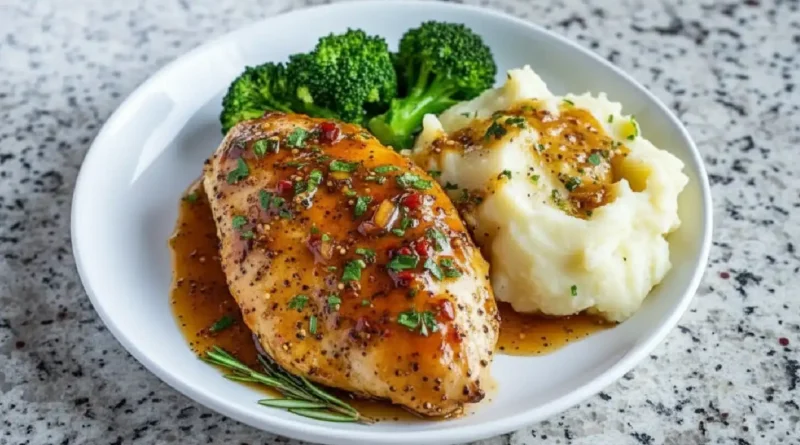
Rosemary-Infused Baked Dijon Chicken
Easy Rosemary-Infused Baked Dijon Chicken: A Tender 30-Minute Dinner
There is a specific moment in the kitchen when the sharp, nasal tang of Dijon mustard meets the woody, pine-like aroma of fresh rosemary. As the oven warms up, that scent begins to drift through the house, promising a meal that tastes far more complex than the ten minutes of effort you put into it. I first started making this rosemary-infused baked Dijon chicken on those frantic Tuesday nights when I wanted something that felt like a Sunday roast but lacked the hours to commit. The result is always the same: a succulent, golden-brown chicken breast draped in a glossy, herb-flecked sauce that begs to be swiped up by a forkful of mashed potatoes.
Why You’ll Love This
-
The sauce creates a self-basting environment, ensuring the chicken stays incredibly juicy and tender rather than drying out.
-
It uses pantry staples like mustard and honey, making it a reliable “emergency” dinner that still feels sophisticated.
-
The balance of savory herbs and tangy Dijon offers a restaurant-quality flavor profile with very little active cooking time.
-
Cleanup is a breeze since the entire dish comes together in a single baking pan.
My younger brother is famously difficult to please when it comes to “healthy” food. He usually associates baked chicken breasts with the dry, rubbery textures of uninspired meal prep. The first time I served him this version, he was silent for a good five minutes. I thought I had missed the mark until he started using his last piece of broccoli to polish off every single drop of the rosemary glaze from his plate. He didn’t realize the secret was the Dijon—which he claims to hate—acting as a tenderizer and flavor powerhouse. Now, it is the only way he asks for chicken.
What Makes It Special
-
Stone-ground or Grey Poupon Dijon: Provides a sophisticated heat and thick texture that clings to the meat.
-
Fresh Sprigs of Rosemary: Infuses the oil and juices with an earthy, woodsy depth that dried herbs simply cannot replicate.
-
A Touch of Honey: Balances the acidity of the mustard and helps the chicken achieve that beautiful golden-brown caramelization.
-
Fresh Garlic: Melts into the sauce during the baking process, adding a mellow, buttery sweetness.
Making It Happen
The process begins with a simple whisk. You will blend the Dijon, honey, olive oil, and minced garlic in a small bowl until it reaches a smooth, pourable consistency. After patting the chicken breasts dry—a crucial step for ensuring the sauce sticks—you lay them in a baking dish and coat them generously with the mixture. Tucking fresh rosemary sprigs around the meat allows the essential oils to release as the temperature rises. Once the dish hits the oven, the mustard creates a protective crust, sealing in the moisture while the honey breaks down to create a sticky, savory lacquer. As the chicken rests after baking, the juices mingle with the melted mustard and rosemary bits to form a built-in gravy that is liquid gold.
You Must Know
-
Always pat the chicken dry with paper towels before seasoning; moisture is the enemy of a good glaze.
-
Let the chicken rest for at least five minutes after taking it out of the oven to allow the juices to redistribute.
-
If your chicken breasts are uneven in thickness, use a meat mallet to gently pound the thicker end so the entire piece cooks at the same rate.
Serving Ideas
This dish is a natural partner for creamy mashed potatoes, which act as the perfect canvas for the extra Dijon sauce. For a pop of color and crunch, serve it alongside steamed broccoli florets or roasted asparagus. If you are looking for a drink pairing, a crisp Sauvignon Blanc or a light Pinot Noir complements the herbaceous rosemary and the acidity of the mustard beautifully.
Make It Different
If you prefer a darker, richer flavor, you can easily swap the chicken breasts for boneless, skinless chicken thighs—just add about five to eight minutes to the baking time. For those avoiding honey, maple syrup provides a wonderful earthy sweetness as a substitute. If fresh rosemary isn’t available, thyme or sage works beautifully, though the flavor profile will shift from woody to slightly more floral or peppery.
Storage and Reheating Recipe Tips
Store any leftovers in an airtight container in the refrigerator for up to four days. To reheat, avoid the microwave if possible, as it can turn the chicken rubbery. Instead, place the chicken in a shallow dish with a splash of chicken broth or water, cover it with foil, and warm it in a 325 degree oven until heated through. This preserves the moisture and keeps the sauce silky.
Success Tips
For the best results, use a meat thermometer. Chicken is perfectly cooked and safe at 165 degrees Fahrenheit. Taking it out at 160 degrees and letting it carry-over cook while resting ensures it never reaches that dreaded “dry” stage. Also, don’t be afraid to spoon the pan juices back over the chicken halfway through the cooking process to build up that rich, golden color.
Frequently Asked Questions
Can I use dried rosemary instead of fresh?
Yes, but use only about one-third of the amount, as dried herbs are more concentrated. Rub the dried rosemary between your palms before adding it to the sauce to wake up the oils.
Is this recipe spicy because of the Dijon?
Not at all. The heat of the mustard mellows significantly in the oven, leaving behind a tangy, savory depth rather than a spicy bite.
Can I prep this in advance?
Absolutely. You can coat the chicken in the marinade up to four hours in advance and keep it in the fridge. This actually helps the flavors penetrate the meat even deeper.
What if my sauce is too thin?
If the juices from the chicken have thinned the sauce too much for your liking, pour the pan drippings into a small saucepan and simmer for two minutes on the stove to reduce and thicken it.
Can I make this with bone-in chicken?
Yes, but you will need to increase the cook time to approximately 35 to 45 minutes depending on the size of the pieces.
Prep time: 10 minutes
Cook time: 20 minutes
Total time: 30 minutes
Servings: 4
Category: Main Course
Difficulty: Easy
Cuisine: American/Bistro
Yield: 4 Chicken Breasts
Equipment: Small mixing bowl, whisk, 9×13 baking dish, meat thermometer.
Ingredients:
-
4 boneless, skinless chicken breasts (about 6-8 oz each)
-
1/4 cup Dijon mustard
-
2 tablespoons honey or maple syrup
-
1 tablespoon extra virgin olive oil
-
3 cloves garlic, minced
-
2 teaspoons fresh rosemary, finely chopped (plus extra sprigs for the pan)
-
1/2 teaspoon kosher salt
-
1/2 teaspoon cracked black pepper
-
1/2 teaspoon paprika (optional, for color)
Instructions:
-
Preheat your oven to 400 degrees Fahrenheit and lightly grease a baking dish with olive oil or non-stick spray.
-
In a small bowl, whisk together the Dijon mustard, honey, olive oil, minced garlic, chopped rosemary, salt, pepper, and paprika until well combined.
-
Pat the chicken breasts dry with paper towels. Place them in the prepared baking dish, ensuring they are not overlapping.
-
Brush or spoon the Dijon mixture over each chicken breast, covering the tops and sides generously.
-
Nestle a few whole sprigs of rosemary between the chicken pieces in the dish.
-
Bake for 18 to 22 minutes, or until the internal temperature reaches 165 degrees Fahrenheit.
-
Remove from the oven and let the chicken rest in the pan for 5 minutes before serving. Spoon the accumulated pan juices over the chicken just before plating.
Nutrition:
(Per serving)
Calories: 285 kcal | Protein: 38g | Fat: 9g | Carbohydrates: 12g | Fiber: 1g | Sugar: 9g
