Texas Style Smoked Beef Brisket
The Ultimate Texas Style Smoked Beef Brisket Recipe: A Foolproof Guide
There’s a particular kind of magic that happens in the quiet, pre-dawn hours of a Texas morning. The air is cool, the world is still, and the only light comes from the glow of the smoker. This is where the ritual begins. For me, smoking a brisket isn’t just about cooking; it’s a slow, patient meditation. It’s about transforming a tough, intimidating cut of meat into something so sublimely tender and deeply flavorful, it feels like a triumph. This Texas Style Smoked Beef Brisket recipe is my homage to that tradition—a simple, no-fuss method that yields a breathtaking result: a bark with a satisfying crunch that gives way to impossibly juicy, smoky meat.
Why You’ll Love This Texas Style Smoked Beef Brisket
-
It’s a Culinary Achievement. Pulling a perfectly smoked brisket off the grill provides a sense of accomplishment that few other dishes can match.
-
The Simplicity is Deceptive. With just salt, pepper, and smoke, you create layers of flavor that are complex, bold, and utterly satisfying.
-
It Feeds a Crowd with Ease. A whole packer brisket is the ultimate centerpiece for any gathering, from family reunions to game day parties.
-
The Aroma is Unforgettable. The scent of hardwood smoke and rendering beef that perfumes your backyard is pure, simple happiness.
I’ll never forget the time I made this for my father-in-law, a man whose culinary praise is sparing and hard-earned. He’s a meat-and-potatoes guy who believes steak is the only proper beef. He watched the entire 16-hour process with a skeptical eye. But when he took that first bite—a slice from the point end, glistening with rendered fat and ringed with a dark, smoky bark—he just closed his eyes and nodded. No words were needed. It was the quietest, most meaningful compliment I’ve ever received.
What Makes It Special
The beauty of authentic Texas brisket lies in its minimalist approach. Every component has a job to do.
-
The Whole Packer Brisket: Using the entire brisket (both the lean flat and the fatty point) is non-negotiable. As it slowly cooks, the fat from the point bastes the flat, keeping the entire cut marvelously juicy.
-
The Salt and Pepper Bark: This classic 50/50 blend, often called Dalmatian rub, forms a stunning, crackly crust known as the bark. The coarse texture is key, creating a perfect, peppery shell that seals in the juices.
-
The Low and Slow Smoke: Cooking at 225 degrees F for hours over indirect heat allows the tough collagen and connective tissues to gently melt into unctuous, mouthwatering gelatin.
-
The Butcher Paper Wrap: Wrapping partway through the cook traps steam and accelerates the cooking process without making the bark soggy, unlike foil. It’s the secret to a tender brisket with a perfect texture.
Making It Happen
Your journey to brisket perfection starts with a cold brisket straight from the fridge; a firm brisket is infinitely easier to trim. Take your time sculpting the meat, removing the large, hard chunks of fat and creating a smooth, even surface so the smoke and seasoning can adhere evenly. Don’t be afraid to be decisive—a well-trimmed brisket is the first step to a great one.
Next, we apply the rub. In a beautiful act of simplicity, you’ll generously coat every square inch of the brisket with the coarse salt and black pepper mixture. The meat should look thoroughly seasoned, like a light snowfall of flavor. Let it sit while you fire up your smoker to a steady 225 degrees F.
Now, the real magic begins. Place the brisket on the grates, with the thicker point end facing your main heat source. Close the lid, and practice the art of patience. For the next several hours, the hardwood smoke will work its way deep into the meat, building that distinctive rosy smoke ring and a deep mahogany color. When the internal temperature hits around 165 degrees F, it’s time for the Texas Crutch.
Lay out a large sheet of butcher paper and center your beautiful brisket in the middle. Wrap it up snugly, like a precious gift, and return it to the smoker, seam-side down. This wrap will carry the brisket through the final leg of its journey, past the stall, and all the way to an internal temperature of around 202 degrees F. This is the sweet spot where a probe thermometer slides into the meat with the gentle resistance of soft butter.
But you’re not done yet. The most critical step of all is the rest. Transfer the wrapped brisket to a cutting board, tent it loosely with a towel, and walk away for a full hour. This allows the frantic, steaming-hot juices to relax and redistribute throughout the meat. Finally, with a sharp knife, slice against the grain to reveal the stunning, tender interior and serve immediately.
You Must Know
-
Patience is Your Secret Ingredient. Rushing the process is the number one cause of tough brisket. Embrace the slow cook and the essential rest.
-
Trust the Thermometer, Not the Clock. Every piece of meat is different. Use a reliable meat thermometer to guide you, not a rigid timeline.
-
Don’t Skip the Trim. Taking the time to trim the brisket properly ensures even cooking and better smoke penetration.
-
Resist the Urge to Peek. Every time you open the smoker lid, you release precious heat and smoke. Keep it closed as much as possible.
Serving It Up
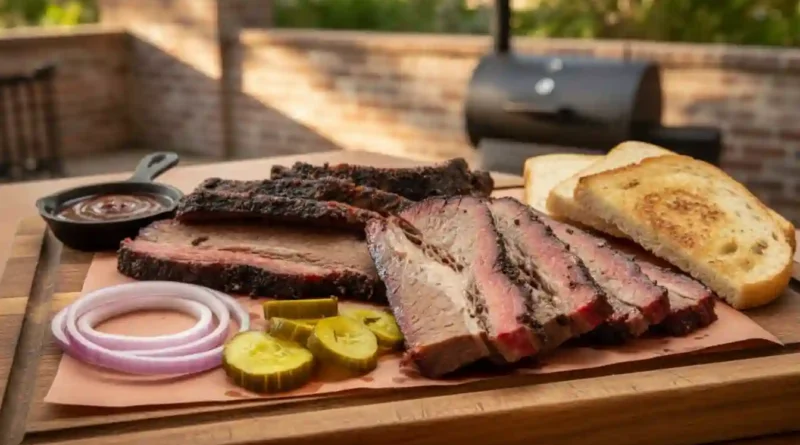
This Texas Style Smoked Beef Brisket is a star that needs little embellishment. Serve it with classic sides that complement without competing: creamy, cool coleslaw, tangy potato salad, or simple baked beans. For a true Texas experience, serve it on a piece of butcher paper with plain white bread, pickles, and sliced onions. A bold, malty brown ale or a glass of iced sweet tea are the perfect drink pairings to cut through the richness.
Make It Different
-
Spice It Up: Add a tablespoon of chili powder or a teaspoon of cayenne pepper to the rub for a subtle kick.
-
Oak or Mesquite: While post oak is traditional, hickory will give a stronger, smokier flavor, and pecan offers a sweeter, milder note.
-
No Smoker? No Problem: You can mimic this process in a standard charcoal or gas grill set up for indirect heat, using a smoker box or foil packet of wood chips.
Storing and Reheating Your Masterpiece
Store leftover brisket, tightly wrapped in butcher paper or foil, in the refrigerator for up to four days. To reheat, avoid the microwave at all costs, as it will make the meat tough. Instead, place slices in a baking dish with a splash of beef broth, cover tightly with foil, and warm in a 325°F oven until heated through. You can also freeze the whole, tightly wrapped brisket or slices for up to three months. Thaw in the refrigerator before reheating.
Success Tips
-
Choose the Right Meat: Look for a brisket with good marbling (white flecks of fat within the lean muscle) and a thick, uniform flat.
-
Maintain Consistent Temperature: Fluctuating temps can extend your cook time and dry out the meat. Use a high-quality smoker or grill that can hold a steady 225°F.
-
Slice as You Go: Only slice what you plan to serve immediately. Keeping the brisket whole until serving time preserves its moisture.
Frequently Asked Questions
1. Can I use just the flat cut of brisket?
While you can, the flat alone is much leaner and has a greater tendency to dry out without the protective, self-basting fat from the point. For the best results, a whole packer brisket is highly recommended.
2. My brisket seems to have stopped cooking around 160-170°F. What’s happening?
This is completely normal! It’s called “the stall,” caused by evaporative cooling as the meat’s moisture rises to the surface. This is exactly why we wrap the brisket in butcher paper—to power through the stall and get the temperature climbing again.
3. Is the garlic powder truly optional?
In the most traditional Central Texas style, yes, it is optional. The purists use only salt and pepper. However, the garlic powder adds a subtle, savory depth that many people enjoy. It’s a personal choice that still honors the spirit of the recipe.
4. Butcher paper vs. foil: what’s the real difference?
Butcher paper is breathable, which allows some steam to escape and helps preserve that incredible crispy bark. Foil, often called the “Texas Crutch,” traps all the steam, which tenderizes the meat faster but can soften the bark. Butcher paper gives you the best of both worlds.
5. How do I know for sure when it’s done?
The target temperature of 202-205°F is your primary guide, but the true test is the probe test. Insert a thermometer probe or a skewer into the thickest part of the flat. It should slide in and out with almost no resistance, like poking into a stick of soft butter.
Texas Style Smoked Beef Brisket Recipe Card
Prep time: 1 hour
Cook time: 14-16 hours
Total time: 15-17 hours
Servings: 12-15
Category: Main Course
Difficulty: Intermediate
Cuisine: American
Yield: 1 smoked brisket
Ingredients
-
1 12-14 pound whole packer brisket
-
2 Tablespoons coarse Kosher salt
-
2 Tablespoons coarse black pepper
-
2 Tablespoons garlic powder (optional)
Instructions
-
Trim: Remove the cold brisket from the fridge. Trim the fat cap to a uniform 1/4-inch thickness and remove any hard, excessive fat. Square off the edges of the flat for even cooking.
-
Season: Combine the salt, pepper, and optional garlic powder. Apply the rub evenly over all sides of the brisket.
-
Smoke (First Phase): Preheat your smoker to 225°F using indirect heat and hardwood. Place the brisket on the grill, point end towards the heat source. Smoke until the internal temperature reaches 165°F, approximately 6-8 hours.
-
Wrap: Center the brisket on a large sheet of butcher paper. Wrap it tightly, folding the edges to create a secure seal. Return to the smoker, seam side down.
-
Smoke (Second Phase): Continue smoking at 225°F until the internal temperature in the thickest part reaches 202°F and a probe slides in with butter-like ease, approximately 5-8 more hours.
-
Rest & Slice: Remove the brisket from the smoker and let it rest, still wrapped, on a cutting board for at least 1 hour. Slice against the grain and serve.
Notes
Nutrition Information (estimated per serving): Calories: 550 | Fat: 35g | Saturated Fat: 13g | Protein: 55g | Cholesterol: 190mg | Sodium: 950mg