
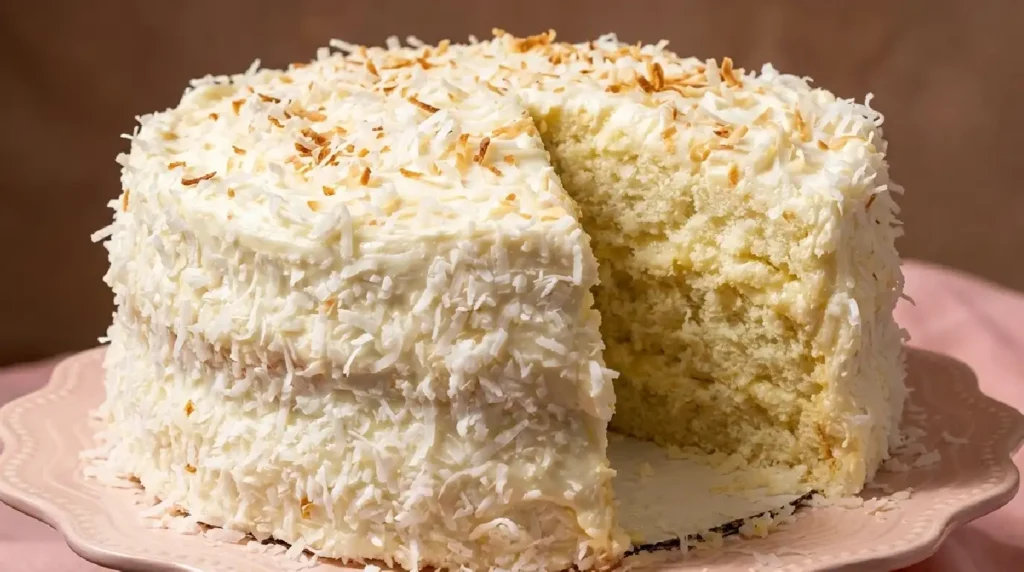
Triple Layer Coconut Cake Recipe
Table of Contents
ToggleThree-Layer Coconut Cake with Creamy Coconut Frosting – A Showstopping Homemade Dessert
Introduction
There’s something about a three-layer coconut cake that stops people mid-conversation. It’s not just the height or the pristine frosting—it’s the way coconut announces itself in every bite, creamy and toasted, with just enough sweetness to feel like a celebration without being heavy. This recipe comes together more smoothly than you’d expect, and the result looks like it came from a professional bakery, even if you’ve never made a layered cake before. The tender crumb, the rich frosting, and the toasted coconut coating create something genuinely special. If you’ve been intimidated by cake-baking, this is the recipe that might change your mind.
Why You’ll Love This
- Impressive but Manageable: Three layers feel fancy, but the straightforward method keeps the stress low and success rate high.
- Rich Coconut Flavor: This isn’t shy about coconut. Between the extract, shredded coconut in the batter, and the generous frosting, every slice delivers consistent flavor.
- Silky, Tender Crumb: The balance of coconut milk and flour creates a moist, delicate structure that stays fresh for days.
- Versatile for Celebrations: Works beautifully for birthdays, bridal showers, potlucks, or any gathering where you want to impress without fuss.
- Room Temperature Serving: No last-minute frosting droop or crumbling. Serve it at room temperature for the best texture and flavor.
The Backstory
My sister-in-law is notoriously picky about desserts. She’ll smile politely at most cakes and then make herself a bowl of cereal an hour later. I decided to test this coconut cake on her—partly as a challenge, partly because I genuinely thought she might appreciate something less heavy than a typical layer cake. She had two slices at dinner and asked for the recipe before dessert was even finished. A week later, she made it herself and texted me photos of her version, crowned with perfectly pressed coconut shreds. That single reaction told me everything. This recipe transforms skeptics into believers.
What Makes It Special
- Coconut Extract and Shredded Coconut: The two-pronged coconut approach gives flavor depth and actual texture. You taste it, and you feel it.
- Coconut Milk Base: Unlike water or regular milk, coconut milk adds richness and a subtle sweetness that integrates seamlessly into the crumb.
- Cream Cheese Frosting: The cream cheese tempers the sweetness of the powdered sugar and adds a slight tang that balances the coconut beautifully.
- Egg Whites Only: This creates an exceptionally light, tender cake with an almost cloud-like crumb. No heavy yolks, just pure structure and lift.
- Toasted Coconut Exterior: That final press of shredded coconut around the cake adds visual appeal and a subtle toasted bite.
Making It Happen
Start by preheating your oven to 350 degrees and preparing three 9-inch cake pans with a light greasing. You’ll want them ready before you mix anything because cake batter waits for no one.
In a standing mixer fitted with a paddle attachment, cream together the softened butter and sugar on high speed. This should take about 3-4 minutes. You’re looking for something light and pale, almost fluffy. This is where you’re incorporating air, which becomes lift in your finished cake. Once you reach that point, reduce the speed to low and slowly add the egg whites, coconut extract, and shredded coconut. Let them integrate fully before moving forward. The batter should look relatively smooth, though the shredded coconut will create little flecks throughout.
In a separate large bowl, whisk together the flour and baking powder. This simple dry mixture is your insurance policy against dense pockets in the finished cake. Now comes the part that requires patience: alternating the dry ingredients and the coconut milk into the wet mixture. Start with dry, then coconut milk, then dry again, ending with the dry ingredients. Add everything slowly with the mixer on low speed. Stop frequently to scrape down the bowl—this ensures even distribution and prevents any hidden pockets of unmixed ingredients. The batter should be thick but pourable, with a slight sheen.
Divide the batter evenly among the three prepared pans. You can use a kitchen scale for precision, or eyeball it by pouring slowly and watching the levels rise. Smooth the tops gently with an offset spatula. Bake for 30 minutes, or until the tops are lightly browned and the centers feel firm when you press them gently. A toothpick inserted into the center should come out clean or with just a few moist crumbs—not wet batter.
Let the cakes cool completely in their pans. This step matters. A warm cake is fragile and will crumble when you try to remove it. Give them at least an hour, or prepare them a day ahead and wrap them at room temperature.
For the frosting, add the softened cream cheese and butter to your mixer with a clean paddle attachment. Beat on high for several minutes until the mixture is light, fluffy, and noticeably paler than when you started. Add the coconut extract. Now add the powdered sugar gradually, mixing on low speed. This is important: powdered sugar clouds easily if you mix too fast. Once everything is combined and smooth, stop. You’re aiming for a thick, spreadable frosting that holds its shape but isn’t grainy.
Turn the cooled cakes onto a flat surface and frost between each layer with a generous amount of frosting. Stack them carefully, then frost the top and sides. Once the cake is frosted, gently press the shredded coconut around the entire exterior, covering the sides and top. The coconut will stick to the frosting and create that picture-perfect finish.
You Must Know
- Bring Ingredients to Room Temperature: Cold butter and cream cheese don’t cream properly, which affects the final texture. Set them out 30 minutes before mixing.
- Don’t Rush the Cooling: Frost a warm cake and you’ll end up with slumping layers and a loose crumb. Patience here prevents disaster.
- Use Fresh Baking Powder: This recipe depends on proper rise. If your baking powder is more than six months old, replace it.
- Coconut Milk Separation is Normal: If the liquid separates in the can, stir it back together. You want the whole thing, not just the cream or just the liquid.
- Invest in Cake Strips: If you have them, wrap them around your pans before baking. They help the cakes bake evenly and cool with flat tops.
Serving Ideas & Pairings
Serve this cake at room temperature with a simple cup of black coffee or strong tea. The richness of the cake pairs perfectly with something bitter and clean. For a more elaborate spread, offer it alongside fresh berries—raspberries or strawberries provide brightness that complements the coconut. A glass of cold milk, especially coconut milk, creates a cohesive flavor experience. If you’re serving it at a gathering, slice it carefully using a hot, wet knife, wiping the blade clean between cuts for neat slices.
Make It Different
For a Lighter Version: Replace half the shredded coconut in the batter with finely shredded white chocolate. The cake stays moist and coconut-forward without being quite as dense.
For a Tangy Twist: Reduce the coconut extract to 1 teaspoon and add ½ teaspoon of lime zest to the frosting. The brightness cuts through the sweetness beautifully.
Dairy-Free Frosting: Use vegan cream cheese and vegan butter in equal proportions. Beat them together and proceed as written. The texture and taste remain virtually unchanged.
Almond Coconut Blend: Replace ½ cup of all-purpose flour with almond flour for a subtly nuttier crumb. The cake stays moist but gains complexity.
Sugar Reduction: If you prefer less sweetness, reduce the cake sugar to 1 ¾ cups and the frosting powdered sugar to 2 ½ cups. The cake still rises and sets properly.
Storage & Reheating
Keep this cake covered at room temperature for up to three days. The frosting stays stable, and the crumb actually improves slightly as it sets. For longer storage, wrap individual slices tightly in plastic wrap and refrigerate for up to five days. The cold will firm up the frosting nicely, making slices easier to handle. You can also freeze unfrosted cooled layers wrapped tightly in plastic and foil for up to three months. Thaw them overnight in the refrigerator before frosting and assembling.
There’s no reheating needed with this cake—it’s best served at room temperature. If you refrigerate a frosted cake and want to serve it, remove it from the fridge 20 minutes before serving so the frosting softens slightly and the cake’s crumb warms up.
Success Tips
The differences between an okay layer cake and an exceptional one often come down to small details. Make sure your flour is measured correctly—spoon it into the measuring cup and level it off rather than scooping directly from the bag, which compacts the flour and can make your cake dense. When alternating dry ingredients and liquid, don’t rush. Small additions, thorough mixing, frequent scraping. This prevents overmixing in one area and undergetting in another.
Pay attention to the cooling step. If your kitchen is warm, you can speed things along by placing the pans on a wire rack in the coolest spot you have. Some bakers even refrigerate their cooled cakes to make frosting easier. The layers will be less fragile, and you’ll have more control over your frosting application.
When stacking layers, a small dollop of frosting between the cake and your cake board or plate prevents sliding. It’s a simple trick that changes everything about the assembly experience.
Frequently Asked Questions
Can I make this cake ahead? Yes. Unfrosted, cooled layers wrapped tightly in plastic wrap keep for three days at room temperature or up to three months frozen. Frost the cake no more than 24 hours before serving for the best appearance.
Why did my cake come out dry? The most common culprit is overbaking. Start checking at 28 minutes. The tops should be lightly golden, and the center should feel just set, not firm. A few moist crumbs on a toothpick are fine; wet batter is not.
Can I use all-purpose flour instead of Bob’s Red Mill specifically? Yes. Any quality all-purpose flour works. Bob’s Red Mill is reliable, but King Arthur, Gold Medal, or your favorite brand will produce the same result.
What if I don’t have a standing mixer? You can hand-mix this, though it takes more elbow work. Cream the butter and sugar with a handheld electric mixer or vigorous whisking for about 5 minutes. Use the same care when alternating ingredients.
How do I prevent the frosting from looking lumpy or gritty? Make sure your cream cheese and butter are fully softened. Cold cream cheese particularly can create lumps. Also, mix the powdered sugar in slowly on low speed. Rushing this step is the primary cause of graininess.
Recipe Card Info
Prep time: 20 minutes
Cook time: 30 minutes
Total time: 1 hour 50 minutes (including cooling)
Servings: 12 slices
Category: Dessert
Difficulty: Intermediate
Cuisine: American
Yield: One 9-inch three-layer cake
Equipment: Standing mixer, three 9-inch round cake pans, offset spatula, wire cooling rack, measuring cups and spoons, large mixing bowls, paddle attachment, whisk
Ingredients
For the Cake:
- 1 cup of softened unsalted butter
- 2 cups of sugar
- 8 egg whites
- 1 ½ teaspoons of coconut extract
- 1 cup of shredded sweetened coconut
- 3 ½ cups of Bob’s Red Mill Unbleached All-Purpose Flour
- 1 tablespoon of baking powder
- 1 1/3 cups of canned coconut milk
For the Icing:
- ¾ cup of softened cream cheese
- ¾ cup of softened unsalted butter
- 1 teaspoon of coconut extract
- 3 cups of powdered sugar
- 4 cups of shredded sweetened coconut
Directions
- Preheat the oven to 350°.
- For the Cake: Cream together the butter and sugar in a standing mixer with the paddle attachment on high speed until light and fluffy.
- Next slowly add in the egg whites, coconut extract and coconut shreds on low speed until it is combined.
- In a large bowl mix together the flour and baking powder and set aside.
- Alternately add the dry ingredients and coconut milk beginning with the dry and ending with the dry ingredients. Stop and scrape often.
- Transfer the batter to 3 9″ greased cake pans and bake for 30 minutes or until lightly browned on top and firm in the center. Cool completely.
- For the Icing: Whip the cream cheese and butter in a standing mixer with the paddle attachment on high speed until light and fluffy.
- Stop and add in the coconut extract and powdered sugar and slowly turn on the speed to low making sure to stop if powdered sugar begins to come out.
- Mix until combined.
- Frost each layer of the cake and stack. Frost the top and outside of the cake and gently press the coconut shreds around the entire cake.
- Serve at room temperature.
Notes: This cake is best served at room temperature. Layers can be baked a day ahead, wrapped tightly, and frosted the next day. For best results, ensure all ingredients are at room temperature before mixing.
Nutrition (per slice): Calories 520 | Fat 28g | Carbohydrates 65g | Protein 5g | Sodium 320mg
