
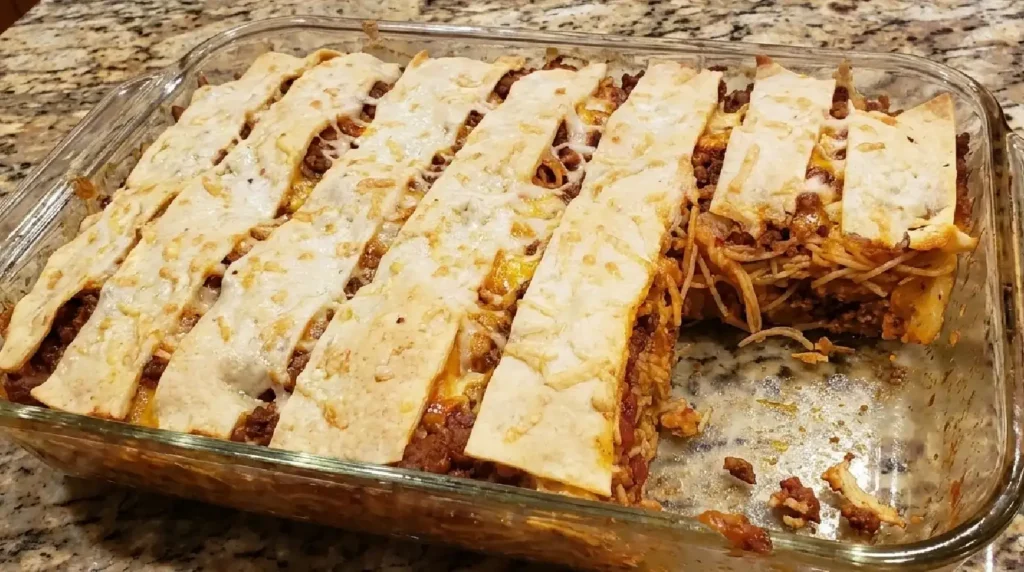
Spaghetti Pie
Table of Contents
ToggleSpaghetti Pie Recipe: The Cheesy, Golden-Crusted Pasta Bake Your Family Will Request Every Week
Introduction
There is something about pulling a spaghetti pie out of the oven that feels entirely different from serving a regular bowl of pasta. The edges are golden and slightly crisp. The inside is tender, creamy, and packed with rich, savory meat sauce. The cheese on top is bubbling, browned in patches, and stretching beautifully when you cut the first slice. It smells like Sunday dinner, even on a Wednesday.
I made this spaghetti pie for the first time on a whim. I had leftover cooked spaghetti, half a jar of marinara, and no patience for complicated cooking. I pressed the pasta into a pie dish, layered on the filling, and baked it until the whole thing held together like a proper pie. My family treated it like I had invented something. They were wrong, of course. This dish has been a staple in American home kitchens for decades, but when it works this well, it feels brand new every single time.
The result is a pasta bake that is sturdy enough to slice, creamy enough to feel indulgent, and simple enough to make on a weeknight without breaking a sweat.
Why You’ll Love This
- It feeds a crowd without complicated prep. One deep-dish pie serves six people comfortably, and the leftovers reheat beautifully the next day.
- The pasta crust is a genuinely clever idea. Pressing egg-coated spaghetti into a pie dish gives you a golden, slightly firm base that holds every slice together cleanly.
- Kids eat it without negotiation. The familiar flavors of spaghetti wrapped in a cheesy, baked format tends to get enthusiasm from even the most reluctant eaters at the table.
- You can make it ahead. Assemble the whole pie, cover it, and refrigerate it until you are ready to bake. It goes from fridge to oven with no extra steps.
- It is endlessly adaptable. Swap the meat, change the cheese, go meatless, add vegetables. The basic structure supports almost any direction you want to take it.
The Backstory
My mother-in-law is not easy to impress with food. She has been cooking for fifty years, grew up in a household where pasta was made from scratch weekly, and has very specific opinions about how Italian-American dishes should taste. She visited for a long weekend last winter, and I made this spaghetti pie on the second night, mostly because I was tired and it was easy.
She asked for the recipe before she finished her second slice. She called it “smart cooking,” which from her is a high compliment. She mentioned that the crust had a satisfying bite she did not expect, and that the ricotta layer added a creaminess she liked better than a straight meat sauce pasta. She has since made it twice for her own dinner guests. The dish has a way of landing well with people who think they already know everything there is to know about pasta.
What Makes It Special
- The egg-bound spaghetti crust creates a firm, golden base with slightly crispy edges that give each slice structure. It is not just a pasta bake; it is a true pie with a distinct crust.
- Ricotta cheese layer sits between the pasta crust and the meat sauce, adding a smooth, milky richness that balances the bold, savory tomato flavor above it.
- Seasoned ground beef and Italian sausage combined in the sauce bring depth, a subtle smoky warmth, and far more flavor than ground beef alone would deliver.
- Mozzarella on top melts into a stretchy, golden blanket that browns beautifully at the edges where the heat hits hardest.
- Parmesan throughout adds a sharp, nutty layer that keeps every bite from feeling one-dimensional. It goes into the crust, the ricotta, and finishes on top.
- Marinara sauce ties the filling together with bright, herby acidity that cuts through the richness of the cheese and meat.
Making It Happen
Start by cooking eight ounces of spaghetti in well-salted water until just al dente. You want a little bite left in the pasta because it will continue cooking in the oven. Drain it well and let it cool for a few minutes, then toss it with two beaten eggs, half a cup of grated Parmesan, a tablespoon of softened butter, and a pinch of garlic powder. The eggs are what bind the crust and hold everything together once baked.
Press the coated spaghetti firmly and evenly into a greased nine-inch deep-dish pie pan. Push it up the sides slightly to form a proper crust edge. Set that aside while you work on the filling.
Brown half a pound of ground beef and half a pound of Italian sausage together in a skillet over medium-high heat, breaking it up as it cooks. Once browned and cooked through, drain the excess fat. Stir in one and a half cups of your favorite marinara sauce, a teaspoon of dried oregano, a half teaspoon of crushed red pepper flakes if you like a gentle heat, and salt and black pepper to taste. Let the sauce simmer for five minutes to meld the flavors together.
In a small bowl, mix one cup of whole-milk ricotta with a tablespoon of Parmesan, a pinch of salt, and a little fresh parsley if you have it. Spread this ricotta mixture evenly over the spaghetti crust. Then spoon the meat sauce over the ricotta in an even layer. Top the whole thing generously with one and a half cups of shredded mozzarella and a final dusting of Parmesan.
Bake in a preheated 375-degree oven for 25 to 30 minutes, until the cheese is melted, bubbling, and golden in spots. Let the pie rest for ten minutes before slicing. That resting time is not optional. It allows the layers to settle and firm up so your slices come out clean rather than collapsing.
You Must Know
- Salt your pasta water properly. The spaghetti is the foundation of this dish, and under-seasoned pasta makes the crust taste flat. The water should taste pleasantly salty before the pasta goes in.
- Do not skip the resting time. Ten minutes out of the oven makes the difference between a messy scoop and a clean, impressive slice. Patience here pays off visibly.
- Press the crust firmly. The more evenly and firmly you press the egg-coated spaghetti into the pan, the sturdier and more golden your crust will be. Use the back of a spoon or your palm to compact it.
- Drain the meat well. Excess grease in the sauce will pool at the bottom of the pie and make the crust soggy. Drain thoroughly after browning.
- Use whole-milk ricotta. Low-fat ricotta tends to release more moisture during baking, which can water down the filling. Full-fat gives you a creamier, more stable layer.
Serving Ideas and Pairings
Spaghetti pie is a complete, filling meal on its own, but it pairs naturally with a crisp green salad dressed with red wine vinaigrette. The acidity of the dressing cuts through the richness of the pie cleanly. Garlic bread or a crusty Italian loaf is excellent for scooping up any sauce that escapes onto the plate.
For vegetables, roasted zucchini, broccolini with garlic, or a simple caprese salad all work beautifully alongside it. If you are serving this for a dinner party, a light antipasto spread as a starter keeps things cohesive with the Italian-American theme.
For drinks, a medium-bodied red wine like Chianti or Montepulciano is a natural match for the tomato-forward sauce. Sparkling water with lemon works perfectly for a non-alcoholic option, as the carbonation and citrus cut through the richness without competing with the flavors.
Make It Different
Make it meatless. Skip the ground beef and sausage entirely and replace the meat sauce with a chunky marinara loaded with sauteed mushrooms, diced zucchini, and baby spinach. The ricotta layer stays the same and keeps the dish creamy and satisfying.
Use turkey or chicken. Ground turkey or ground chicken can replace the beef and pork for a lighter version. Season it a little more generously since it has less inherent fat and flavor.
Go spicier. Use hot Italian sausage instead of mild, and double the red pepper flakes in the sauce. Add a few sliced pickled pepperoncini into the meat layer before baking.
Switch up the cheese. Provolone melts beautifully and adds a slightly smoky note. Fontina brings a buttery, nutty quality. A sharp aged cheddar blended with mozzarella gives the topping a more pronounced flavor. Avoid fresh buffalo mozzarella on top as it releases too much water during baking.
Add a ricotta swap. Cottage cheese, drained overnight through a fine-mesh strainer, works reasonably well as a ricotta substitute. Blend it first for a smoother texture. Some cooks also use mascarpone for an even richer, creamier middle layer.
Gluten-free version. Use your favorite gluten-free spaghetti and check that your marinara sauce contains no added thickeners with gluten. The rest of the recipe works exactly the same way.
Storage and Reheating
Cover leftovers tightly with plastic wrap or transfer slices to an airtight container. The spaghetti pie keeps well in the refrigerator for up to four days. The flavors actually deepen overnight, making next-day leftovers arguably better than the original serving.
To reheat individual slices, place them on a microwave-safe plate, cover loosely with a damp paper towel, and heat on medium power for two to three minutes. The damp towel keeps the pasta from drying out during reheating.
For reheating a larger portion, place the pie or remaining slices in a baking dish, cover with foil, and warm in a 350-degree oven for fifteen to twenty minutes. Remove the foil for the last five minutes to re-crisp the cheese on top.
For freezing, wrap individual slices tightly in plastic wrap, then in foil, and freeze for up to two months. Thaw overnight in the refrigerator before reheating using the oven method above. The texture holds up well, though the crust may be slightly softer after freezing.
Success Tips
Do not overcook the spaghetti. Al dente pasta holds its structure through the baking process. If the pasta is too soft before it goes into the pie, the crust will be mushy rather than golden and firm.
Let the egg and Parmesan mixture coat every strand before pressing it in. Toss the pasta thoroughly and let it sit for a minute so the egg absorbs into the noodles rather than pooling at the bottom of the bowl.
If you are worried about the pie sticking, butter the pie dish generously, then add a very light dusting of Parmesan over the butter before pressing in the crust. It adds flavor and acts as an extra barrier.
A deep-dish nine-inch pie pan is ideal. A standard pie dish is shallower and may not hold all the layers without overflow. If you only have a standard pan, reduce the meat sauce layer slightly and use a baking sheet underneath to catch any drips.
Taste your marinara before you use it. A jarred sauce that is too sweet will make the filling taste unbalanced. Add a pinch of salt and a small splash of red wine or balsamic vinegar if the sauce needs more depth and acidity.
Frequently Asked Questions
Can I use a different pasta shape instead of spaghetti?
Yes, though spaghetti works best because the long, thin strands press together into a cohesive, sliceable crust. Thin linguine or angel hair pasta are close alternatives that behave similarly. Shorter pasta shapes like penne or rigatoni do not bind together as well and will result in a looser, harder-to-slice pie.
Can I make this ahead of time?
Absolutely. Assemble the entire pie up to the cheese topping, cover it tightly with plastic wrap, and refrigerate for up to 24 hours before baking. When you are ready to cook, remove it from the fridge and let it sit at room temperature for about 20 minutes before placing it in the oven. Add an extra five minutes to the baking time to account for the cold start.
My crust is soggy. What went wrong?
The most common causes are overcooked pasta before baking, excess moisture in the meat sauce from undrained fat, or wet ricotta. Use al dente pasta, drain the browned meat well, and choose whole-milk ricotta rather than a low-fat version. If your ricotta seems very wet, drain it in a fine-mesh strainer lined with cheesecloth for 30 minutes before using it.
How do I know when the spaghetti pie is done?
The cheese on top should be fully melted, bubbling actively at the edges, and golden or lightly browned in patches. The edges of the pie will appear slightly pulled away from the sides of the pan. If you insert a thin knife into the center, it should come out hot. The internal temperature should be at least 165 degrees Fahrenheit.
Can I double this recipe?
Yes. Use a 9×13 inch baking dish instead of a pie pan. Press the doubled spaghetti mixture across the bottom and up the sides as much as possible, layer the ricotta and meat sauce, and top with the doubled amount of cheese. The baking time will increase by about ten minutes. Check the center for bubbling and browning before pulling it from the oven.
Recipe Card
Prep Time: 20 minutes
Cook Time: 30 minutes
Total Time: 50 minutes
Servings: 6 slices
Category: Main Dish / Dinner
Difficulty: Easy
Cuisine: Italian-American
Yield: One 9-inch deep-dish pie
Equipment: 9-inch deep-dish pie pan, large pot, large skillet, mixing bowls, colander
Ingredients
For the Spaghetti Crust:
- 8 oz spaghetti
- 2 large eggs, beaten
- 1/2 cup grated Parmesan cheese
- 1 tablespoon unsalted butter, softened
- 1/4 teaspoon garlic powder
For the Ricotta Layer:
- 1 cup whole-milk ricotta cheese
- 1 tablespoon grated Parmesan
- 2 tablespoons fresh parsley, finely chopped (optional)
- 1/4 teaspoon salt
For the Meat Sauce:
- 1/2 lb ground beef (80/20)
- 1/2 lb mild Italian sausage, casings removed
- 1 1/2 cups marinara sauce
- 1 teaspoon dried oregano
- 1/2 teaspoon crushed red pepper flakes (optional)
- Salt and black pepper to taste
For the Topping:
- 1 1/2 cups shredded whole-milk mozzarella
- 2 tablespoons grated Parmesan
Directions
- Preheat the oven to 375 degrees Fahrenheit. Lightly grease a 9-inch deep-dish pie pan with butter or cooking spray.
- Cook the spaghetti in a large pot of generously salted boiling water until al dente according to package directions. Drain well and allow to cool for 5 minutes.
- In a large bowl, toss the warm drained spaghetti with the beaten eggs, Parmesan, softened butter, and garlic powder. Toss thoroughly until every strand is coated.
- Press the coated spaghetti firmly and evenly into the prepared pie pan, pushing it slightly up the sides to form a crust. Set aside.
- In a large skillet over medium-high heat, brown the ground beef and Italian sausage together, breaking into small crumbles. Drain excess fat thoroughly.
- Stir the marinara sauce, dried oregano, red pepper flakes, salt, and black pepper into the browned meat. Simmer over medium-low heat for 5 minutes. Remove from heat.
- In a small bowl, stir together the ricotta, Parmesan, parsley, and salt until smooth.
- Spread the ricotta mixture evenly over the spaghetti crust.
- Spoon the meat sauce evenly over the ricotta layer.
- Sprinkle the shredded mozzarella over the meat sauce, then finish with the 2 tablespoons of Parmesan.
- Bake uncovered for 25 to 30 minutes, until the cheese is melted, bubbling, and golden in spots.
- Remove from the oven and let rest for 10 minutes before slicing and serving.
Notes
- For a meatless version, replace the meat sauce with a vegetable-loaded marinara featuring mushrooms, zucchini, and spinach.
- The assembled, unbaked pie can be refrigerated overnight. Add 5 extra minutes to the baking time when cooking from cold.
- Leftovers keep refrigerated in an airtight container for up to 4 days.
- The pie can be frozen in individual slices for up to 2 months. Thaw overnight in the refrigerator before reheating.
- For a spicier pie, use hot Italian sausage and double the red pepper flakes.
Nutrition
Per serving (1 slice, based on 6 servings):
- Calories: 520
- Total Fat: 28g
- Saturated Fat: 13g
- Cholesterol: 145mg
- Sodium: 780mg
- Total Carbohydrates: 38g
- Dietary Fiber: 2g
- Sugars: 5g
- Protein: 31g
Nutrition values are estimates and will vary depending on specific ingredients used.
