
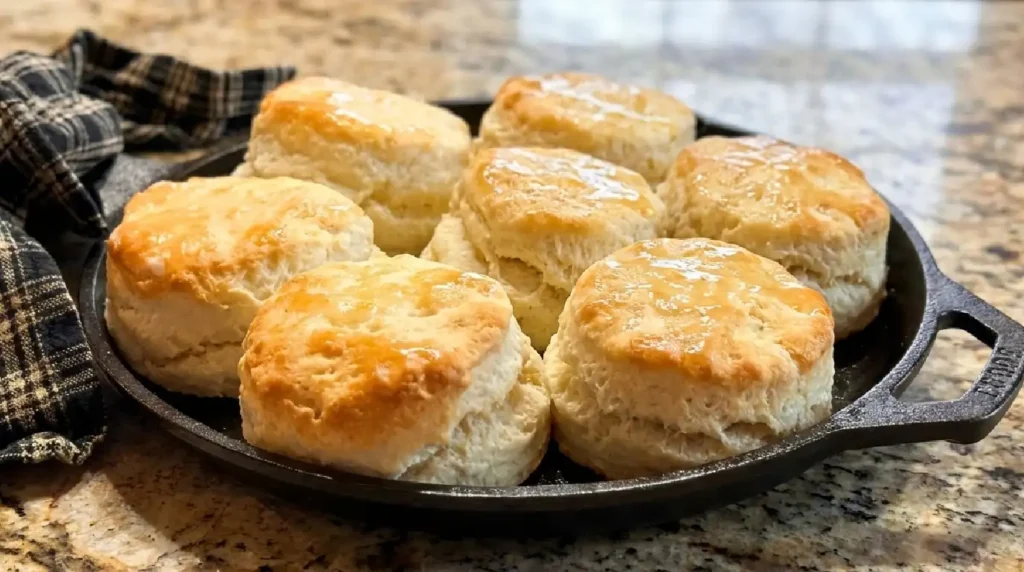
Two-Ingredient Homemade Biscuits
Table of Contents
Toggle2-Ingredient Cream Biscuits: A Simple Recipe That Delivers Golden, Buttery Perfection
Introduction
Some of the best recipes are born from simplicity, and this cream biscuits recipe is a perfect example. With just self-rising flour and heavy cream, you can create biscuits with a tender crumb and rich, buttery flavor that rivals anything from a bakery. There’s something almost magical about how these two humble ingredients transform into warm, golden rounds that practically melt in your mouth. I discovered this recipe during a particularly hectic weeknight when I needed something impressive but had zero time—what emerged from the oven changed how I think about baking. No complicated lamination techniques, no mystery ingredients, just straightforward baking that works.
Why You’ll Love This
- Ridiculously Simple: Two main ingredients mean fewer things to measure, fewer dishes to wash, and less stress in the kitchen
- Unfailly Good Results: Self-rising flour does the heavy lifting, making this nearly impossible to mess up
- Ready in Minutes: From mixing bowl to warm biscuits on the table in under 25 minutes total
- Customizable: The basic formula works for savory biscuits or sweet shortcake-style versions depending on your mood
- Perfect Texture: The heavy cream creates a tender, moist interior with a lightly crispy exterior
The Backstory
I made these biscuits for my brother-in-law last summer—the one who “doesn’t really eat biscuits” because he grew up thinking they were always dry and flavorless. I wasn’t expecting much of a reaction, honestly. But when he bit into one straight from the cooling rack, something shifted. He actually paused mid-chew. “These are what biscuits are supposed to taste like,” he said, reaching for a second one before anyone else had taken a first. That moment taught me that sometimes the simplest recipes pack the most punch. Now I make them whenever he visits, and he’s started asking me for the recipe (which he claims to have lost three times already).
What Makes It Special
- Heavy Cream as the Star: Rather than cutting cold butter into flour, heavy cream acts as both the liquid and fat component, creating an incredibly tender crumb
- Self-Rising Flour Advantage: Contains salt and leavening already mixed in, eliminating guesswork about proportions
- Minimal Mixing: The less you stir, the flakier they become—a beautiful contradiction that works in your favor
- Versatility: Works beautifully as shortcake-style biscuits for strawberries and whipped cream or as savory biscuits for breakfast sandwiches
Making It Happen
Start by adjusting your oven rack to the center position and preheating the oven to 450°F—this temperature is crucial for getting that golden-brown exterior without overbaking the interior. While the oven heats, place your self-rising flour into a large mixing bowl. If you’re making the sweet shortcake-style version, whisk in the sugar at this stage so it distributes evenly throughout.
Now comes the most important part: the mixing. Using a wooden spoon, begin drizzling in your heavy cream while stirring. The dough will look shaggy and lumpy—this is exactly what you want. Keep stirring until all the flour is just moistened and a lumpy dough has formed. This is your signal to stop. Resist every urge to keep mixing. Over-mixing develops gluten, which leads to tough biscuits instead of the tender ones you’re after.
From here, you have two options. For drop biscuits (the faster route), use a 1-ounce cookie scoop to portion dough balls onto a parchment-lined baking sheet, spacing them about 2 inches apart. Brush the tops lightly with additional cream, which gives them a beautiful sheen as they bake. Slide them into your preheated oven for about 12 minutes, until they turn a light golden brown.
For flaky rolled biscuits (the slightly more involved method), roll your dough into a 12-inch square on a lightly floured surface. Using a bench scraper, fold the right third of the dough over the center, then fold the left third over on top so you end up with a 12-by-4-inch rectangle. Next, fold the top third down over the center, then fold the bottom third up, creating a 4-inch square. Press this square down and roll it out again into another 12-inch square. Repeat this entire folding process once more (so you’ve folded twice total), then roll the dough a final time into a 12-inch square. The lamination creates those beautiful flaky layers you see when you break one open. Cut out rounds using a 3- to 4-inch biscuit cutter and transfer them to your parchment-lined baking sheet, spacing them 2 inches apart. Press together any scraps and cut additional biscuits from them. Brush the tops with cream and bake for approximately 12 minutes until golden brown. Whether you choose drop or rolled, let them cool for just a minute or two before serving—they’re best enjoyed while still warm.
You Must Know
- Temperature Matters: Cold dough mixed and baked immediately creates better flake and structure than warm dough
- Don’t Overmix: Stir just until the dough comes together. Lumps are your friend, not your enemy
- Brush With Cream: This simple step creates that gorgeous golden color and a slightly crisp exterior
- The Scoop Method Works: If you’re intimidated by rolling and cutting, drop biscuits are just as delicious and far faster
- Oven Position and Temperature: Center rack and 450°F are non-negotiable for consistent results
Serving Ideas and Pairings
These cream biscuits shine in multiple contexts. Serve them warm alongside scrambled eggs and bacon for breakfast, split them to make breakfast sandwiches with sausage and cheese, or embrace the sweet side by topping them with fresh strawberries and whipped cream for a classic shortcake dessert. They pair beautifully with a simple cup of coffee or tea in the morning, or with iced tea on a warm afternoon. For dinner occasions, they complement soups and salads equally well.
Make It Different
For Extra Flavor: Add 1 tablespoon of honey to the cream mixture for subtle sweetness, or whisk in 1 teaspoon of vanilla extract for the sweet version. For savory biscuits, mix in 1/2 teaspoon of garlic powder and fresh cracked pepper, or stir in shredded cheddar cheese.
For Dietary Adjustments: Heavy cream can be partially substituted with full-fat Greek yogurt (use about 3/4 cup cream and 1/2 cup yogurt) for a slightly tangier flavor, though the texture will be slightly denser. For a dairy-free version, use full-fat coconut cream instead of heavy cream—the results are remarkably similar.
For Different Textures: If you prefer them more cake-like and tender, reduce mixing time even further. For more pronounced flakiness, repeat the folding process three times instead of twice.
Storage and Reheating
Freshly baked biscuits are best enjoyed within a few hours, but they keep well for up to two days. Store cooled biscuits in an airtight container at room temperature. To reheat, place them on a baking sheet and warm in a 350°F oven for about 5 minutes until warmed through—this restores the tender texture better than a microwave would. You can also freeze baked biscuits in a freezer-safe container for up to three months. Thaw at room temperature for about an hour before reheating, or reheat directly from frozen (adding just a couple extra minutes in the oven). For the best results, freeze unbaked dough balls on a sheet before transferring to a freezer bag—you can bake them straight from frozen, adding just a minute or two to the baking time.
Success Tips
The real mastery of this recipe lies in understanding that simplicity requires precision in execution. Your self-rising flour brand matters slightly—different brands have different densities, so if your first batch seems too dry or too wet, adjust the cream amount by a tablespoon next time. Keep everything as cool as possible, especially if your kitchen is warm. Work quickly once you’ve mixed the dough. The lumpy appearance of your dough might make you second-guess yourself, but trust the process. That lumpy texture is what creates distinct flaky layers. If you’re making the rolled version, flour your work surface and rolling pin well to prevent sticking, but brush off excess flour before baking. One final thought: these biscuits have a narrow window where they’re perfect—that’s when they’re warm and still slightly steaming. Plan to serve them immediately if possible.
Frequently Asked Questions
Can I make these biscuits ahead of time? Yes. You can prepare the dough up to 8 hours in advance, refrigerate it in an airtight container, and bake when ready. Cold dough actually bakes better, producing flakier results. You can also freeze unbaked dough balls for up to three months and bake directly from frozen, adding one or two minutes to the baking time.
Why did my biscuits turn out dense and heavy? Overmixing is the most common culprit. Stir the dough only until the flour is just moistened—lumps are fine. If you’re rolling and folding, handle the dough gently and avoid pressing it too firmly between folds.
Can I use regular all-purpose flour instead of self-rising flour? You can, but you’ll need to add 1 1/2 teaspoons of baking powder and 1/2 teaspoon of salt per cup of all-purpose flour. Self-rising flour does all this automatically, so I’d recommend sticking with it for this recipe.
What’s the difference between drop biscuits and rolled biscuits? Drop biscuits are scooped directly onto the baking sheet (faster and easier), while rolled biscuits are rolled out and cut with a cutter (more traditional-looking). The rolled method creates more distinct flaky layers due to the lamination process, but both are delicious.
How do I know when they’re done baking? Look for a light golden-brown color on the tops. They should be set and no longer wet-looking on top, but not deeply browned. At 450°F, this typically takes about 12 minutes. If they’re browning too quickly, your oven may run hot—pull them out a minute or two earlier next time.
Recipe Card Info
Prep Time: 10 minutes Cook Time: 12 minutes Total Time: 22 minutes Servings: 12 biscuits Category: Breakfast, Dessert, Sides Difficulty: Easy Cuisine: American Yield: 12 drop biscuits or 8-10 rolled biscuits Equipment: Large mixing bowl, wooden spoon, measuring cups, baking sheet, parchment paper, rolling pin (for rolled version), bench scraper (optional), biscuit cutter (for rolled version)
Ingredients
- 10 ounces (about 2 cups) self-rising flour
- 2 tablespoons sugar (if making sweet shortcake-style biscuits)
- 10 ounces (about 1 1/4 cups) heavy cream, plus more for brushing
Directions
Prep and Mixing: Adjust oven rack to center position and preheat oven to 450°F. Place flour in a large bowl. If making sweet biscuits, whisk in sugar. Stirring with a wooden spoon, drizzle in cream. Stir until a lumpy dough is formed. Do not over mix.
For Drop Biscuits: Using a 1-ounce cookie scoop, scoop balls of dough onto a parchment-lined baking sheet, spacing them 2 inches apart. Brush tops with cream and bake until golden brown, about 12 minutes. Let cool slightly and serve.
For Flaky Rolled Biscuits: With a rolling pin, roll the dough into a 12-inch square. Using a bench scraper, fold the right third of the dough over the center, then fold the left third over so you end up with a 12-by-4-inch rectangle. Fold the top third down over the center, then fold the bottom third up so the whole thing is reduced to a 4-inch square. Press the square down and roll it out again into a 12-inch square. Repeat the folding process once more, then roll the dough again into a 12-inch square. Use a 3- to 4-inch biscuit cutter to cut out rounds and transfer to a parchment-lined baking sheet, spaced 2 inches apart. Press together scraps to form additional biscuits. Brush tops with cream and bake until golden brown, about 12 minutes. Let cool slightly and serve.
Notes: These biscuits are best served warm. The heavy cream creates a tender, moist crumb—no butter substitution needed. For savory biscuits, omit the sugar and add garlic powder, pepper, or cheese instead.
Nutrition: Per biscuit (approximate): 150 calories, 8g fat, 18g carbohydrates, 2g protein, 0.5g fiber
