
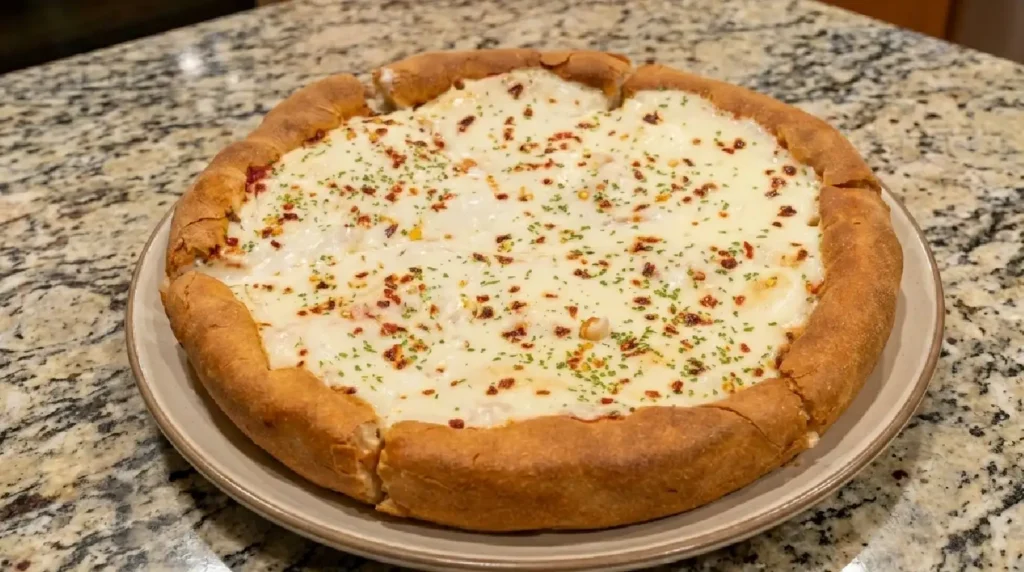
Big Star Pizza Recipe
Table of Contents
ToggleBig Star Pizza Recipe: The Crispy, Cheesy Slice You’ll Make Every Weekend
Introduction
There is something about a pizza that comes out of the oven with a shatteringly crisp bottom, a sauce that tastes like summer tomatoes at their peak, and cheese that bubbles and browns in patches of golden amber that just stops everyone in the room. That is the Big Star Pizza. It is not fussy. It is not trying to be anything other than exactly what a great pizza should be — bold, satisfying, and impossible to stop eating after the first slice.
I first made this version on a Friday night when the plan was takeout and the motivation was zero. The dough had been sitting in the fridge since Tuesday, the pantry had a can of whole tomatoes, and there was a generous block of low-moisture mozzarella that needed to be used. What came out of that oven was so unexpectedly good that it became a standing weekly ritual. No delivery app required.
This Big Star Pizza Recipe brings together a long-fermented, thin-yet-chewy crust, a punchy no-cook tomato sauce, and a layered cheese situation that gets smoky and stretchy in all the right ways. It is the kind of pizza that makes people lean over the counter before it is even cut.
Why You’ll Love This
- The dough ferments slowly in the refrigerator, which builds a complex, slightly tangy flavor that same-day dough simply cannot match.
- The no-cook sauce takes five minutes and tastes brighter and more vibrant than anything that has been simmered for an hour.
- You get that coveted crispy, leopard-spotted crust without a pizza oven — just a screaming-hot cast iron skillet or baking steel.
- It is endlessly customizable with toppings, so every member of the household can get what they want on their half.
- Leftovers reheat beautifully, and cold pizza straight from the fridge the next morning is a genuine pleasure.
The Backstory
My brother-in-law Marco has exactly two food opinions: he likes what he likes and he does not try new things. He is the person who orders the same burger at every restaurant and considers “adventurous” to mean extra pickles. So when he watched me stretch the dough for this pizza on a Sunday afternoon and announced he was “not really a homemade pizza person,” I did not take it personally. Twenty minutes later he was standing at the counter eating his third slice directly off the cutting board, still in his coat, unable to commit to sitting down because that felt like it might slow the process. He asked for the recipe. He has never once asked for a recipe. The Big Star Pizza has that effect on people.
What Makes It Special
- Long-fermented dough: Refrigerator fermentation over 48 to 72 hours produces a crust with deep flavor, good chew, and those beautiful charred bubbles on the cornicione.
- Whole canned San Marzano tomatoes: Crushed by hand into a raw sauce with olive oil, garlic, and a pinch of red pepper flakes — bright, acidic, and deeply savory.
- Low-moisture mozzarella: Shredded fresh from a block (never pre-shredded, which contains anti-caking agents that prevent proper melting) for maximum stretch and golden browning.
- Olive oil on the crust edge: Brushed just before baking, this creates a buttery, crispy, richly flavored rim that makes the crust worth eating on its own.
- High heat: The difference between a good pizza and a great one is temperature. This recipe uses the highest heat your oven will produce, and it shows.
Making It Happen
Start the dough two to three days before you plan to eat, and the rest of the process is genuinely easy. Combine bread flour, a small amount of instant yeast, salt, water, and a drizzle of olive oil in a large bowl. Mix until no dry flour remains, then cover and let it rest at room temperature for one hour. After that, transfer the dough to the refrigerator in a lightly oiled covered container and leave it for 48 to 72 hours. The slow cold fermentation does all the work.
When pizza day arrives, pull the dough from the fridge about two hours before baking so it can come to room temperature and relax. Cold dough fights you when you try to stretch it — warm dough cooperates. Divide the dough if you are making two smaller pies, then shape each portion into a smooth ball and let it rest under a damp cloth on a lightly floured surface.
For the sauce, drain most of the liquid from a 28-ounce can of whole San Marzano tomatoes and crush them by hand directly into a bowl. Add two cloves of grated garlic, a generous pour of good olive oil, a pinch of kosher salt, and a small amount of red pepper flakes. Stir and taste. It should be vivid, a little sharp, and deeply tomatoey. That is correct.
Place your baking steel, baking stone, or heavy cast iron skillet in the oven and preheat to the maximum temperature — 500 to 550 degrees Fahrenheit — for at least 45 minutes to one hour. The surface needs to be blazing hot.
On a lightly floured surface or parchment paper, stretch the dough by pressing from the center outward with your fingertips, then picking it up and letting gravity do the work. Aim for a thin, even round with a thicker edge. Transfer to a well-floured pizza peel or the back of a flat baking sheet. Work quickly from here.
Spoon a modest amount of sauce onto the dough — less than you think — and spread it to the edge, leaving about a half inch for the crust. Scatter the shredded mozzarella generously. Add any additional toppings in a single, sparse layer. Brush the exposed crust edge with olive oil. Slide onto the hot surface and bake for 7 to 10 minutes, until the crust is deeply golden with dark, charred spots and the cheese is bubbling with bronzed patches across the top.
Let it rest for two minutes before cutting. This matters. The cheese needs a moment to settle so slices hold together cleanly.
You Must Know
- Do not overload the sauce. A thin, even coat is what you want. Too much sauce steams the dough and prevents the crust from getting crispy.
- Pre-shredded mozzarella will not melt the same way. Buy a block and shred it yourself — the difference is immediate and obvious.
- Give the oven and baking surface the full preheat time. Rushing this step is the most common reason homemade pizza disappoints.
- Stretch, do not roll. A rolling pin deflates the air pockets in the dough that create texture and those signature bubbles. Use your hands.
- If your dough keeps springing back when you try to stretch it, let it rest five more minutes uncovered. It will relax and cooperate.
Serving Ideas & Pairings
Big Star Pizza is a complete meal on its own, but a few simple sides round out the table nicely. A crisp green salad dressed with nothing more than lemon juice, olive oil, and shaved Parmesan is the ideal partner — the acidity cuts through the richness of the cheese. A bowl of castelvetrano olives or a small board of charcuterie works beautifully as a starter while the pizza bakes.
For drinks, a medium-bodied Italian red like Chianti Classico or Montepulciano d’Abruzzo is a natural match. If you prefer white, a cold, mineral-driven Pinot Grigio or a Vermentino from Sardinia plays well against the tomato. For non-alcoholic pairings, sparkling water with a wedge of lemon, or a lightly sweetened Italian soda, keeps things refreshing.
Make It Different
For a white pizza: Skip the tomato sauce entirely. Instead, brush the stretched dough with garlic-infused olive oil, scatter with ricotta in small dollops, mozzarella, and finish with fresh thyme after baking.
For a spicy version: Add thinly sliced fresh Calabrian chilis or a generous amount of hot honey drizzled over the finished pizza just before serving. The sweet heat against the smoky cheese is outstanding.
For gluten-free needs: A store-bought gluten-free pizza dough works reasonably well here, though the texture will differ. Pre-bake the crust for four to five minutes before adding toppings to prevent sogginess.
For a dairy-free option: A high-quality cashew-based mozzarella substitute can replace the dairy cheese. Results vary by brand, so try a small test batch first.
For extra-crispy crust: Add one tablespoon of semolina flour to the bottom of the dough before stretching. It adds a slightly gritty, cracker-like texture to the base that is genuinely excellent.
Storage & Reheating
Leftover pizza keeps well in an airtight container or wrapped tightly in foil in the refrigerator for up to three days. For best texture, avoid stacking slices directly on top of each other, as this can make the crust soggy.
To reheat, skip the microwave entirely. Place slices in a dry cast iron skillet over medium heat, cover with a lid, and heat for three to four minutes. The bottom crisps back up beautifully while the cheese softens and the toppings warm through. It comes remarkably close to fresh-from-the-oven quality.
For reheating multiple slices at once, arrange them on a baking sheet and place in a 375-degree oven for eight to ten minutes. A preheated oven gives a better result than starting from cold.
Unbaked dough balls can be frozen for up to three months. Wrap tightly in plastic wrap and place in a zip-lock freezer bag. Thaw overnight in the refrigerator, then continue with the room-temperature rest before shaping.
Success Tips
The biggest variable between an average pizza and a genuinely great one is confidence during the stretch. New pizza makers tend to be timid — they worry about tearing the dough and end up with a thick, uneven round. Thin is your friend. Aim for translucency in the center. If a small tear appears, pinch it shut and carry on. It will seal during baking.
Salt your dough correctly from the start. Under-salted dough produces a flat, cardboard-adjacent crust no matter how good everything else is. The recipe calls for a specific amount — follow it.
Keep toppings light and evenly distributed rather than piling them on. Heavy, wet toppings like fresh vegetables release moisture during baking and can make the center of the pie soft and steamy rather than crisp. If using vegetables, roast or sauté them first to drive off excess water.
Finally, trust the heat. If your oven goes to 550 degrees Fahrenheit, use 550 degrees. The ferocity of the heat is what creates the charred, complex flavors in the crust and the beautifully bronzed, slightly crispy edge on the cheese.
Frequently Asked Questions
Can I make the dough the same day? You can, but the results will be noticeably different. Same-day dough has less flavor complexity and can be harder to stretch because the gluten has not had enough time to relax fully. If you must do same day, use slightly warmer water and let the dough ferment at room temperature for four to six hours instead.
What if I do not have a baking steel or stone? A heavy cast iron skillet works well and is arguably more accessible. Preheat it in the oven the same way. You can also use an inverted heavy-duty baking sheet — it will not hold heat as well, but it still produces a far better result than a standard pan on the middle rack.
Can I use fresh mozzarella instead of low-moisture? Fresh mozzarella has a much higher water content, which can make the pizza wet in the center. If you want to use it, tear the mozzarella and let it drain on paper towels for at least 30 minutes before use, and apply it sparingly. A combination of low-moisture for coverage and a few pieces of fresh for flavor is a good middle ground.
Why does my crust keep tearing when I stretch it? The dough is too cold or too tight. Let it rest at room temperature for an additional 10 to 15 minutes and try again. The gluten needs time to relax. Never force a dough ball that is resisting — resting is always the answer.
How do I know when the pizza is done? The crust should be deeply golden brown on the bottom (lift an edge with a spatula to check), the cornicione should have visible dark spots, and the cheese should be fully melted with bronze bubbling patches across the surface. If the cheese looks pale and the crust looks pale, give it two more minutes and check again.
Recipe Card
Recipe Name: Big Star Pizza Recipe
Prep Time: 20 minutes (plus 48–72 hours dough fermentation) Cook Time: 8–10 minutes Total Time: 48–72 hours (mostly hands-off) Servings: 2 pizzas (serves 4) Category: Main Course Difficulty: Intermediate Cuisine: American-Italian Yield: Two 12-inch pizzas
Equipment:
- Large mixing bowl
- Baking steel, baking stone, or 12-inch cast iron skillet
- Pizza peel or flat baking sheet (for transferring)
- Box grater
- Sharp chef’s knife or pizza wheel
Ingredients
For the Dough:
- 3 cups (360g) bread flour, plus more for dusting
- 1 teaspoon kosher salt
- 1/4 teaspoon instant yeast
- 1 cup plus 2 tablespoons (270ml) lukewarm water
- 1 tablespoon olive oil
For the Sauce:
- 1 can (28 ounces) whole San Marzano tomatoes
- 2 cloves garlic, finely grated
- 2 tablespoons good-quality olive oil
- 1/2 teaspoon kosher salt
- 1/4 teaspoon red pepper flakes (adjust to taste)
For the Pizza:
- 2 cups (225g) low-moisture mozzarella, shredded from a block
- 2 tablespoons olive oil (for brushing the crust)
- Flaky salt, for finishing
- Fresh basil leaves, added after baking (optional)
Instructions
Step 1 — Make the Dough (48–72 Hours Ahead) Combine the bread flour, salt, and instant yeast in a large bowl and whisk briefly to distribute. Add the lukewarm water and olive oil, then mix with a fork or your hand until no dry flour remains and a shaggy dough forms. Cover the bowl tightly with plastic wrap and let it rest at room temperature for one hour. Transfer the covered bowl to the refrigerator and ferment for 48 to 72 hours.
Step 2 — Bring Dough to Room Temperature Remove the dough from the refrigerator two hours before baking. Turn it out onto a lightly floured surface, divide into two equal portions, and shape each into a smooth ball. Place the dough balls on a floured surface, cover with a damp kitchen towel, and let rest at room temperature for two hours.
Step 3 — Preheat the Oven Place your baking steel, baking stone, or cast iron skillet on the top rack of the oven. Preheat the oven to its maximum temperature (500 to 550 degrees Fahrenheit / 260 to 290 degrees Celsius) for at least 45 to 60 minutes before baking.
Step 4 — Make the Sauce Open the can of tomatoes and drain off most of the liquid. Crush the tomatoes by hand directly into a bowl until they are broken into a rough, chunky texture. Add the grated garlic, olive oil, salt, and red pepper flakes. Stir well and taste for seasoning. Set aside at room temperature.
Step 5 — Stretch the Dough On a lightly floured surface, press one dough ball flat with your fingertips, working from the center outward. Pick the dough up and hold it with both hands along the edge, letting gravity stretch it gently as you rotate. Work it to a thin, roughly 12-inch round with a slightly thicker rim. Transfer to a well-floured pizza peel or the back of a flat baking sheet.
Step 6 — Top the Pizza Spoon 3 to 4 tablespoons of sauce onto the dough and spread evenly, leaving a 1/2-inch border. Scatter 1 cup of shredded mozzarella across the surface in an even layer. Add any additional toppings sparingly. Brush the exposed crust rim generously with olive oil.
Step 7 — Bake Slide the pizza quickly onto the preheated baking surface. Bake for 7 to 10 minutes, until the crust is deeply golden with dark charred spots and the cheese is fully melted and patchy brown across the top. Check the bottom by lifting the edge with a spatula — it should be crisp and browned.
Step 8 — Rest and Serve Transfer the pizza to a wire rack or cutting board and let it rest for two minutes before cutting. Finish with a pinch of flaky salt and fresh basil if desired. Repeat with the second dough ball.
Notes
- Do not use pre-shredded mozzarella. The anti-caking starches coat the shreds and prevent proper melting and browning. Buying a block and shredding it yourself makes a meaningful difference.
- The longer the dough ferments (up to 72 hours), the more complex and slightly tangy the flavor. Plan ahead for best results.
- If the dough tears during stretching, simply pinch the hole closed and continue. Small tears seal during baking without affecting the finished pizza.
- Leftovers reheat best in a dry cast iron skillet over medium heat for 3 to 4 minutes with the lid on.
Nutrition (Per Serving — based on 4 servings)
- Calories: 520
- Total Fat: 18g
- Saturated Fat: 7g
- Cholesterol: 35mg
- Sodium: 780mg
- Total Carbohydrates: 68g
- Dietary Fiber: 3g
- Sugars: 5g
- Protein: 22g
Nutritional values are estimates and will vary based on specific ingredients used and portion sizes.
