Cajun Baked Catfish
The Best Cajun Baked Catfish Recipe: Tender, Buttery, and Bold
There is something deeply comforting about the sound of a cast iron skillet sliding into a hot oven. Growing up, fish night usually meant a heavy flour dread and a deep fryer that left the house smelling like a chip shop for days. But this Cajun Baked Catfish changed the game for me. It captures that soulful, smoky heat of the bayou without the heavy oil. When you pull this skillet out, the kitchen fills with the scent of toasted garlic, bright lemon, and the earthy richness of melted butter. The fillets come out remarkably tender, soaking up a spicy, citrus-infused sauce that gathers at the bottom of the pan, making every bite feel like a celebration of Southern coastal cooking.
Why You’ll Love This
-
Effortless Elegance: It looks and tastes like a gourmet meal but requires less than ten minutes of actual prep work.
-
The Perfect Balance: You get the punchy heat of cayenne and hot sauce tempered by the silky richness of cold butter.
-
Healthier Comfort: By baking instead of frying, you preserve the delicate texture of the catfish while keeping the meal light and nutritious.
The Skeptic at the Table
I remember the first time I served this to my uncle, a man who believes that if a fish isn’t battered and fried, it isn’t worth eating. He sat down with a look of pure suspicion, eyeing the lack of cornmeal. But as soon as his fork hit the fillet and it flaked away in perfect, moist layers, his expression shifted. He didn’t just finish his portion; he was using a piece of crusty bread to swipe up every last drop of the Cajun butter sauce left in the skillet. It’s the kind of dish that wins over the “fried-only” crowd by proving that flavor doesn’t always need a crust.
What Makes It Special
-
The Cast Iron Skillet: Using heavy cast iron ensures even heat distribution, helping the bottom of the fish sear slightly while the top stays succulent.
-
Crystal Hot Sauce: This specific sauce adds a vinegar-based tang and a medium heat that is quintessentially Louisianan.
-
Cold Butter Tabs: By using cold butter rather than melted, the fat emulsifies slowly with the lemon juice and spices, creating a velvety pan sauce.
-
Layered Aromatics: The combination of garlic powder, onion powder, and dried parsley creates a savory base that lets the cayenne pepper shine.
Making It Happen
Success starts with a screaming hot oven preheated to 400 degrees. While the air warms up, take your 12-inch cast iron skillet and grease it liberally; you want those fillets to glide right out when they’re done. Lay your catfish fillets—fresh or properly thawed—into the center of the pan.
Now, we build the flavor layers. Drizzle that fresh lemon juice over the fish, brushing it to the edges so every inch is brightened. Follow it up with the hot sauce, which acts as a “binder” for your dry spices. Generously sprinkle your salt, black pepper, and that signature kick of cayenne. Dust the fillets with the paprika, parsley, garlic, and onion powders until they look beautifully copper-toned.
The secret move? Drop those pieces of cold butter around the fish, not on top. As they melt, they’ll mingle with the spices and lemon to create a bubbling bath of flavor. Slide the skillet in and let the oven work its magic for 15 to 20 minutes. You’re looking for that moment when the meat turns opaque and flakes effortlessly at the touch of a fork.
You Must Know
-
Pat it Dry: If you are using thawed frozen catfish, moisture is your enemy. Use paper towels to get the fillets as dry as possible before seasoning to ensure the spices stick.
-
The Juice Factor: Avoid the green plastic lemon bottles. The chemical aftertaste can ruin the delicate sweetness of the fish. Fresh is always best.
-
Don’t Over-Butter: Resist the urge to add more than the three tablespoons called for. Too much fat will make the bottom of the fish feel slimy rather than silky.
Serving Ideas
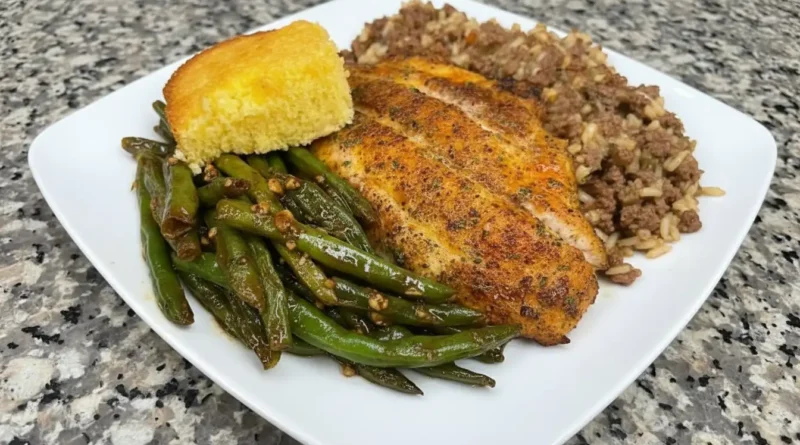
This Cajun Baked Catfish screams for a side of creamy cheese grits or a pile of fluffy white rice to soak up the pan drippings. For a bit of crunch, a vinegar-based coleslaw or sautéed green beans with toasted almonds works beautifully. To drink, reach for a crisp, cold Chenin Blanc or a light pilsner to cut through the buttery heat.
Make It Different
-
The Mild Version: Swap the cayenne for extra smoked paprika if you want the flavor without the fire.
-
Herb Forward: If you don’t have dried parsley, fresh thyme or oregano added at the very end adds a lovely earthy note.
-
Keto-Friendly: This recipe is naturally low-carb. Serve it over cauliflower rice or a bed of wilted spinach for a perfect keto dinner.
Storage and Reheating
If you have leftovers, store them in an airtight container in the fridge for up to two days. To reheat, avoid the microwave—it can make the fish rubbery. Instead, place the fillets back in a skillet over medium-low heat with a splash of water or broth, cover with a lid, and steam gently until warmed through.
Success Tips
The most accurate way to tell if your catfish is done is using a digital meat thermometer. You are aiming for an internal temperature of 145 degrees Fahrenheit. Also, don’t be afraid to let the fish “rest” in the skillet for two minutes after taking it out of the oven; this allows the juices to redistribute and the sauce to thicken slightly.
FAQ
Can I use a glass baking dish instead of cast iron?
Yes, but you may miss out on some of the deeper browning on the bottom. If using glass, ensure you grease it well.
Is catfish a “fishy” tasting fish?
When prepared this way, catfish is mild and sweet. The lemon and Cajun spices do an excellent job of highlighting its clean flavor.
Can I use this seasoning blend on other fish?
Absolutely. This “Cajun butter” method works wonderfully on tilapia, cod, or even shrimp.
What if I don’t have Crystal Hot Sauce?
Any Louisiana-style hot sauce (like Tabasco or Louisiana Brand) will work, though the flavor profile will shift slightly.
How do I know when the fish is perfectly cooked?
Look for the thickest part of the fillet to turn from translucent to opaque white. If it flakes easily with a fork, you’re ready to eat.
Cajun Baked Catfish
Prep time: 10 minutes
Cook time: 20 minutes
Total time: 30 minutes
Servings: 2
Category: Main Course
Difficulty: Easy
Cuisine: Southern / Cajun
Yield: 2 Fillets
Equipment: 12-inch cast iron skillet, pastry brush or spoon, digital meat thermometer.
Ingredients
-
2 large raw catfish fillets (about 1 pound)
-
1 teaspoon lemon juice (freshly squeezed preferred)
-
1 teaspoon Crystal hot sauce
-
Salt, black pepper, and cayenne pepper to taste
-
½ teaspoon paprika
-
1 teaspoon dried parsley flakes
-
1 teaspoon garlic powder
-
1 teaspoon onion powder
-
3 tablespoons cold butter, cut into small pieces
-
½ teaspoon lemon zest (optional)
Instructions
-
Preheat your oven to 400°F.
-
Grease a 12-inch cast iron skillet liberally with oil to prevent sticking.
-
Place the catfish fillets side-by-side in the skillet.
-
Apply half of the lemon juice to each fillet. Use a brush or the back of a spoon to ensure even coverage across the top.
-
Repeat the application process with the hot sauce, spreading it over the lemon juice.
-
Season both fillets with salt, black pepper, and cayenne pepper according to your heat preference.
-
Evenly sprinkle the paprika, dried parsley, garlic powder, and onion powder over the top of the fish.
-
Scatter the pieces of cold butter in the skillet around the catfish fillets.
-
If using lemon zest, sprinkle it over the seasoned fish for an extra pop of brightness.
-
Bake for 15 to 20 minutes. The fish is done when it flakes easily with a fork and reaches an internal temperature of 145°F.
Nutrition (per serving)
-
Calories: 385 kcal
-
Protein: 42g
-
Fat: 22g
-
Carbohydrates: 3g
-
Sodium: 450mg