
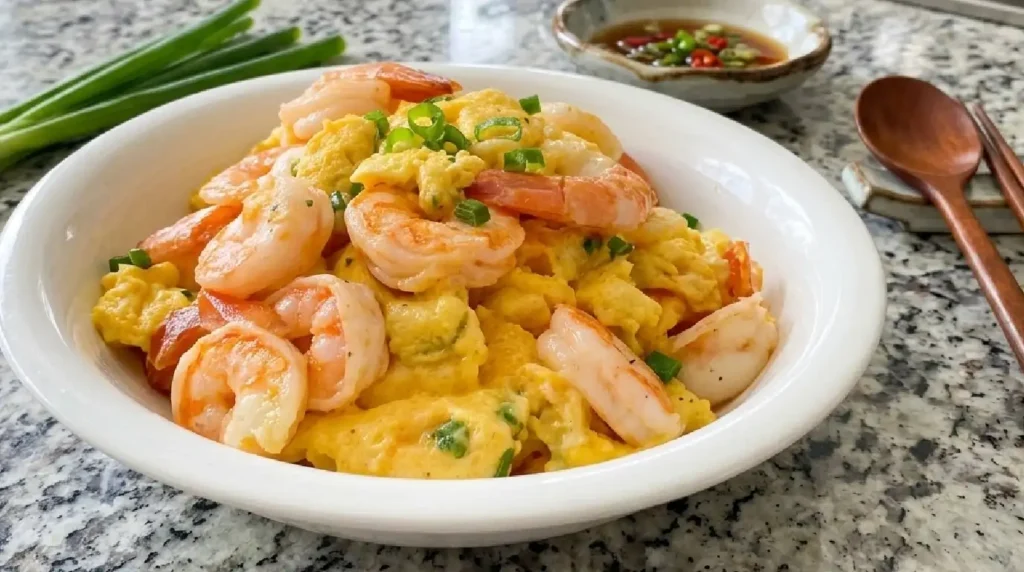
Classic Shrimp and Soft Scrambled Egg Stir-Fry
Table of Contents
ToggleClassic Shrimp and Soft Scrambled Egg Stir-Fry Recipe: Quick, Creamy
Introduction
There’s a certain magic in watching shrimp turn from translucent to golden pink, catching the heat just right before meeting custard-soft eggs scrambled to cloud-like perfection. This shrimp and soft scrambled egg stir-fry is the kind of dish that tastes like someone spent hours fussing in the kitchen, when really it’s ready in about fifteen minutes flat.
I stumbled onto this combination by accident, honestly. It was a Wednesday evening, my fridge was looking sparse, and I had shrimp thawing on the counter and eggs in the carton. What emerged was this silky, protein-packed stir-fry that’s become a weeknight staple in my house. The eggs don’t just scramble here—they coat everything with this buttery richness that transforms simple ingredients into something genuinely exciting to eat. There’s no heavy sauce masking flavors, no complicated technique that requires years of wok experience. Just clean, intentional cooking.
Why You’ll Love This
- Dinner hits the table in under 20 minutes, making it perfect for busy weeknights when you’re running on empty.
- The creamy, velvety eggs create a natural sauce without cream or cornstarch, keeping the dish light but deeply satisfying.
- High in lean protein from both the shrimp and eggs, so you’ll actually feel full and energized afterward.
- One pan does the work, meaning you’re not spending your evening elbow-deep in dishes.
The Backstory
My brother-in-law has this reputation for being picky. And I don’t mean he’s slightly particular—the man has rejected creamy sauces, garlic in excess, and anything he deems “too fancy.” When we hosted him for a casual dinner, I nearly panicked thinking about what to make. I decided to take a risk with this stir-fry, figuring if it didn’t work out, we’d order takeout anyway.
What actually happened was he came back into the kitchen asking if there was more. He stood at the counter eating directly from the wok (yes, really) and asking me to walk him through what I’d done. “It’s simple,” he kept saying, like he’d uncovered some culinary secret. He’s made it at his own place twice since. There’s something about the straightforward flavors and tender texture that just works for people, regardless of where their usual tastes lean.
What Makes It Special
- Shrimp: Cooks in under two minutes per side, turning sweet and tender while providing lean protein and a delicate briny note that complements eggs perfectly.
- Soft scrambled eggs: The real star here. Cooked slowly over medium heat, they create a custard-like texture that binds ingredients together without needing a heavy sauce.
- Fresh ginger and garlic: Adds bright, warming heat that wakes up your palate without overwhelming the delicate shrimp.
- Soy sauce and sesame oil: These two create depth and a nutty background that ties everything together.
- Green onions and white pepper: Final touches that add color, a sharp onion bite, and subtle heat without the graininess of black pepper.
Making It Happen
Start by patting your shrimp completely dry with paper towels—this is the one step that actually matters for getting a good sear. If they’re damp, they’ll steam instead of developing that golden exterior. Season them generously with salt and white pepper on both sides. Keep them close to the stove because they’re only minutes away from done.
Heat your wok or large skillet over medium-high heat until a drop of water sizzles on contact. Add two tablespoons of oil—vegetable or peanut works best—and let it shimmer for about thirty seconds. Working quickly, lay the shrimp in a single layer and resist the urge to move them around. Let them sit for about ninety seconds until the undersides turn opaque pink. Flip and give them another minute or so. They’ll continue cooking just a bit after you pull them off heat, so don’t wait for them to be completely opaque or they’ll toughen. Transfer to a plate.
Lower your heat to medium. In a small bowl, crack your eggs and whisk them together with a splash of water, a pinch of salt, and some white pepper. Add another tablespoon of oil to your pan and drop in minced ginger and garlic. Let them bloom for maybe fifteen seconds until fragrant—your kitchen should smell incredible at this point. Pour in the whisked eggs and here’s the key: patience. Don’t touch them immediately. Let them sit for about fifteen seconds, then gently push them around with a spatula, scraping them from the edges toward the center. Keep doing this slowly, letting them stay on the heat without constant agitation. You want soft, billowy curds, not small rubbery bits. This should take about three to four minutes total.
Toss the shrimp back in along with sliced green onions (reserve some for garnish), a drizzle of soy sauce, and a small splash of sesame oil. Stir everything together gently—the eggs are delicate and you want them to maintain that creamy texture, not break apart into smaller pieces. Taste and adjust seasoning. The whole process from shrimp searing to final plate is roughly twelve to fifteen minutes.
You Must Know
- Don’t overcook the shrimp. They continue cooking off heat, and overcooked shrimp tastes rubbery and loses that tender sweetness. Err on the side of pulling them too early.
- Pat shrimp very dry. Any moisture on their surface will prevent browning and create steam instead of a golden crust.
- Cook the eggs low and slow. Medium heat isn’t exciting, but it’s what gives you that silky, soft scrambled texture instead of a dry, curdled result.
- Add soy sauce gradually. You can always add more salt, but you can’t remove it. Start with a teaspoon and adjust up.
- White pepper is your friend here. It has a warmer, slightly fermented quality that complements soft eggs better than black pepper’s sharpness.
Serving Ideas & Pairings
Serve this over jasmine rice to soak up the silky eggs and subtle sauce, or with a mound of cauliflower rice if you’re keeping things lighter. Steamed bok choy on the side adds a pleasant bitter contrast and rounds out the meal nutritionally. For drinks, a crisp white wine like Sauvignon Blanc or a cold beer cuts through the richness beautifully. If you want something non-alcoholic, a ginger tea or even cold lychee juice complements the ginger notes surprisingly well.
Make It Different
Vegetarian version: Swap shrimp for extra-firm tofu cubes or cashews. Press tofu first to remove excess moisture, then follow the same high-heat searing method. The eggs become the protein hero here.
Spicier kick: Add fresh red chile slices or a teaspoon of chile paste along with the ginger. Build heat gradually and taste as you go.
Different proteins: This method works beautifully with chicken thigh (cut into small pieces), or even flaked crab if you want to get fancy without extra effort.
Add vegetables: Diced bell peppers, snap peas, or water chestnuts can go in during the ginger-garlic bloom stage, giving you extra texture and nutrients.
Creamy version: Finish with a swirl of cream or crème fraîche instead of just sesame oil for something richer and more indulgent.
Storage & Reheating
Store leftovers in an airtight container in the refrigerator for up to three days. The dish keeps best when you store the eggs and shrimp mixture separately from any rice or grain you’re serving alongside.
To reheat, gently warm the stir-fry in a skillet over medium heat with a tiny splash of water or sesame oil, stirring occasionally until heated through. The eggs won’t regain their original soft texture—they’ll be more set—but the flavor remains excellent. Alternatively, reheat your rice or grain, then top it with room-temperature stir-fry for a slightly different but equally nice experience.
Don’t microwave this dish. The intense, concentrated heat will scramble the eggs further and cook the shrimp unevenly. A gentle stovetop reheat preserves the texture far better.
Success Tips
The difference between good and truly great shrimp and egg stir-fry often comes down to temperature control. Your wok or pan should be hot enough for shrimp to sear immediately, but your eggs need gentle, steady medium heat. Don’t try to rush the egg-cooking stage by cranking the heat up. It might seem faster, but you’ll end up with small curds instead of that creamy, luxurious texture that makes this dish special.
Timing matters more than you’d think. Shrimp and eggs cook quickly, so have everything prepped and measured before you start cooking. Mise en place—having everything in its place—transforms this from potentially chaotic to calm and controlled.
Lastly, understand that the eggs are the medium here, not a side ingredient. They’re not just protein; they’re what carries the flavors of ginger, garlic, and soy throughout the dish. Treating them with respect—cooking them slowly and gently—elevates the entire experience.
Frequently Asked Questions
Can I use frozen shrimp instead of fresh?
Absolutely. Thaw them in the refrigerator overnight or run them under cool water for about five minutes. Make sure to pat them very dry afterward. Frozen shrimp often have more moisture on their surface, and drying them thoroughly is even more important than with fresh.
What if my eggs turn out scrambled-scrambled instead of soft scrambled?
You likely cooked them over heat that was too high. Try reducing your temperature to medium or even medium-low, and stir them more frequently but gently. It takes a bit longer, but the reward is that creamy, custard-like texture.
Can I prep the ingredients ahead of time?
Yes. You can devein and dry your shrimp, mince your ginger and garlic, and chop your green onions up to two hours before cooking. Keep shrimp on a plate covered with plastic wrap in the fridge, and store cut ingredients in small bowls or containers. Having everything prepped means you can start cooking and finish in about fifteen minutes.
Is there a substitute for soy sauce?
Tamari (gluten-free soy sauce) or coconut aminos work well if you need to avoid soy. Adjust the amount since these are sometimes saltier or less salty than regular soy sauce. Taste as you go and season to your preference.
Why does my stir-fry sometimes taste greasy?
Usually it’s from using too much oil or not letting the shrimp sear properly on dry heat. Start with the amount specified, pat your shrimp very dry, and let them sit without moving for those first ninety seconds. If the pan isn’t hot enough, they’ll release moisture and absorb oil instead of searing.
Recipe Card Info
Prep time: 10 minutes
Cook time: 15 minutes
Total time: 25 minutes
Servings: 2–3
Category: Main Course
Difficulty: Easy
Cuisine: Asian-inspired
Yield: 2–3 servings
Equipment: Wok or large skillet, spatula, small bowl for whisking, chef’s knife, cutting board
Ingredients
- 1 pound large shrimp, peeled and deveined, patted dry
- 6 large eggs
- 2 tablespoons neutral oil (vegetable or peanut)
- 1 tablespoon additional neutral oil (for the eggs)
- 1 tablespoon fresh ginger, minced
- 3 cloves garlic, minced
- 2 tablespoons soy sauce
- 1 teaspoon sesame oil
- 4 green onions, sliced (white and green parts separated)
- Salt to taste
- White pepper to taste
- Pinch of water (for whisking eggs)
Directions
Step 1: Prepare the shrimp
Pat the shrimp completely dry with paper towels. Season both sides generously with salt and white pepper. Set on a clean plate close to your stove.
Step 2: Sear the shrimp
Heat your wok or large skillet over medium-high heat until a drop of water sizzles immediately upon contact. Add two tablespoons of oil and let it shimmer for thirty seconds. Lay the shrimp in a single layer without crowding. Resist moving them for about ninety seconds until the undersides turn opaque pink. Flip and cook for another minute. Transfer to the plate.
Step 3: Prepare the eggs
While the shrimp cooks, crack the eggs into a small bowl. Add a splash of water, a pinch of salt, and white pepper. Whisk until well combined and set aside.
Step 4: Bloom the aromatics
Reduce heat to medium. Add one tablespoon of oil to the same pan. Add minced ginger and minced garlic, stirring constantly for about fifteen seconds until fragrant. Don’t let them burn.
Step 5: Cook the eggs
Pour in the whisked eggs and let them sit untouched for about fifteen seconds. Using a spatula, gently push the eggs from the edges toward the center, creating soft curds. Continue stirring gently every ten to fifteen seconds, letting them stay on the heat without constant agitation. Cook for three to four minutes until the eggs reach a soft, creamy consistency but are still slightly wet-looking. They’ll continue cooking after you remove the pan from heat.
Step 6: Combine
Return the shrimp to the pan. Add soy sauce, sesame oil, and the white parts of the sliced green onions. Gently stir everything together, being careful not to break up the soft eggs. Taste and adjust seasoning with additional soy sauce or salt as needed.
Step 7: Finish and serve
Transfer to serving plates and top with the reserved green parts of the green onions. Serve immediately over rice or your choice of grain.
Notes
- The key to this dish is respecting the timing of each component. Shrimp cooks quickly and shouldn’t be rushed; eggs need gentle, patient cooking to achieve that creamy texture.
- Make sure your pan is truly hot before adding shrimp. If it’s not hot enough, they’ll release moisture and steam rather than sear.
- White pepper is recommended over black pepper for its warmer, less sharp flavor profile that complements soft eggs better.
- This dish is best served immediately after cooking. The eggs are at their most luxurious right off the heat.
- Leftovers can be refrigerated but won’t have quite the same tender texture when reheated due to the delicate nature of soft-scrambled eggs.
Nutrition
Based on serving size of 2 servings (approximate values):
- Calories: 380-420 per serving
- Protein: 38-42 grams
- Fat: 18-22 grams
- Carbohydrates: 4-5 grams
- Fiber: 0 grams
- Sodium: 650-750 mg
- Cholesterol: 380-420 mg
Note: Nutrition values are estimates and may vary based on specific brands and portion sizes. Nutrition data does not include rice or additional sides.
