
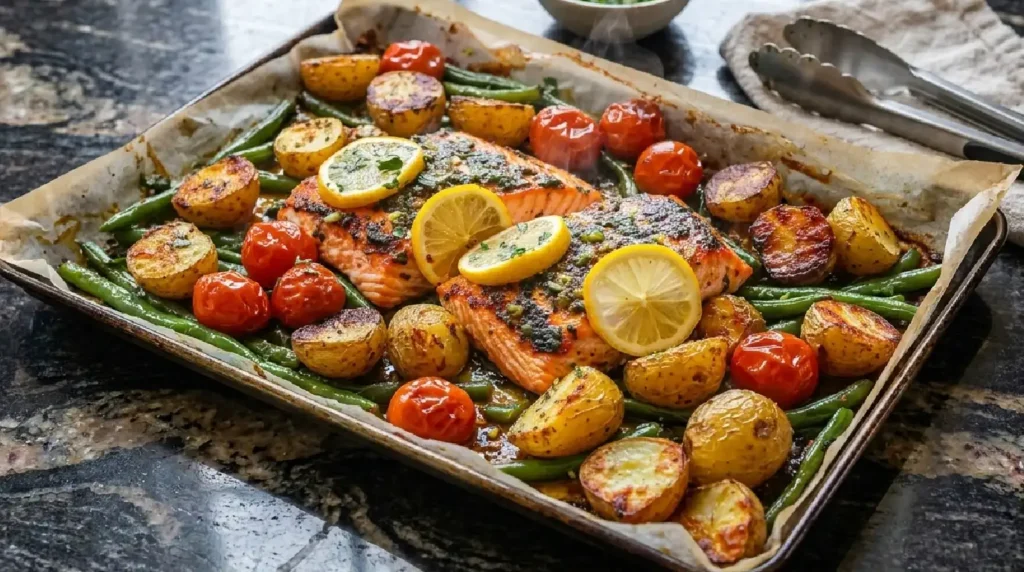
One-Pan Garlic Herb Salmon & Veggies
Table of Contents
ToggleOne-Pan Garlic Herb Salmon & Veggies: The Easy Weeknight Dinner That Never Disappoints
Introduction
Some recipes earn a permanent spot in your rotation not because they’re flashy, but because they work every single time. This one-pan garlic herb salmon and veggies recipe is exactly that kind of dish. The salmon comes out buttery and tender, the edges just barely golden, and the vegetables — zucchini, cherry tomatoes, asparagus, or whatever you have on hand — roast into something almost caramelized and vibrant.
I started making this on nights when I had thirty minutes, no plan, and a salmon fillet thawing in the sink. What I didn’t expect was how good it would taste with so little effort. The garlic and fresh herbs do the heavy lifting. A drizzle of olive oil, a squeeze of lemon, and the oven takes care of the rest.
There’s no complicated sauce to babysit, no second pan to scrub, and no moment where you have to wonder if it’s done. The whole thing bakes together, and when you pull it out, the kitchen smells like something you’d pay good money for at a restaurant.
Why You’ll Love This
- It comes together in under 40 minutes, start to finish — including prep. On a Tuesday evening, that matters more than anything.
- Everything cooks on one sheet pan, which means cleanup takes about five minutes. One pan, one meal, done.
- The flavor is genuinely impressive without any complicated technique. Garlic, herbs, lemon, and good olive oil do all the work.
- It’s naturally gluten-free and works beautifully for anyone eating low-carb or following a paleo approach.
- The recipe is endlessly flexible. Whatever vegetables are close to going bad in your crisper drawer? They belong on this pan.
The Backstory
My brother-in-law, Marco, is the kind of person who treats any fish that isn’t fried with deep suspicion. He’s the guy at family dinners who nudges the salmon to the edge of his plate and quietly loads up on bread instead. Last spring, he showed up at our place unexpectedly on a weeknight, and this was what I had. I made it anyway, figuring he’d fill up on rice.
He finished the salmon first. Then he asked if there was more.
I didn’t say anything in the moment because I didn’t want to make a big deal of it, but I noticed. The garlic crust on the fish, the way the herbs get slightly crisp at the edges, the lemon juice that cuts through the richness — something about the combination just works, even on people who swear they don’t like salmon. Marco has since asked for the recipe twice. I count that as a full endorsement.
What Makes It Special
- Fresh garlic, finely minced: This is non-negotiable. Jarred garlic is fine in a pinch, but fresh garlic pressed right into the olive oil and herbs creates a depth of flavor that pre-minced just can’t match.
- A mix of fresh herbs: Dill, parsley, and thyme work exceptionally well here. Each one brings something different — dill for that bright, grassy note; parsley for freshness; thyme for a subtle earthiness that rounds the whole dish out.
- Lemon zest and juice: The zest goes on before baking and becomes fragrant and slightly caramelized. The fresh juice comes at the end and wakes everything back up with a clean, acidic hit.
- Good olive oil: Don’t use the cooking oil here. A decent extra-virgin olive oil carries the herbs and garlic across the fish and vegetables in a way that lighter oils simply don’t.
- Skin-on salmon fillets: The skin protects the bottom of the fish from drying out and crisps up beautifully if you want to eat it. Either way, it keeps the flesh moist from underneath while the top takes on that golden color.
- Colorful mixed vegetables: Cherry tomatoes burst and release their juices, asparagus gets tender and slightly smoky at the tips, and zucchini softens just enough to absorb the garlicky oil pooling in the pan. The variety of textures makes every bite different.
Making It Happen
Start by preheating your oven to 400°F and lining a large sheet pan with parchment paper or foil. This is the kind of step people skip, and then they regret it when the garlic sticks and burns to the pan. Don’t skip it.
While the oven heats, mix together your minced garlic, chopped fresh herbs, lemon zest, olive oil, salt, and a generous crack of black pepper in a small bowl. The mixture should smell incredible already — sharp from the garlic, bright from the lemon, fragrant from the herbs. Set it aside for a moment.
Arrange your vegetables across the pan in a single layer. Crowding is the enemy of roasted vegetables. If things are piled on top of each other, they steam instead of roasting, and you lose that caramelized edge that makes everything taste so good. If your pan is small, use two.
Drizzle the vegetables with a little olive oil, season them with salt and pepper, and toss them right on the pan. Slide the pan into the oven and let the vegetables get a five-minute head start. Salmon cooks faster than most root vegetables, but cherry tomatoes and asparagus are tender enough that they just need a brief jump on things.
Pull the pan out and nestle the salmon fillets skin-side down among the vegetables. Spoon the garlic herb mixture generously over the top of each fillet. Don’t be shy — this is the flavor layer, and it should cover the surface of the fish completely.
Return the pan to the oven and bake for 12 to 15 minutes, depending on the thickness of your fillets. Salmon is done when it flakes easily with a fork and the flesh has shifted from translucent to opaque. If you have a meat thermometer, 125°F to 130°F is perfect for medium, 145°F for fully cooked through.
When the pan comes out, squeeze half a lemon over everything while it’s still hot. That fresh juice hitting the warm fish and vegetables is one of those small kitchen moments that makes the whole dish taste brighter and more alive.
You Must Know
- Pat the salmon dry before adding the herb mixture. Moisture on the surface of the fish prevents the garlic and herbs from adhering properly and slows the browning process. A quick press with paper towels makes a real difference.
- Room-temperature salmon cooks more evenly. Pull it from the fridge about 15 minutes before it goes in the oven. Cold fish straight from the refrigerator takes longer to cook through and can result in an overdone exterior with an underdone center.
- Don’t open the oven during those first 12 minutes. Every time you crack the door, heat escapes and the cooking time shifts. Trust the process and check only when you’re genuinely close to done.
- Thicker fillets need more time; thinner tail pieces need less. If your fillets vary in thickness, you can fold the thin end of the tail piece under itself to create a more uniform shape and even out the cooking.
- Season the vegetables separately from the fish. They need their own salt and oil treatment before the salmon goes on the pan, not just whatever drips off the fillets.
Serving Ideas & Pairings
This dish is completely satisfying on its own, especially when you load the pan with a generous variety of vegetables. But if you want to make it feel more like a proper dinner spread, a scoop of fluffy white rice or a bed of herbed couscous underneath the salmon is a natural fit. The juices from the tomatoes and the garlic oil pool at the bottom of the pan and become an instant sauce worth soaking up.
A simple green salad dressed with red wine vinegar and olive oil cuts through the richness of the salmon beautifully. Crusty sourdough bread on the side is never a wrong move.
For beverages, a crisp, unoaked white wine like Sauvignon Blanc or Pinot Grigio works well. If you prefer non-alcoholic, sparkling water with a slice of lemon or a light cucumber-mint agua fresca pairs nicely with the brightness of the dish.
Make It Different
For a spicy version: Add half a teaspoon of red pepper flakes to the garlic herb mixture, or swap one of the herbs for fresh cilantro and add a dash of smoked paprika for a warmer, smokier heat.
For a Mediterranean spin: Use kalamata olives, sun-dried tomatoes, and swap the dill for fresh oregano. Add crumbled feta cheese during the last two minutes of baking and let it just barely warm through.
For a dairy-free creaminess: After pulling the pan from the oven, dollop tahini thinned with a little lemon juice and water over the salmon. It adds a nutty, creamy richness without butter or cream.
For those avoiding fish: This exact preparation works beautifully with boneless, skin-on chicken thighs. They’ll need a longer cooking time — about 25 to 30 minutes at 400°F — so give the vegetables a longer head start, roughly 15 minutes, before adding the chicken.
Seasonal vegetable swaps: In fall and winter, try cubed butternut squash, halved Brussels sprouts, or thinly sliced fennel in place of summer vegetables. They roast more slowly, so cut them smaller or increase the head start time to 10 minutes before adding the fish.
Low-sodium version: Reduce the added salt and lean on the lemon zest, fresh herbs, and a small amount of capers for a briny, savory punch without the sodium load.
Storage & Reheating
Leftover salmon and vegetables store well in an airtight container in the refrigerator for up to three days. The flavor actually deepens overnight as the herbs and garlic continue to perfume the fish.
To reheat, the oven is your best option. Spread the leftovers on a sheet pan, cover loosely with foil, and warm at 275°F for about 10 to 12 minutes. The low temperature prevents the salmon from drying out and keeps the vegetables from turning mushy.
The microwave works in a pinch, but use 50% power and heat in 30-second intervals. Full power tends to make salmon rubbery and unpleasant.
Cold leftover salmon, flaked and tossed over salad greens with a lemon vinaigrette, is genuinely one of the best next-day lunches you can make from a dinner like this. Don’t overlook it.
Success Tips
Garlic burns quickly at high heat, especially the little minced bits sitting directly on the salmon. If you find that the garlic is browning too fast before the fish is done, drape a loose piece of foil over the fillets for the last few minutes of baking. This shields the surface without trapping steam.
If you want the very top of the salmon to have a slightly crispier crust, switch the oven to broil for the final two minutes. Watch it closely — broilers work fast and the line between golden and burnt is narrower than you’d expect.
Buy center-cut salmon fillets whenever you can. They’re more uniform in thickness than tail-end pieces, which means they cook predictably and you don’t have to manage the thin parts getting overdone while the thick parts catch up.
And finally, taste the herb mixture before it goes on the fish. It should be bright, garlicky, and a little salty. This is your only chance to adjust before it bakes. If it needs more lemon or more salt, fix it in the bowl, not on the pan.
Frequently Asked Questions (FAQ)
Can I use frozen salmon for this recipe?
Yes, but thaw it completely first. The best way to thaw salmon is overnight in the refrigerator. If you’re short on time, place the sealed fillets in a bowl of cold water for 30 to 45 minutes. Pat the fillets very dry before using — frozen fish releases more moisture, and excess water on the surface will prevent proper browning.
What vegetables work best for sheet pan salmon?
Vegetables that roast in roughly the same time as salmon are your best candidates. Cherry tomatoes, asparagus, zucchini, thin-sliced bell peppers, snap peas, and broccolini are all excellent choices. Denser vegetables like carrots or potatoes need to be cut very thin or given a much longer head start before the fish joins the pan.
How do I know when the salmon is done without a thermometer?
Press gently on the thickest part of the fillet with a fork or your finger. It should feel firm but give slightly, and the flesh should flake apart in clean layers when you nudge it. If it’s still translucent in the center and resists flaking, give it another two to three minutes. Overcooked salmon feels very firm and looks chalky in color.
Can I prep this dish ahead of time?
You can mix the garlic herb oil up to two days in advance and store it in a jar in the fridge. You can also chop and portion the vegetables the night before and keep them in the refrigerator. When you’re ready to cook, the whole assembly takes under five minutes before it goes into the oven, which makes this a genuinely practical weeknight dinner even after a long day.
My salmon always sticks to the pan. What am I doing wrong?
Three things help prevent sticking: lining the pan with parchment paper or foil, making sure the pan is large enough so the fish isn’t crowded, and resisting the urge to move the fillets too soon. Salmon will naturally release from a well-oiled surface once it has developed enough crust. If it’s sticking when you try to slide a spatula under it, wait another minute and try again. It will let go.
Recipe Card
Recipe Name: One-Pan Garlic Herb Salmon & Veggies
Prep Time: 10 minutes
Cook Time: 20 minutes
Total Time: 30 minutes
Servings: 4
Category: Main Course / Dinner
Difficulty: Easy
Cuisine: American / Mediterranean-Inspired
Yield: 4 salmon fillets with roasted vegetables
Equipment:
- Large rimmed sheet pan (18×13 inch recommended)
- Parchment paper or aluminum foil
- Small mixing bowl
- Microplane or zester
- Sharp knife and cutting board
- Instant-read thermometer (optional but helpful)
Ingredients
For the Salmon:
- 4 salmon fillets (6 oz each, skin-on, center-cut preferred)
- 4 cloves garlic, finely minced
- 2 tablespoons fresh dill, chopped
- 2 tablespoons fresh flat-leaf parsley, chopped
- 1 teaspoon fresh thyme leaves
- Zest of 1 lemon
- Juice of 1 lemon (divided: half before baking, half after)
- 3 tablespoons extra-virgin olive oil (for herb mixture)
- 3/4 teaspoon kosher salt
- 1/2 teaspoon freshly cracked black pepper
For the Vegetables:
- 1 bunch asparagus, woody ends trimmed
- 1 medium zucchini, sliced into half-moons
- 1 cup cherry tomatoes
- 1 medium red bell pepper, sliced thin
- 2 tablespoons extra-virgin olive oil
- 1/2 teaspoon kosher salt
- 1/4 teaspoon black pepper
- Optional: 1/4 teaspoon red pepper flakes for heat
Directions
- Preheat the oven to 400°F (204°C). Line a large rimmed sheet pan with parchment paper or aluminum foil and set aside.
- In a small bowl, combine the minced garlic, chopped dill, parsley, thyme, lemon zest, olive oil, salt, and black pepper. Stir well to combine and set aside.
- Arrange all the vegetables on the prepared sheet pan in a single layer. Drizzle with 2 tablespoons of olive oil, season with salt and pepper, and toss directly on the pan to coat.
- Slide the pan into the preheated oven and roast the vegetables for 5 minutes to give them a head start.
- While the vegetables roast, pat the salmon fillets dry with paper towels. Remove the pan from the oven and nestle the salmon fillets skin-side down among the vegetables, spacing them evenly.
- Spoon the garlic herb mixture generously over the top of each salmon fillet, covering the surface completely.
- Return the pan to the oven and bake for 12 to 15 minutes, or until the salmon flakes easily with a fork and reaches an internal temperature of 125°F to 145°F depending on your preferred doneness.
- Remove from the oven and immediately squeeze the remaining half of the lemon over the salmon and vegetables. Taste and adjust seasoning if needed.
- Serve directly from the pan, or plate individually with an extra garnish of fresh herbs and a wedge of lemon on the side.
Notes:
- Pat the salmon completely dry before adding the herb mixture. This step is critical for proper browning and adhesion.
- For crispier tops, switch the oven to broil for the final 2 minutes. Watch closely.
- Leftover salmon keeps in the refrigerator for up to 3 days. Reheat at 275°F covered with foil for best results.
- Frozen salmon must be fully thawed and dried before use.
- Swap fresh herbs based on what you have. Basil and tarragon are also excellent choices.
Nutrition (Per Serving, Approximate):
- Calories: 420
- Protein: 38g
- Total Fat: 24g
- Saturated Fat: 4g
- Carbohydrates: 10g
- Fiber: 3g
- Sugar: 5g
- Sodium: 480mg
- Cholesterol: 95mg
- Omega-3 Fatty Acids: 2.1g
Nutrition values are estimates based on standard ingredients and may vary depending on specific brands and portion sizes used.
