
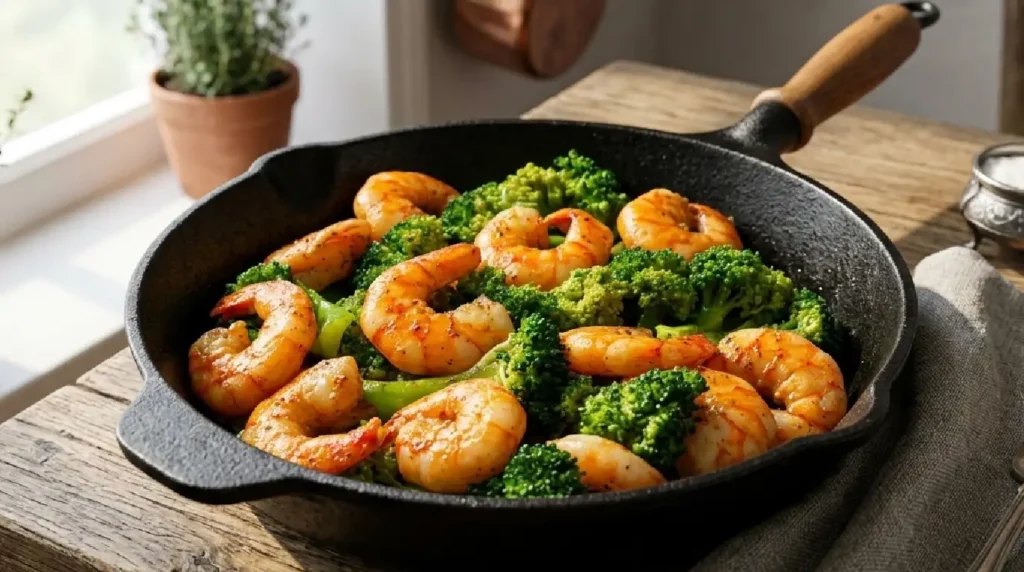
Stir-Fry Style Shrimp and Broccoli Recipe
Table of Contents
ToggleStir-Fry Style Shrimp and Broccoli Recipe: Restaurant Quality in 20 Minutes
Introduction
There’s something magical about a pan that’s properly heated and a handful of ingredients that transform into something extraordinary. This stir-fry style shrimp and broccoli recipe is exactly that kind of dish—the kind you’d order confidently at a restaurant, then realize you can pull off at home with minimal fuss and maximum flavor.
The beauty here isn’t hidden. It’s in the snap of freshly cooked broccoli, the tender pink of properly seared shrimp, and that glossy, savory sauce that coats everything with just the right amount of heat and umami. What used to take me forty minutes and a handful of skepticism now takes barely twenty, and honestly, it tastes better than I remember from takeout. The shrimp stays tender, the broccoli maintains its slight crunch, and nothing gets swimming in grease. That’s the win right there.
This isn’t a complicated dish playing dress-up. It’s straightforward cooking that respects good ingredients and doesn’t overthink the process. Once you understand how to handle the heat and the timing, you’ll find yourself making this at least once a week.
Why You’ll Love This
The reasons to make this shrimp and broccoli stir-fry are as practical as they are delicious:
• It comes together in under 20 minutes—perfect for weeknight dinners when the clock is ticking and hunger is real
• Shrimp cooks faster than almost any other protein, meaning you’re eating sooner without sacrificing depth of flavor
• No complicated techniques required; this is straightforward cooking with common pantry staples
• It’s naturally lower in carbs and high in protein, making it adaptable to various dietary approaches without tasting like you’re sacrificing anything
• The combination works with endless variations, so you can make it feel completely different week to week depending on your mood or what’s in your fridge
The Backstory
I remember my mother-in-law eyeing this stir-fry with the kind of skepticism that only decades of cooking can produce. She’d grown up on traditional home cooking—slow simmers, proper roasts, the works—and quickly-cooked vegetables had always seemed suspect to her. But she was hungry, it was on the table, so she tried it.
Three bites in, something shifted. It was the broccoli, she said later. The way it had color and crunch without tasting raw or overcooked. Then the shrimp—she kept pointing out how tender it was, how it didn’t have that rubbery edge she associated with seafood cooked at home. By the end of the bowl, she was asking for the recipe. More specifically, she was asking why I’d never made this before when she visited.
Now, every time I know she’s coming over, there’s a text: “Are you making that shrimp stir-fry?” It’s become the dish that bridges the gap between her traditional cooking style and this faster, brighter way of eating. That’s when you know something works.
What Makes It Special
This isn’t just shrimp and broccoli. The magic lives in how these elements work together:
• Shrimp: The foundation. Look for medium to large shrimp (16-20 count per pound ideally) that cook quickly and develop that slight sweetness when properly seared. They need barely three minutes total.
• Fresh Broccoli: Cut into proper florets—not too large, not too small—so they cook in about four minutes without falling apart or tasting like cafeteria vegetables.
• Soy Sauce: The savory backbone that ties everything together. Use good-quality soy sauce, not the super-salty version that overpowers everything.
• Garlic and Ginger: Aromatics that wake up your senses the moment they hit the hot pan. Fresh versions matter here; they provide brightness that bottled never quite captures.
• Sesame Oil: Just a touch at the end—not for cooking, but for finishing. It adds a toasted, almost nutty depth that makes people wonder what you did.
• Rice Vinegar or Lime: Acidity to cut through the richness and keep everything balanced and bright.
• Chili Flakes or Fresh Chili: Heat that builds gradually rather than punches. You control the intensity.
Making It Happen
Start by getting your mise en place together. This is the one non-negotiable rule for stir-frying—everything chopped, measured, and ready to go before you touch the pan. Mince your garlic into small pieces (roughly a quarter-inch; you want them small enough to cook quickly but visible enough that you know they’re there). Cut your ginger into thin matchsticks or fine dice. Cut your broccoli into florets that are roughly bite-sized, maybe two inches across at the crown. Pat your shrimp completely dry with paper towels—moisture is the enemy of a good sear, so don’t skip this step.
Place your wok or largest skillet over medium-high heat. If you’re using a regular skillet instead of a wok, that’s completely fine; just make sure it has decent depth and a wide surface. Let it get hot—genuinely hot. You’re looking for the point where a drop of water sizzles instantly on contact. This usually takes about three minutes on medium-high.
Add about a tablespoon of neutral oil (vegetable or canola, not sesame—that burns at high heat). Immediately add your shrimp in a single layer. Don’t stir it right away. Let each piece sit for about ninety seconds so it develops a slight golden crust on one side. This is where the flavor comes from. Then flip everything and let it cook for another minute or so on the other side. The shrimp should be just starting to turn that opaque pink color but not fully cooked through yet. Remove it to a clean plate.
Without wiping the pan (those browned bits are liquid gold), add another teaspoon of oil if it looks dry. Add your broccoli florets and let them sit directly on the hot surface for two minutes, stirring occasionally. You want them to pick up some color and char on the edges. When they’re starting to brown in spots, add your garlic and ginger. Stir constantly for about thirty seconds—this is when your kitchen smells incredible. Don’t let the garlic brown too much or it turns bitter.
Add about one-third cup of water or chicken broth (this creates steam that finishes cooking the broccoli gently). Cover the pan loosely with a lid or even a cutting board for about two minutes. The broccoli will brighten up and become tender-crisp.
Return the shrimp to the pan. Add your sauce elements: a tablespoon of soy sauce, half a teaspoon of sesame oil, a small squeeze of lime juice or splash of rice vinegar, and a pinch of chili flakes if you want heat. Toss everything together for about thirty seconds so the sauce coats everything. Taste as you go. The dish should taste balanced—salty but not too salty, with a little brightness from the acid and a whisper of heat. That’s when you’re done.
You Must Know
These small details make the difference between good and genuinely excellent:
• Don’t crowd the pan: If you’re using a regular skillet instead of a wok, you might be tempted to throw everything in at once. Resist this. Give the shrimp and broccoli room to develop color and texture. Cook in batches if needed.
• Temperature matters more than time: A properly hot pan is your biggest asset. The shrimp should sear, not steam. If your pan isn’t hot enough, you’ll end up with rubbery shrimp and steamed broccoli, which is the opposite of what you’re after.
• Taste and adjust: Every soy sauce brand is slightly different in salt content. Every palate is different in what “balanced” means. Add sauce elements slowly and taste constantly.
• Don’t skip the drying step: Wet shrimp will steam rather than sear. It’s a small step that makes a massive difference.
• Sauce can be prepared ahead: Mix your soy sauce, sesame oil, vinegar, and chili flakes in a small bowl before you start cooking. This gives you one less thing to juggle when everything is moving quickly.
Serving Ideas & Pairings
Serve this over jasmine rice, jasmine tea-infused rice, or even cauliflower rice if you’re watching your carbs. A bed of cooked rice soaks up the sauce beautifully. Alternatively, serve it with rice noodles for something a bit more delicate.
For beverages, a crisp white wine works wonderfully—a Sauvignon Blanc or unoaked Chardonnay. If you’re avoiding alcohol, sparkling water with fresh lime keeps the meal light and refreshing. A light lager beer also pairs nicely if that’s your preference.
Add a simple side of cucumber salad or steamed bok choy if you want something lighter on the plate alongside everything.
Make It Different
This recipe is a jumping-off point, not a rule set in stone:
• Protein swaps: Chicken breast cut into bite-sized pieces, scallops (which cook similarly to shrimp), or tofu (pressed and cubed) all work beautifully here. Adjust cooking times accordingly—chicken and tofu need slightly longer than shrimp.
• Vegetable additions: Bell peppers, snap peas, mushrooms, carrots cut into thin rounds, or water chestnuts add variety and texture. The key is cutting everything to roughly the same size so it cooks evenly.
• Spice level: Use less chili flakes for a gentler heat, or add a full teaspoon if you like real fire. A pinch of white pepper can add heat without visible heat source.
• Sauce depth: Add a teaspoon of oyster sauce for deeper savory notes, or a tiny bit of honey or brown sugar if you prefer something slightly sweet.
• Garlic and ginger intensity: Double both if you love them, or reduce to half if you prefer subtlety.
Storage & Reheating
This dish keeps well in the refrigerator for about three days in an airtight container. The shrimp and broccoli hold their texture better than you might expect.
To reheat, the stovetop is your best friend. Add the leftovers to a hot pan with just a teaspoon of oil and warm through over medium-high heat for about two minutes, stirring often. This restores much of the original texture and flavor. You can also reheat in the microwave—transfer to a microwave-safe dish, cover loosely, and heat for about ninety seconds, stirring halfway through. The texture won’t be quite as good as the stovetop method, but it’s perfectly acceptable.
Don’t try to make this dish too far in advance and serve it cold. The sauce thickens oddly, and the texture changes in ways that aren’t pleasant. Fresh is genuinely better with this one.
Success Tips
The difference between a good stir-fry and a great one often comes down to small refinements:
• Finish with fresh herbs: Add a small handful of sliced scallions or cilantro at the very end. The freshness brightens everything and makes it feel like a complete dish.
• Learn to love your residual heat: The shrimp continues cooking slightly after you remove it from the pan. Account for this by pulling it slightly before it looks completely opaque. It’ll finish as residual heat does its work.
• Use the wok’s natural slope: If you have an actual wok, use its shape. Toss ingredients from the flat bottom up the curved sides to control cooking speed. It’s the reason woks work so well for this style of cooking.
• Keep your oil smoking point in mind: Don’t use olive oil or butter here; they burn at the high heat you need. Vegetable, canola, or peanut oil are the right choices.
• The sauce should coat, not pool: Your finished dish shouldn’t have liquid pooling at the bottom. If it does, you’ve added too much sauce or liquid. You’re looking for everything coated and glistening, not swimming.
Frequently Asked Questions
Can I make this ahead of time?
Not really in the way you might want. Stir-fries are best when everything goes from pan to plate to mouth within a few minutes. The shrimp gets progressively more rubbery as it sits, and the broccoli loses its crunch. What you can do is prep everything in advance—chop your vegetables, measure your sauce ingredients, pat your shrimp dry—and then cook right when you’re ready to eat.
What if I only have frozen shrimp?
Thaw them completely in the refrigerator the night before, or place them in cold water for about an hour. Then pat them thoroughly dry. Frozen shrimp work fine; they just need that careful thawing and drying process to cook properly.
Can I use a regular skillet instead of a wok?
Absolutely. A wok has a curved bottom and wider surface that’s ideal for stir-frying, but a 12-inch skillet works perfectly well. You might just need to cook in two batches so things aren’t crowded, which is actually the better approach anyway for proper searing and cooking.
What size should my broccoli florets be?
Aim for roughly two inches across at the crown. Smaller pieces cook faster but can fall apart or turn mushy. Larger pieces look impressive but might not cook through completely while the outer edge starts to char. Consistent sizing is more important than the exact size.
Is this recipe spicy?
Not inherently. The chili flakes I’ve suggested add just a whisper of heat—noticeable but not intense. Adjust up or down based on your preference. You’re in complete control of the heat level.
Recipe Card Info
Prep time: 15 minutes
Cook time: 12 minutes
Total time: 27 minutes
Servings: 2 (easily doubled)
Category: Main Course
Difficulty: Easy
Cuisine: Asian-inspired
Yield: 2 servings
Equipment: Wok or large skillet, cutting board, knife, measuring spoons, small mixing bowl, paper towels, wooden spoon or spatula
Ingredients
• 1 pound medium shrimp, peeled and deveined
• 4 cups fresh broccoli florets (about one small head)
• 3 cloves garlic, minced
• 1 tablespoon fresh ginger, minced or finely diced
• 2 tablespoons soy sauce
• 1 teaspoon sesame oil
• 1 tablespoon rice vinegar or lime juice
• 1/4 teaspoon chili flakes (adjust to taste)
• 2 tablespoons neutral oil (vegetable or canola), divided
• 1/3 cup water or low-sodium chicken broth
• Salt to taste
• Sesame seeds for garnish (optional)
• Sliced scallions for garnish (optional)
Directions
Step 1: Prepare Your Ingredients
Pat the shrimp completely dry with paper towels and set aside. Mince the garlic into small quarter-inch pieces. Cut the ginger into thin matchsticks or fine dice. Cut the broccoli into bite-sized florets, roughly two inches across. Whisk together the soy sauce, sesame oil, rice vinegar, and chili flakes in a small bowl.
Step 2: Heat Your Pan
Place your wok or largest skillet over medium-high heat and let it get properly hot—about three minutes. A drop of water should sizzle instantly on the surface.
Step 3: Sear the Shrimp
Add one tablespoon of neutral oil to the hot pan. Immediately add the shrimp in a single layer and don’t stir for about ninety seconds, letting each piece develop a golden crust. Flip and cook for another minute until the shrimp starts turning opaque pink but isn’t fully cooked through. Transfer to a clean plate.
Step 4: Cook the Broccoli
Add the remaining oil to the pan (don’t wipe it out). Add the broccoli florets and let them sit undisturbed for about two minutes to develop color and char on the edges. Stir occasionally as they cook.
Step 5: Add Aromatics
Add the minced garlic and ginger to the broccoli and stir constantly for about thirty seconds. Your kitchen should smell incredible at this point.
Step 6: Steam the Broccoli
Add the water or broth to the pan and cover loosely with a lid or cutting board for about two minutes. The broccoli will brighten and become tender-crisp.
Step 7: Combine and Finish
Return the shrimp to the pan. Pour in your prepared sauce and toss everything together for about thirty seconds until everything is coated and glossy. Taste and adjust seasoning as needed with salt or additional soy sauce.
Step 8: Plate and Serve
Transfer to serving plates or bowls over rice or noodles. Garnish with sesame seeds and sliced scallions if desired. Serve immediately.
Notes
This stir-fry is best eaten right away while the broccoli still has its crunch and the shrimp is at its best. If you’re doubling the recipe, don’t double everything that goes in the pan at once—cook in batches so everything sears properly rather than steaming. The sauce recipe can be made ahead and stored in the refrigerator for several days, making weeknight cooking even faster. This dish pairs beautifully with jasmine rice or rice noodles.
Nutrition
Per serving (prepared without rice or noodles):
Calories: approximately 245
Protein: 34g
Fat: 9g
Carbohydrates: 8g
Fiber: 2g
Sodium: 820mg (before additional salt to taste)
Nutrition information is estimated and can vary based on specific brands and preparation methods used.
