
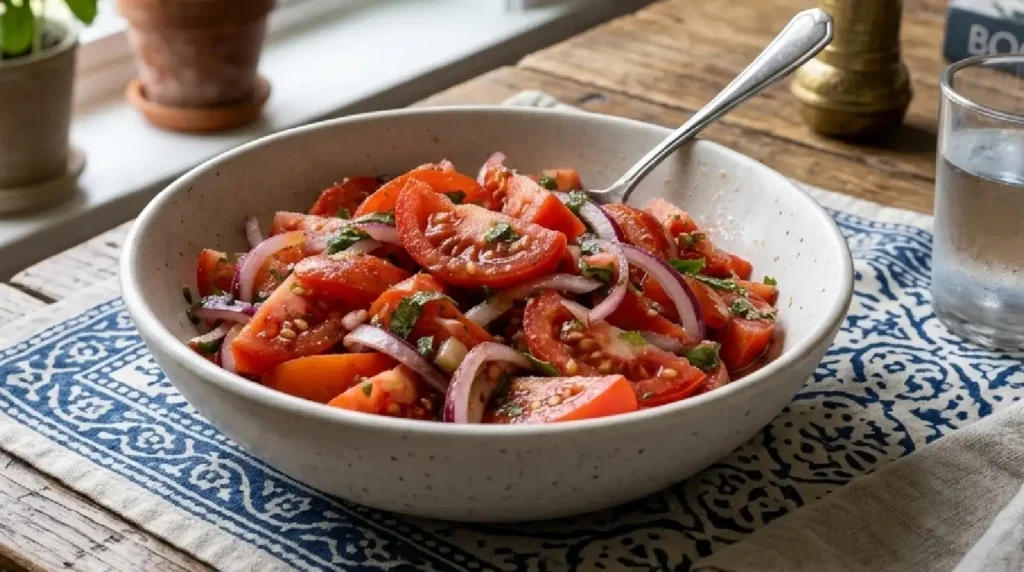
Tomato and Red Onion Salad
Table of Contents
ToggleTomato and Red Onion Salad: A Simple Recipe That Proves Less is More
Introduction
There’s something about a perfectly ripe tomato and a sharp slice of red onion that makes you remember why you love eating fresh food. This isn’t a complicated dish. There are no fancy techniques or obscure ingredients waiting for you to hunt them down at specialty stores. What you have instead is a salad that tastes like summer if you’re lucky enough to eat it then, or like a quiet rebellion against bland food if you’re eating it in the middle of winter.
The magic happens when you stop overthinking it. Good tomatoes, crisp red onions, a drizzle of good oil, a splash of vinegar, and a pinch of salt transform into something that shouldn’t work as well as it does. It’s the kind of dish that shows up at potlucks and disappears first, that makes people ask for the recipe even though they already know how to make it, and that proves you don’t need hours in the kitchen to create something worth eating.
Why You’ll Love This
- It takes five minutes to put together and tastes like you actually tried
- The sharp bite of red onion cuts through the sweetness of tomatoes in the most satisfying way
- You probably have everything you need in your kitchen right now
- It works as a side dish, a light lunch, or even a topping for grilled fish or chicken
- Tastes better the next day as flavors meld together
The Backstory
My neighbor spent years turning down every salad I offered her. She was convinced she hated raw vegetables. One summer afternoon, when I had nothing else on hand, I tossed together some tomatoes, red onions, olive oil, and vinegar. She tried it out of politeness. She went back for seconds. Then she asked me to make another batch because her husband wanted some too. That salad converted a vegetable skeptic. Now she makes it every week during tomato season and swears it’s the only way she’ll eat tomatoes raw.
What Makes It Special
- Fresh tomatoes: They carry the entire weight of this dish. The juiciness, acidity, and sweetness all matter. Choose tomatoes that feel heavy for their size and smell fragrant at the stem end.
- Red onions: Unlike yellow onions, they bring a natural sweetness along with their sharp bite. They’re crisp when raw and add a visual pop to the plate.
- Good olive oil: This isn’t just a supporting ingredient. Quality matters here because it’s not hiding in a sauce. Use something you’d actually taste on its own.
- Vinegar: The acid brightens everything and brings balance. Red wine vinegar, sherry vinegar, or even a good balsamic all work depending on your mood.
- Salt and pepper: Don’t skip these. They’re not background players. Salt draws out the tomato juices and brings all the flavors into focus.
Making It Happen
Start with your tomatoes. If they’re large beefsteaks or heirlooms, cut them into wedges or rough chunks. If you’re working with smaller varieties, halve them or leave them whole. The pieces should be big enough that they feel substantial, not small enough that they disappear into a puddle. Pat them dry with a paper towel if they’re especially wet. You want to control the liquid, not let it take over.
Next, slice your red onions. Cut them in half from root to tip, then slice them into thin half-moons. Don’t be timid here. You want them thin enough that they’re tender but visible enough to make a statement on the plate. If they feel harsh, you can soak them in cold water for a few minutes to take the edge off slightly, though the raw bite is part of their appeal.
Toss the tomatoes and onions into a bowl. Drizzle generously with olive oil. Add a splash of vinegar. Grind in black pepper. Add salt. Toss everything gently so nothing breaks apart. Let it sit for at least ten minutes before serving. Those ten minutes let the salt do its work, drawing out the tomato juices and creating a light dressing that pools at the bottom of the bowl.
Taste it. Adjust. Sometimes tomatoes need more acid. Sometimes onions need more time to soften. This is where you make it yours.
You Must Know
- Let your salad rest. The flavors are better after a few minutes of sitting time, and the tomato juices create their own light dressing.
- Don’t refrigerate it. Tomatoes lose their flavor when they get cold. Serve it at room temperature for the best taste.
- Use the ripest tomatoes you can find. This dish lives or dies by tomato quality. If yours aren’t great, they’re not going to miraculously become great with the addition of red onions.
- The ratio matters. Too much onion and it overpowers. Aim for about one red onion to four medium tomatoes as a starting point, then adjust based on preference.
- Dress it close to serving time if you’re using delicate tomatoes. Heartier varieties can sit longer without breaking down.
Serving Ideas & Pairings
This salad pairs beautifully with almost anything grilled. Set it alongside a piece of grilled fish, a steak, or roasted chicken. It works as a bright counterpoint to rich foods. If you’re keeping things light, add some crumbled feta or fresh mozzarella and serve it as a complete lunch with crusty bread. Beverages-wise, it complements crisp white wines, light rosés, or even a cold beer. For non-alcoholic options, sparkling water with lemon hits the right notes.
Make It Different
If you don’t love raw red onions, roast or caramelize them first. Slice them, toss with a bit of oil, and roast at 400 degrees Fahrenheit for about twenty minutes until they soften and develop sweet, caramelized edges. Let them cool before adding to your salad.
For a creamier version, whisk together Greek yogurt with lemon juice, garlic, and herbs to make a quick dressing instead of oil and vinegar. This works especially well if you’re serving the salad to people who prefer something richer.
Add herbs freely. Fresh basil is traditional and delicious. Cilantro, parsley, or chives all work. A small amount of feta, mozzarella, or even goat cheese turns it into something more substantial.
If you want to add protein, grilled shrimp, chickpeas, or white beans turn this into a complete meal. Hard-boiled eggs work too if you like the combination of egg and tomato.
Storage & Reheating
This salad actually improves when stored. Keep your tomatoes and onions separate from the dressing if you want to keep it for a few days. Store them in an airtight container in a cool place (not the refrigerator, which mutes the flavor). The tomatoes will release more juice, creating a light dressing. When you’re ready to eat, toss everything together with a bit more oil if needed.
Don’t heat this salad. There’s no reheating involved. It’s meant to be eaten fresh and cool, though room temperature is better than cold.
Success Tips
Taste your tomatoes before you commit to the full batch. One bad tomato can pull down the whole dish, so sample a slice to make sure you’re starting with something good. Choose tomatoes that give slightly when you squeeze them gently, not ones that are rock hard or mushy.
The way you cut your tomatoes affects how they taste. Larger pieces feel more substantial and cook down less. Smaller pieces incorporate dressing more easily but can get mushier as they sit.
Don’t be afraid of salt. This salad needs salt to taste like itself. Add it gradually and taste as you go. You want to notice the salt bringing out the tomato flavor, not make the salad taste salty.
Red onions vary in sharpness depending on when they were harvested and how they’ve been stored. Early season onions tend to be milder. Late season onions from storage can be punchy. Adjust the quantity based on what you’re working with.
Frequently Asked Questions
Can I make this salad ahead of time?
You can prep your ingredients ahead, but hold off on combining and dressing until about thirty minutes before serving. The tomatoes will break down and get watery if they sit too long in the dressing.
What type of vinegar is best for this salad?
Red wine vinegar is the classic choice and works beautifully. Balsamic vinegar adds sweetness. Sherry vinegar brings a subtle nuttiness. Apple cider vinegar works too. Use what you have on hand or what matches other dishes you’re making. The amount matters more than the specific type—start with one tablespoon for four servings and adjust to taste.
Can I use cherry tomatoes instead of large ones?
Absolutely. Just halve them instead of cutting into larger pieces. They’ll release less liquid, so the salad won’t become as wet. Adjust your dressing amounts accordingly.
Is it okay if my tomatoes are a little firm?
Firm tomatoes will work, but they won’t be as flavorful. They’ll also hold their shape better, which is nice for presentation but means less natural dressing pooling at the bottom. If your options are limited, choose what’s available and add a tiny bit more oil and vinegar to compensate.
How do I store leftovers?
Keep tomatoes and onions in a separate container from any dressing if you used extra. In an airtight container away from direct sunlight, they’ll last three to four days. The tomato juices will create a light dressing as they sit. Stir everything together before serving.
Recipe Card Info
Prep time: 10 minutes
Cook time: 0 minutes
Total time: 10 minutes
Servings: 4
Category: Salad
Difficulty: Easy
Cuisine: Mediterranean
Yield: 4 servings
Equipment: Cutting board, sharp knife, mixing bowl, measuring spoons
Ingredients
- 4 medium fresh tomatoes (about 2 pounds), cut into wedges or chunks
- 1 large red onion, thinly sliced
- 1/4 cup high-quality olive oil
- 2 tablespoons red wine vinegar
- 1 teaspoon salt, or to taste
- 1/2 teaspoon black pepper, freshly ground
- Optional: fresh basil, feta cheese, or mozzarella
Directions
Step 1: Prepare your tomatoes by cutting them into wedges or chunks, depending on their size. If they’re particularly wet, pat them gently with a paper towel to remove excess moisture. Place them in a large mixing bowl.
Step 2: Slice your red onion in half from root to tip, then slice into thin half-moons. Add to the bowl with the tomatoes.
Step 3: Pour the olive oil over the tomatoes and onions. Add the red wine vinegar, salt, and freshly ground black pepper.
Step 4: Toss gently to combine all ingredients, taking care not to break apart the tomatoes.
Step 5: Let the salad rest for at least ten minutes at room temperature before serving. This allows the salt to draw out the tomato juices and create a light, flavorful dressing.
Step 6: Taste and adjust seasonings as needed. Add more salt, vinegar, or oil if desired. Serve immediately or within a few hours while the flavors are fresh and bright.
Notes
This salad is best served at room temperature rather than chilled. Refrigeration dulls the flavor of fresh tomatoes. If making ahead, keep components separate and combine just before serving. The salad improves slightly if left to sit for thirty minutes, as flavors meld together. Leftovers can be stored in an airtight container for up to four days, though the tomatoes will continue to release liquid.
Nutrition
Per serving (based on 4 servings):
Calories: 180
Total Fat: 14g
Saturated Fat: 2g
Cholesterol: 0mg
Sodium: 580mg
Total Carbohydrates: 14g
Dietary Fiber: 3g
Sugars: 8g
Protein: 2g
