
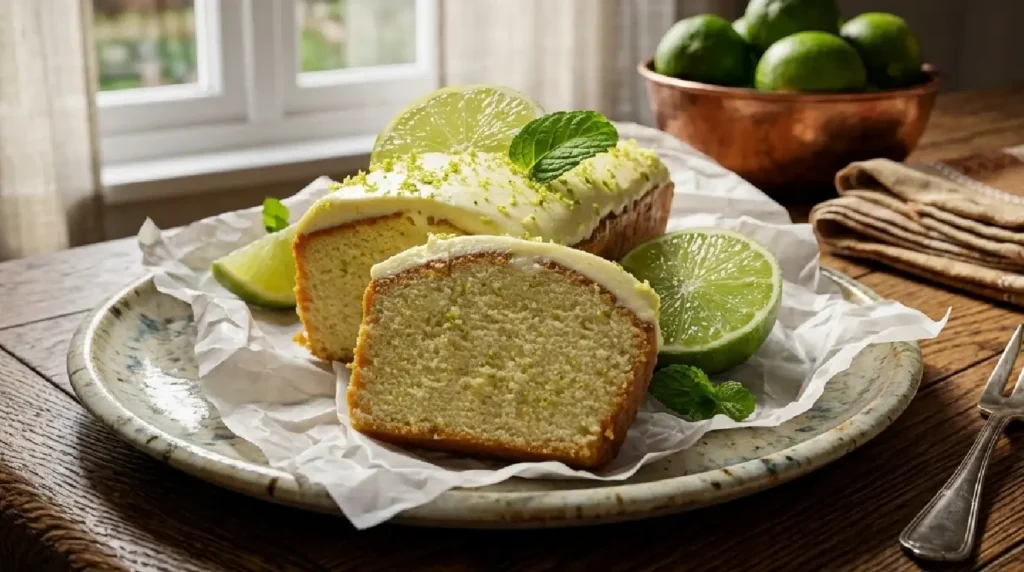
Vegan Lime Pound Cake
Table of Contents
ToggleVegan Lime Pound Cake: Bright, Buttery, and Completely Dairy-Free
Introduction
There’s something about the sharpness of lime hitting a tender, buttery crumb that just stops you mid-bite. This vegan lime pound cake delivers exactly that moment—the kind of dessert that makes people forget entirely that there’s no butter or eggs involved. The cake itself is dense but impossibly moist, with a bright citrus flavor that cuts through richness without being tart or aggressive. It’s the sort of cake you bake on a regular Tuesday because you want something memorable, not because you’re trying to impress anyone. Though it definitely does anyway.
I stumbled onto this recipe during a phase when I was baking for friends with all sorts of dietary preferences. What struck me wasn’t how well it adapted to being vegan—it was that everyone went back for seconds, regardless of what they usually eat. The lime isn’t subtle. It announces itself in that golden crumb with a brightness that lingers long after the last forkful.
Why You’ll Love This
- Simple ingredients you probably have on hand. No specialty vegan products or hard-to-find substitutes required.
- The texture is genuinely dense and satisfying. This isn’t airy or fluffy—it’s a proper pound cake with real substance.
- Lime flavor is pronounced but balanced. It feels fresh without tasting like cleaning supplies.
- It keeps for days. This cake is actually better on day two, when flavors settle and the crumb stays moist.
- Works for any occasion. Breakfast, dessert, afternoon snack—this cake doesn’t judge.
The Backstory
My brother-in-law showed up to a family gathering already apologizing for his dietary restrictions. He’s vegan, and while everyone’s supportive, there’s always that moment of awkwardness when dessert arrives. I’d made this cake the night before, not thinking much of it—just something bright and citrus-forward that seemed right for summer. He cut a small slice, mostly out of politeness. Then he ate another. Then he asked if there was more in the kitchen and started wrapping it up to take home. Three days later, he texted asking for the recipe. That’s when I knew the thing actually works. It’s not a “vegan substitute” that tastes almost as good as the real thing. It’s just good cake.
What Makes It Special
- Aquafaba instead of eggs. The whipped chickpea liquid creates lift and structure without any beany flavor, resulting in a crumb that’s surprisingly tender.
- Coconut oil for that buttery richness. It contributes the flavor you expect from a pound cake without dairy. The amount matters—there’s real fat here, which is the point.
- Fresh lime juice and zest. Not extract, not syrup. The zest adds color and the juice adds brightness that feels clean and sophisticated.
- All-purpose flour for the classic crumb. Combined with the right ratio of fat and aquafaba, it produces that dense, almost velvet-like texture pound cake should have.
- Vanilla and salt to frame everything. These quiet ingredients prevent the lime from becoming one-dimensional.
Making It Happen
Start by preheating your oven to 325 degrees Fahrenheit. This is lower than most cakes, and it matters—a slower bake ensures the center cooks through without the exterior browning too quickly. While the oven warms, prepare a loaf pan or bundt pan by oiling it lightly and dusting with flour, tapping out the excess.
Zest your limes directly over a small bowl. You want about two tablespoons of zest here—the fine, colored part only, not the bitter white pith. Then juice those limes. You’re looking for roughly half a cup of fresh juice. Strain out the pulp if you prefer a smoother batter, though leaving it in adds texture and bursts of concentrated lime flavor.
In a larger mixing bowl, combine your coconut oil with granulated sugar, whisking until the mixture becomes light and sandy. This takes about two minutes of steady whisking. The goal is to incorporate air, which helps the cake rise. Add your vanilla extract and salt, whisking briefly.
Pour your aquafaba into a separate bowl and whip it with an electric mixer on high speed for about three minutes. You want soft peaks to form—the mixture should become pale and foamy. Don’t over-whip until stiff peaks form, as this can make the batter dense.
Gently fold the whipped aquafaba into your oil-sugar mixture using a spatula. Work slowly and deliberately, folding rather than stirring, to preserve the air bubbles. Once combined, alternate adding your flour (sifted to remove lumps) and your lime juice, starting and ending with the flour. Add the flour in three additions and the lime juice in two. Fold gently after each addition. This is where patience pays off—rushed folding deflates all your careful work.
Pour the batter into your prepared pan and smooth the top with a spatula. Bake for 50 to 65 minutes, depending on your oven and whether you’re using a loaf or bundt pan. The cake should be golden brown on top and a toothpick inserted into the center should come out with a few moist crumbs, not wet batter.
Let the cake cool in the pan for about 15 minutes, then turn it out onto a wire rack to cool completely. This step is important—a warm cake is fragile. Once cool, you can frost it with a simple lime glaze or leave it naked to show off that golden crumb.
You Must Know
- Don’t skip sifting the flour. Lumps aren’t just texture problems—they can lead to dense pockets in your finished cake.
- Temperature matters for all your ingredients. Use room-temperature aquafaba and coconut oil. Cold ingredients make it harder to incorporate air and achieve an even crumb.
- Fresh lime juice, not bottled. Bottled lime juice tastes stale and chemical. Fresh limes are worth it here.
- Let it rest before slicing. A warm cake crumbles. Wait until it’s completely cool and even better until the next day when the flavors have melded.
- Lime zest oxidizes. Zest your limes right before mixing, or the vibrant flavor compounds start fading.
Serving Ideas & Pairings
A slice of this cake pairs beautifully with strong black tea, especially Earl Grey, which echoes the citrus notes without competing. For coffee, go with espresso rather than something sweet and milky. If you’re serving it as dessert, a small glass of dry white wine—something crisp like Sauvignon Blanc or Pinot Grigio—complements the brightness perfectly.
As a breakfast cake (and it works wonderfully in this context), it needs little accompaniment beyond maybe some fresh fruit on the side. Raspberries or blueberries add color and a slight tartness that echoes the lime without overlapping it. A bit of unsweetened whipped coconut cream, if you want richness, works too.
Make It Different
Lemon instead of lime: Substitute the same quantity of fresh lemon juice and zest for a more traditional citrus flavor. The cake stays equally moist and takes on a slightly warmer tone.
Orange-lime combination: Use half lime and half fresh orange juice to soften the sharpness and add complexity. Add a tiny pinch of cardamom if you go this route.
Coconut lime variation: Toast a half cup of unsweetened shredded coconut and fold it into the batter along with the flour. It adds subtle texture and a mild sweetness that balances the lime.
Vegan sour cream topping: Skip a glaze. Instead, whip together vegan sour cream with a bit of maple syrup and lime zest to make a thick frosting. It cuts the sweetness of a traditional glaze.
Lavender-lime: Add half a teaspoon of culinary lavender buds, finely crushed, to the batter. The floral notes soften the citrus’s sharp edges.
Storage & Reheating
Wrap the cooled cake in plastic wrap or place it in an airtight container. It keeps at room temperature for up to four days, in the refrigerator for up to seven days, and in the freezer for up to three months. The cake actually improves slightly after a day or two, as the lime flavor becomes less bright and the crumb settles into a more even texture.
To reheat a slice (though honestly, it’s fine at room temperature or even cold), warm it gently in a 275-degree Fahrenheit oven for about five minutes. Microwaving is quicker but can make the crumb slightly rubbery, so avoid that if possible.
If freezing the whole cake, wait until it’s completely cool, then wrap it tightly in plastic wrap and then in foil. Thaw it overnight in the refrigerator before serving. Slices can go directly from freezer to a 275-degree oven for about eight minutes to refresh.
Success Tips
The ratio of wet to dry ingredients in vegan baking feels counterintuitive at first, but it’s deliberate. Vegan cakes often need slightly more liquid than their traditional counterparts because there’s no egg to add structure. If your cake turns out dense, it’s usually because the aquafaba wasn’t whipped enough—aim for visible peaks and pale color, not just foam.
Coconut oil’s melting point matters more than you’d think. If your kitchen is very warm, your oil might be liquid at the start, which is fine, but cool oil that’s solid will incorporate unevenly. If it matters, measure your coconut oil at a consistent temperature.
Lime zest clings to the fine holes of your microplane. That’s good—it means you’re capturing oils—but be patient and let the zest fall naturally rather than scraping aggressively, which can damage the tool and leave zest behind.
Frequently Asked Questions
Can I use lime extract instead of fresh lime juice?
I wouldn’t recommend it. Lime extract is concentrated and tends toward a sharp, almost medicinal flavor. Fresh lime juice provides balance and complexity that extract can’t match. This cake is worth the few minutes it takes to juice a lime.
Why is my cake sinking in the middle?
This usually means the oven temperature is off—your oven might run hotter or cooler than you think. Use an oven thermometer to verify. It could also mean the aquafaba wasn’t whipped enough or you opened the oven door too early during baking. The cake needs 45 minutes of undisturbed baking before you even think about checking it.
Can I make this in a regular cake pan instead of a loaf or bundt?
Yes, absolutely. You might need to reduce the baking time to 35 to 45 minutes if you’re using a wider, shallower pan. Start checking with a toothpick around the 35-minute mark. The key is that internal temperature—the center should be set with just a few moist crumbs clinging to the toothpick.
Is aquafaba really necessary, or can I use a vegan egg replacement?
Aquafaba works best here because it whips into genuine peaks, which contributes to lift. Liquid egg replacements don’t whip up well and will result in a denser cake. If you absolutely don’t have aquafaba, try a commercial flax or chia egg (one tablespoon ground mixed with three tablespoons water), though the texture won’t be quite the same.
How do I know if the coconut oil I’m using is actually coconut oil and not coconut shortening?
Check the label—shortening will say “vegetable shortening” or “palm oil shortening” and usually includes added emulsifiers. Pure coconut oil is just coconut oil, sometimes with a note that it’s unrefined or virgin. For this cake, refined coconut oil works fine. It has a milder flavor, which lets the lime shine.
Recipe Card Info
Prep time: 20 minutes
Cook time: 60 minutes
Total time: 80 minutes
Servings: 10 to 12 slices
Category: Dessert
Difficulty: Intermediate
Cuisine: Vegan, American
Yield: One loaf or bundt cake
Equipment: 9-inch loaf pan or 10-inch bundt pan, mixing bowls, electric mixer, microplane zester, whisk, spatula, measuring cups and spoons, toothpick or cake tester, wire cooling rack
Ingredients
- 1 cup unsweetened applesauce or coconut oil
- 1.5 cups granulated sugar
- 3/4 cup unsweetened aquafaba (liquid from one 14-ounce can of chickpeas, divided from solids)
- 1/2 cup fresh lime juice (approximately 4 medium limes)
- 2 tablespoons fresh lime zest
- 1 teaspoon vanilla extract
- 2 cups all-purpose flour
- 1.5 teaspoons baking powder
- 1/2 teaspoon fine sea salt
Directions
- Preheat your oven to 325 degrees Fahrenheit. Oil your loaf or bundt pan lightly and dust with flour, tapping out excess.
- Zest your limes over a small bowl, capturing fine zest only. Juice the limes and strain if desired. Set lime zest and juice aside.
- In a large mixing bowl, whisk together coconut oil and granulated sugar until the mixture is light and sandy, approximately two minutes. Add vanilla extract and fine sea salt, whisking to combine.
- Pour aquafaba into a separate bowl and whip with an electric mixer on high speed until soft peaks form and the mixture becomes pale and foamy, about three minutes. Do not over-whip.
- Using a spatula, gently fold the whipped aquafaba into the oil-sugar mixture, preserving air bubbles.
- Sift the flour with the baking powder into a separate bowl. Alternate adding flour and lime juice to your wet mixture, starting with flour and ending with flour. Fold gently after each addition using three flour additions and two lime juice additions.
- Fold in the fresh lime zest.
- Pour batter into your prepared pan and smooth the top with a spatula.
- Bake for 50 to 65 minutes, until the top is golden brown and a toothpick inserted into the center emerges with a few moist crumbs.
- Allow the cake to cool in the pan for 15 minutes, then turn out onto a wire rack to cool completely before slicing.
Notes
This cake is best sliced and served the day after baking, when flavors have melded and the crumb has settled. Store wrapped in plastic wrap at room temperature for up to four days. Freeze in an airtight container for up to three months. The lime flavor is intentionally pronounced—if you prefer a subtler citrus note, reduce the lime juice to 1/4 cup and add 1/4 cup of unsweetened plant-based milk instead.
Nutrition
Per slice (based on 12 servings):
- Calories: 285
- Protein: 2g
- Fat: 12g
- Carbohydrates: 42g
- Fiber: 1g
- Sugar: 28g
- Sodium: 185mg
Nutritional information is approximate and calculated using standard ingredient databases. Values may vary based on specific brands and preparation methods.
