
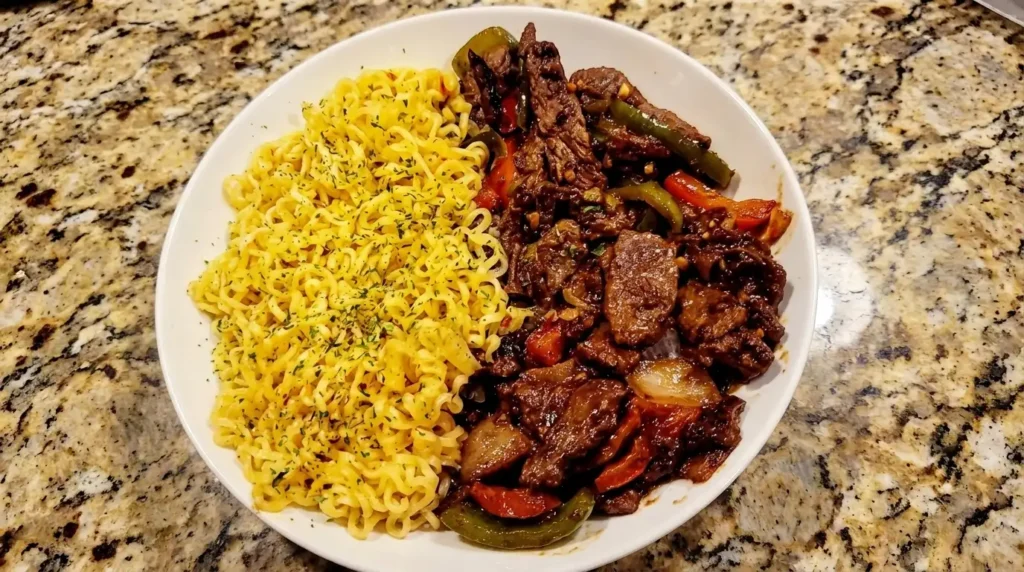
Spicy Steak Ramen Noodles
Table of Contents
ToggleSpicy Steak Ramen Noodles: A Bold, Saucy Weeknight Favorite
Introduction
Some recipes sneak up on you. You throw them together on a Tuesday night when the fridge is looking sparse, the week has been long, and you just need something that tastes like it took effort — even when it didn’t. That’s exactly how this Spicy Steak Ramen Noodles recipe became a permanent fixture in my dinner rotation.
Thin strips of seared skirt steak, glossy noodles coated in a tangy, smoky hot sauce glaze, a hit of brown sugar to balance the heat — it all comes together in one skillet in under thirty minutes. The first time I made it, I stood over the stove eating straight from the pan. That tells you everything you need to know.
Why You’ll Love This
- It comes together in about 25 minutes, start to finish, with ingredients you likely already have.
- The sauce is a genuine flavor punch — spicy, savory, slightly sweet, and sticky in the best way.
- One skillet means minimal cleanup on a night when you have zero energy to spare.
- It’s endlessly flexible — swap the protein, add vegetables, dial the heat up or down to suit your crowd.
- It tastes like something you’d order out, but costs a fraction of the price.
The Backstory
My brother-in-law is notoriously suspicious of “fusion” anything. He’s a steak-and-potatoes person in the most literal sense, and the first time I mentioned ramen noodles alongside steak, he looked at me the way someone looks at a questionable menu item at an unfamiliar restaurant. I made it anyway. He ate two full servings and asked, very quietly, if there was more. He has since requested it at every family gathering. There is something deeply satisfying about a recipe that converts skeptics on the first bite.
What Makes It Special
- Skirt steak — naturally thin and quick-cooking, it picks up the sauce beautifully and stays tender when sliced against the grain.
- Hot sauce — the backbone of the whole dish. Frank’s works perfectly here: it’s tangy and bright without being one-dimensionally fiery.
- Worcestershire sauce — brings a deep, umami undertone that makes the sauce taste like it simmered for hours.
- Brown sugar — just enough to round out the heat and create that glossy, sticky coating on the noodles and steak.
- White vinegar — a sharp splash of acid that keeps every other flavor honest and prevents the sauce from going flat.
- Ramen noodles — budget-friendly, fast-cooking, and perfect for soaking up every drop of that bold sauce.
Making It Happen
Start by getting your noodles going. Open the ramen packages, toss the seasoning packets aside, and drop the noodles into a pot of boiling water. Three minutes is all they need — you want them just barely cooked because they’ll finish in the skillet. Drain them and set them aside.
While the noodles are cooking, heat your oil in a large skillet over medium-high heat. Add the steak strips and let them sear, giving them a chance to develop some color. Don’t rush this step — a little browning means a lot of flavor.
Once the steak has started to brown, pour in the hot sauce, Worcestershire sauce, vinegar, minced onion, minced garlic, and brown sugar. Stir everything together so the steak gets coated. Reduce the heat and let it all simmer together for about five minutes. The sauce will thicken slightly and the garlic and onion will mellow into the background, leaving behind a rich, complex depth that tastes like way more than a handful of pantry staples.
Add the drained noodles directly into the skillet and toss to coat thoroughly. Every strand should be glistening with that spicy, sticky glaze. Scatter sliced green onions over the top for a fresh, slightly sharp finish, and serve immediately.
You Must Know
- Don’t overcook the noodles. They’ll continue to cook when you add them to the hot skillet. Slightly underdone is exactly where you want them before the toss.
- Slice the steak thin and against the grain. This is the difference between tender and chewy. Take thirty extra seconds to do it right.
- If you like your steak on the rarer side, pull it from the skillet before adding the sauce. Let the sauce simmer on its own, then return the steak when you add the noodles.
- Taste the sauce before the noodles go in. That’s your last easy opportunity to adjust — more hot sauce for heat, a pinch more sugar to balance, or a splash of soy sauce if you want deeper savory notes.
- Use a large skillet. You need room to toss those noodles without losing half of them over the sides.
Serving Ideas and Pairings
This dish is bold enough to stand entirely on its own, but if you want to round out the meal, a simple side of steamed broccoli or a crisp cucumber salad brings cooling contrast to the heat. Roasted edamame works well too, as does a handful of shredded cabbage dressed lightly in rice vinegar.
For drinks, a cold lager or light beer cuts right through the richness. If you prefer something non-alcoholic, sparkling water with lime or an iced green tea both do the job without competing with the flavors on the plate.
Make It Different
For extra vegetables: Toss in broccoli florets, sliced mushrooms, green beans, or asparagus spears right after the steak browns. Give them a few minutes to soften before adding the sauce.
For a milder version: Cut the hot sauce in half and replace the difference with soy sauce. You get the same savory depth with significantly less fire.
For a different protein: Chicken thighs, shrimp, or even firm tofu all work well here. Adjust the cooking time accordingly — shrimp cook fast, tofu benefits from a good sear before the sauce goes in.
For a gluten-free version: Swap the ramen for rice noodles and make sure your Worcestershire and soy sauce (if using) are certified gluten-free.
For more sweetness: A small drizzle of honey in place of some of the brown sugar adds a slightly floral note that plays well against the heat.
Storage and Reheating
Store leftovers in an airtight container in the refrigerator for up to three days. The noodles will absorb more of the sauce as they sit, which actually concentrates the flavor nicely.
To reheat, add a small splash of water or soy sauce to the container before microwaving, or reheat in a skillet over medium heat with a bit of added liquid to loosen the sauce back up. Avoid high heat on reheating — you just want to warm it through, not cook the steak a second time.
This dish does not freeze particularly well due to the noodle texture, so plan to enjoy it fresh or within the three-day window.
Success Tips
The sauce is forgiving but it rewards attention. Give it the full five-minute simmer rather than rushing straight to the noodle toss — that short window is when the garlic and onion lose their raw edge and the sugar caramelizes just enough to pull everything together.
If you find the sauce has reduced too aggressively before the noodles go in, a tablespoon or two of water will bring it back to a good coating consistency. Don’t panic, just adjust.
Finally, green onions are not optional garnish here — they add a genuinely important fresh, sharp counterpoint to the richness of the sauce. Use them generously.
Frequently Asked Questions
Can I use a different cut of steak? Absolutely. Any cut works — ribeye, sirloin, flank steak, even a budget-friendly chuck steak sliced thin. Skirt steak is great because it’s lean, thin, and absorbs the sauce well, but this recipe is flexible by design.
What hot sauce works best? Frank’s RedHot is the go-to here — it’s tangy and vinegary, which works beautifully with the Worcestershire and brown sugar. Sriracha, Cholula, or your preferred hot sauce will all work, but keep in mind that heat levels vary significantly between brands.
Can I make this less spicy for kids? Yes. Reduce the hot sauce to a tablespoon or two and replace the rest with soy sauce or a mild chili sauce. The dish keeps all of its savory, saucy character without the heat.
Do I need to marinate the steak? No marinating required. The sauce does all the heavy lifting in terms of flavor. If you have time and want to marinate, a simple soy-garlic mixture for 30 minutes doesn’t hurt, but it’s genuinely unnecessary for a great result.
Can I add vegetables directly to the skillet? Yes, and it’s highly recommended if you want a more complete one-pan meal. Add broccoli, mushrooms, green beans, or asparagus right after the steak starts to brown. Stir them around for two to three minutes before adding your sauce ingredients.
Recipe Card
Recipe: Spicy Steak Ramen Noodles Prep Time: 10 minutes Cook Time: 15 minutes Total Time: 25 minutes Servings: 4 Category: Main Dish / Dinner Difficulty: Easy Cuisine: Asian-American Fusion Yield: 4 servings
Equipment:
- Large skillet or wok
- Medium saucepan (for noodles)
- Colander
- Cutting board and sharp knife
- Tongs or spatula
Ingredients
- 1 lb skirt steak, cut into thin strips
- 1 Tbsp oil
- ½ cup hot sauce (Frank’s RedHot recommended)
- 2 Tbsp Worcestershire sauce
- 1 Tbsp white vinegar
- 1 Tbsp minced onion
- 1 Tbsp minced garlic
- 3 Tbsp brown sugar
- 2 (3-oz) packages ramen noodles, any flavor (discard seasoning packets)
- Green onions, sliced (for garnish)
Instructions
Step 1: Open the ramen packages and discard the seasoning flavor packets. Cook the ramen noodles in boiling water for 3 minutes. Drain and set aside.
Step 2: While the noodles are cooking, heat the oil over medium-high heat in a large skillet. Add the steak strips and cook until they begin to brown.
Step 3: Add the hot sauce, Worcestershire sauce, white vinegar, minced onion, minced garlic, and brown sugar to the skillet. Stir to combine. Reduce the heat and simmer for 5 minutes.
Step 4: Add the cooked, drained noodles to the skillet and toss thoroughly to coat. Sprinkle with sliced green onions and serve immediately.
Notes
- Any cut of steak can be used based on your preference or budget.
- If you prefer your steak rare, remove it from the skillet before adding the sauce ingredients. Return the steak to the skillet along with the noodles in Step 4.
- Broccoli, green beans, mushrooms, or asparagus can be added directly to the noodle mixture for a more complete one-pan meal.
- Increase or reduce the hot sauce amount to match your personal heat preference. Soy sauce can be added in place of some of the hot sauce for a milder, more savory profile.
- Frank’s RedHot was used in the original recipe.
Nutrition (Per Serving, Approximate)
- Calories: 430
- Protein: 32g
- Carbohydrates: 38g
- Fat: 16g
- Saturated Fat: 5g
- Sodium: 890mg
- Sugar: 11g
- Fiber: 1g
Nutrition values are estimates and will vary based on specific ingredients and portion sizes used.
