
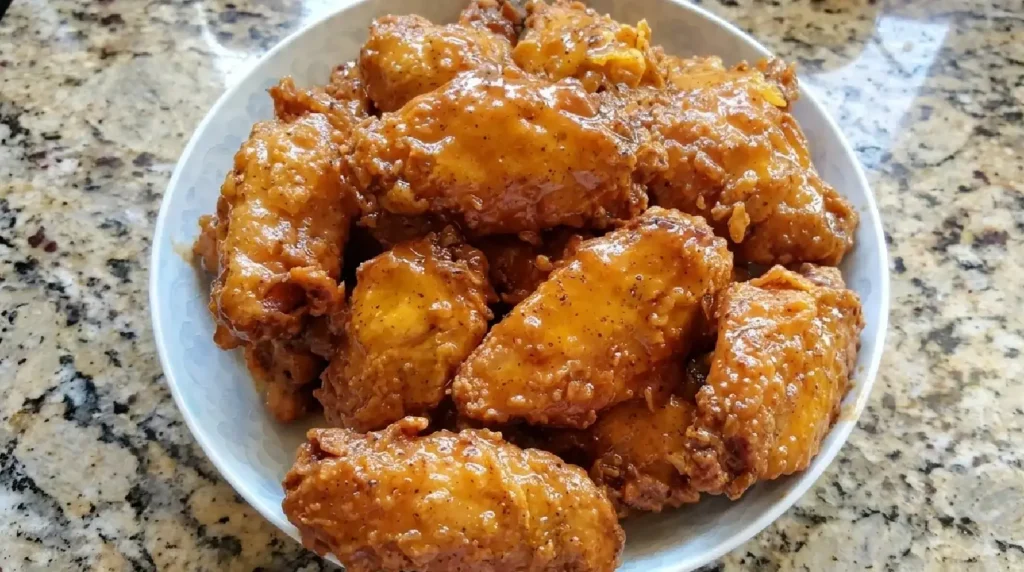
Fried Wing Flats Drizzled with Honey Lemon Pepper Sauce
Table of Contents
ToggleCrispy Fried Wing Flats Drizzled with Honey Lemon Pepper Sauce
Introduction
There is something about the sound of chicken hitting hot oil that makes everything feel right. The sharp sizzle, the rising steam carrying the scent of seasoned skin, the slow deepening of golden color as the fat renders down — frying chicken wing flats is one of those kitchen rituals that never gets old. But what makes this particular recipe stand apart is what happens after the fry. A glossy, sticky honey lemon pepper sauce gets drizzled over those crispy flats, and the contrast between crunch and silky glaze is exactly as satisfying as it sounds.
This is the kind of recipe that shows up at every gathering and disappears before anything else on the table. It is not complicated. It does not demand special equipment or chef-level skill. What it does demand is a little patience with the oil temperature and a willingness to let the sauce simmer until it thickens into something truly special. Make this once and it becomes muscle memory.
Why You’ll Love This
- The skin fries up shatteringly crispy thanks to a double-dredge technique that locks in a thick, textured crust.
- The honey lemon pepper sauce hits every note — sweet, tangy, buttery, and warmly spiced — without overpowering the chicken.
- Wing flats cook more evenly than drumettes, meaning every bite delivers consistent crunch from tip to tip.
- The sauce comes together in under ten minutes using pantry staples, so there is no elaborate prep involved.
- These reheat beautifully in the oven, which means leftovers are just as good as the original batch.
The Backstory
My brother-in-law Marcus is not a wing person. He has said it repeatedly at cookouts, at game nights, at every family dinner where a plate of wings materialized on the counter. He would take one polite look, grab something else, and move on. So when he showed up at a summer cookout and I had nothing but these flats on the grill table, I handed him one mostly as a joke. He bit in, paused, and reached for two more before saying a word. By the end of the evening he had finished more than half the batch and asked me to text him the sauce recipe before he drove home. These are those wings — the ones that convert people.
What Makes It Special
- Chicken wing flats: Flats have a broader surface area than drumettes, which means more skin, more crunch, and more surface for that sauce to cling to.
- Buttermilk brine: Soaking the flats in seasoned buttermilk before dredging tenderizes the meat while adding a subtle tang that works brilliantly against the sweet sauce.
- Double-dredge coating: A combination of all-purpose flour and cornstarch creates a coating that fries up exceptionally light and crispy, with jagged edges that trap the glaze.
- Raw honey: Using raw honey in the sauce gives it a more complex, floral sweetness compared to processed honey — it caramelizes more slowly and builds better depth.
- Fresh lemon juice and zest: Bottled lemon juice will not do the same job here. Fresh juice delivers a brighter, more vibrant acidity, and the zest adds a fragrant citrus punch that dried seasoning simply cannot replicate.
- Cracked black pepper: Coarsely cracked pepper gives the sauce visible specks and a warm, assertive heat that keeps the sweetness in check.
Making It Happen
Start by brining the wing flats. Combine buttermilk with garlic powder, onion powder, smoked paprika, a generous pinch of salt, and a few cracks of black pepper in a large bowl. Add the flats, toss to coat every surface, cover the bowl, and refrigerate for at least two hours. Overnight brining produces noticeably more tender meat, so if time allows, that is the better choice.
When you are ready to fry, pull the wings from the fridge and let them sit at room temperature for about twenty minutes. This brings the internal temperature up slightly and helps the coating set more evenly. While the wings rest, make your dredge by whisking together all-purpose flour, cornstarch, garlic powder, smoked paprika, cayenne, and a solid measure of salt in a wide, shallow dish.
Set your oil — a neutral oil like vegetable or peanut works best — in a heavy-bottomed pot or Dutch oven and bring it to 350°F. Temperature control is everything here. Too cool and the coating absorbs oil and turns greasy. Too hot and the outside burns before the meat cooks through. Use a thermometer and trust it.
Take each flat directly from the buttermilk, let the excess drip off for a second or two, then press it firmly into the flour mixture on both sides. Return the coated flat to the buttermilk briefly, then press into the flour mixture again. That second pass is what builds the thick, craggly crust. Set the coated flats on a wire rack while you finish coating the batch.
Fry in batches of four to five flats at a time — overcrowding the pot drops the oil temperature and leads to soggy coating. Fry for seven to eight minutes, turning once halfway through, until the coating is a deep amber-gold and the juices run clear. Transfer to a clean wire rack set over a baking sheet to drain, never to paper towels, which trap steam and soften the crust.
While the last batch fries, build the sauce. Melt butter in a small saucepan over medium heat, then add minced garlic and let it soften for about a minute without browning. Pour in the raw honey, fresh lemon juice, lemon zest, cracked black pepper, and a small pinch of salt. Whisk everything together and let the sauce simmer for three to four minutes until it thickens slightly and turns glossy. Remove from heat and let it cool for a minute before drizzling over the wings.
Arrange the finished flats on a serving platter and drizzle the warm sauce generously over the top. Serve immediately.
You Must Know
- Letting the coated flats rest on the wire rack for five minutes before frying helps the dredge adhere and produces a thicker, crunchier crust.
- Never cover fried chicken while it is hot — the trapped steam turns crispy skin soft within minutes.
- If your oil temperature drops between batches, wait for it to return to 350°F before adding more wings. Patience here is not optional.
- The honey lemon pepper sauce thickens as it cools. If it becomes too thick to drizzle, reheat it gently over low heat and whisk in a teaspoon of water to loosen.
- Taste and adjust the sauce before drizzling — more lemon juice if you want sharper brightness, more honey if you prefer a sweeter finish.
Serving Ideas and Pairings
These wing flats are bold enough to anchor a whole meal or hold their own as part of a spread. Serve them alongside creamy coleslaw, where the cool, vinegary crunch cuts through the richness of the fried chicken and the sweetness of the sauce. Seasoned waffle fries or crispy smashed potatoes make an excellent starchy companion that soaks up any drizzled sauce on the plate.
For a lighter pairing, a cucumber and red onion salad dressed simply with rice wine vinegar and sesame oil brings welcome freshness to the table. Cornbread with a honey butter spread extends the sweet-savory theme beautifully.
On the drinks side, a cold lager or wheat beer plays well against the fried richness. For non-alcoholic pairings, a sparkling lemonade or a ginger-spiked iced tea mirrors the citrus notes in the sauce and keeps the palate sharp between bites.
Make It Different
Spicier version: Add a tablespoon of sriracha or a teaspoon of cayenne directly to the honey lemon pepper sauce for a fiery glaze that still carries all the sweetness and citrus brightness.
Baked alternative: For a lighter take, arrange the double-dredged flats on a wire rack over a baking sheet, spray generously with avocado oil, and bake at 425°F for 40 to 45 minutes, flipping once at the halfway point. The coating will not be quite as shattering as the fried version, but it still delivers real crunch.
Air fryer method: Cook dredged flats in an air fryer basket at 400°F for 20 to 22 minutes, shaking the basket once midway. Spray with oil before and after flipping for the best browning.
Gluten-free adaptation: Replace the all-purpose flour with a blend of rice flour and tapioca starch in equal parts. The coating turns out slightly thinner but still crisps beautifully.
Sauce variation — garlic parmesan spin: Swap the honey lemon pepper sauce for a mix of melted butter, roasted garlic, grated parmesan, and fresh parsley for an entirely different flavor profile using the same crispy base.
Dairy-free: Replace the buttermilk brine with a mixture of unsweetened oat milk and a tablespoon of apple cider vinegar. Let it sit for five minutes to curdle before using, and it will behave exactly like buttermilk in the recipe.
Storage and Reheating
Store leftover wing flats in an airtight container in the refrigerator for up to three days. Keep the sauce in a separate small container rather than storing the wings already dressed — the coating holds its texture far better when the sauce is applied fresh at serving time.
To reheat, arrange the flats on a wire rack set over a baking sheet and warm in a 375°F oven for twelve to fifteen minutes. This method restores most of the original crispiness and is far superior to the microwave, which softens the coating and leaves the meat slightly rubbery.
If you are reheating from frozen, let the wings thaw fully in the refrigerator overnight before using the oven method above. Reheat the sauce separately in a small saucepan over low heat, adding a small splash of water if it has thickened too much in storage.
Success Tips
One thing home cooks overlook is the importance of dry wings going into the brine. Pat the flats completely dry with paper towels before adding them to the buttermilk mixture — excess surface moisture dilutes the brine and weakens the final flavor.
When measuring cornstarch for the dredge, do not pack it. A light, aerated scoop gives the coating a finer, crisper texture than a dense, compacted measure.
If you are frying for a crowd, keep finished batches warm by placing the wire rack in a 200°F oven while you complete the remaining rounds. The low heat maintains crispiness without overcooking the already-finished flats.
For the most uniform color and even frying, use wing flats that are as similar in size as possible. If some are notably larger, they may need an extra minute or two in the oil, so frying them in a separate batch from the smaller ones is a smart move.
Finally, drizzle the sauce in a slow, controlled stream from a spoon rather than dumping it all at once. This gives you visual control over coverage and ensures every flat gets an even coat without drowning the crust.
Frequently Asked Questions (FAQ)
Can I use frozen wing flats for this recipe? Yes, but make sure they are completely thawed and thoroughly dried before brining. Ice crystals trapped inside the meat turn to steam during frying, which can cause the coating to separate from the surface. Overnight thawing in the refrigerator is the safest approach.
How do I know when the oil is hot enough without a thermometer? Drop a small pinch of the dredge mixture into the oil. If it sizzles immediately and rises to the surface, the oil is ready. If it sinks and sits without bubbling, the oil is still too cool. This test is less precise than a thermometer, though, so investing in an instant-read probe is worthwhile if you fry often.
Can I make the honey lemon pepper sauce ahead of time? Absolutely. The sauce keeps well in a sealed jar in the refrigerator for up to one week. Reheat it gently on the stove or in the microwave in short bursts, stirring between intervals, until it is warm and pourable again.
Why are my wings not getting crispy? The most common culprits are oil that is not hot enough, wings that are too wet when they go into the dredge, or overcrowding the pot. All three cause the coating to steam rather than fry. Double-check your oil temperature, dry the wings after brining, and give each batch room to move in the oil.
Can I substitute drum drumettes for flats in this recipe? Yes, drumettes work well and cook in roughly the same time. Keep in mind that they have a slightly denser muscle and may benefit from an extra minute in the oil. The sauce pairs just as well with drumettes as it does with flats.
Recipe Card
Recipe Name: Fried Wing Flats Drizzled with Honey Lemon Pepper Sauce
Prep Time: 20 minutes (plus 2 hours brining time)
Cook Time: 35 minutes
Total Time: 2 hours 55 minutes
Servings: 4
Category: Appetizer / Main Dish
Difficulty: Intermediate
Cuisine: American
Yield: Approximately 20 to 24 wing flats
Equipment:
- Large mixing bowl
- Heavy-bottomed pot or Dutch oven
- Instant-read cooking thermometer
- Wire rack set over a rimmed baking sheet
- Shallow wide dish for dredging
- Small saucepan for the sauce
- Tongs
- Whisk
Ingredients
For the Buttermilk Brine:
- 2 pounds chicken wing flats (approximately 20 to 24 pieces)
- 1 cup buttermilk
- 1 teaspoon garlic powder
- 1 teaspoon onion powder
- 1 teaspoon smoked paprika
- 1 teaspoon kosher salt
- 1/2 teaspoon coarsely cracked black pepper
For the Dredge:
- 1 cup all-purpose flour
- 1/2 cup cornstarch
- 1 teaspoon garlic powder
- 1 teaspoon smoked paprika
- 1/2 teaspoon cayenne pepper
- 1 1/2 teaspoons kosher salt
- 1/2 teaspoon coarsely cracked black pepper
For Frying:
- 4 to 6 cups vegetable or peanut oil (enough to fill the pot 3 to 4 inches deep)
For the Honey Lemon Pepper Sauce:
- 3 tablespoons unsalted butter
- 2 cloves garlic, finely minced
- 1/3 cup raw honey
- 3 tablespoons fresh lemon juice (approximately 2 lemons)
- 1 teaspoon fresh lemon zest
- 1 teaspoon coarsely cracked black pepper
- 1/4 teaspoon kosher salt
Instructions
Step 1 — Brine the wings: Pat the wing flats completely dry with paper towels. In a large bowl, whisk together the buttermilk, garlic powder, onion powder, smoked paprika, salt, and black pepper. Add the wing flats and toss to coat every surface evenly. Cover the bowl with plastic wrap and refrigerate for a minimum of 2 hours, or overnight for best results.
Step 2 — Prepare the dredge: In a wide, shallow dish, whisk together the all-purpose flour, cornstarch, garlic powder, smoked paprika, cayenne, salt, and black pepper until fully combined. Set aside.
Step 3 — Rest the wings: Remove the brined flats from the refrigerator and let them sit at room temperature for 20 minutes before frying.
Step 4 — Heat the oil: Pour enough oil into a heavy-bottomed pot or Dutch oven to reach a depth of 3 to 4 inches. Heat over medium-high heat until the oil reaches 350°F on an instant-read thermometer.
Step 5 — Double-dredge the wings: Working one flat at a time, lift a wing from the buttermilk, let the excess drip off for a moment, then press it firmly into the dredge mixture on both sides. Return it briefly to the buttermilk, let excess drip off again, then press into the dredge a second time, coating thoroughly. Set on a clean wire rack and repeat with remaining flats.
Step 6 — Let the coating rest: Allow the coated flats to rest on the wire rack for 5 minutes before frying. This helps the coating adhere and improves crispiness.
Step 7 — Fry the wings: Working in batches of 4 to 5 flats, carefully lower the coated wings into the hot oil using tongs. Fry for 7 to 8 minutes, turning once at the halfway point, until the coating is deep amber-gold and the internal temperature of the thickest flat reads 165°F. Between batches, allow the oil to return to 350°F before adding the next round.
Step 8 — Drain the wings: Transfer cooked flats to a clean wire rack set over a rimmed baking sheet. Do not place them on paper towels.
Step 9 — Make the honey lemon pepper sauce: While the last batch fries, melt the butter in a small saucepan over medium heat. Add the minced garlic and cook for about 1 minute, stirring, until softened and fragrant but not browned. Add the honey, lemon juice, lemon zest, cracked black pepper, and salt. Whisk to combine and let the sauce simmer for 3 to 4 minutes, stirring occasionally, until it thickens slightly and turns glossy. Remove from heat.
Step 10 — Dress and serve: Arrange the finished wing flats on a serving platter. Using a spoon, drizzle the warm honey lemon pepper sauce generously over the wings. Serve immediately.
Notes
- For extra crispy results, fry the wings in two stages: a first fry at 325°F for 6 minutes to cook through, then a second fry at 375°F for 2 to 3 minutes to finish the crust. This is the method used in many restaurant kitchens and produces an exceptional texture.
- If the sauce thickens too much before serving, add a teaspoon of warm water and whisk over low heat until loosened.
- Coarse black pepper is essential for the sauce — pre-ground fine pepper loses most of its aroma and does not deliver the same bold, speckled flavor.
- The brine time is not optional. Even a short 2-hour brine makes a measurable difference in the tenderness of the meat.
Nutrition (Per Serving, Approximate)
- Calories: 520
- Total Fat: 28g
- Saturated Fat: 8g
- Cholesterol: 110mg
- Sodium: 780mg
- Total Carbohydrates: 38g
- Sugars: 18g
- Protein: 30g
Nutrition values are estimates based on standard ingredient data and will vary based on wing size, oil absorption, and specific brands used.
